West Virginia’s Public Drinking Water Systems
This Science & Technology Note explains challenges that community drinking water systems in West Virginia may experience, highlights both federal and state drinking water standards, explores challenges to public trust in drinking water in the Appalachian region, and addresses adopting standards for emerging contaminants as one policy option for West Virginia.
Updated June 11, 2026
41% of Americans state that safe, clean drinking water is one of their top environmental and health concerns. However, the Appalachian region contains a high number of community drinking water systems with safety violations. This Science & Technology Note explains the challenges that community drinking water systems often face, provides information on state and federal drinking water standards, and explores policy options to address West Virginia’s drinking water quality.
Community Drinking Water Systems
About 80% of West Virginians rely on community (public) drinking water systems for their water needs. The American Society of Civil Engineers gave West Virginia’s public drinking water infrastructure a D+ grade, citing challenges with aging systems, high funding needs, and large water losses via leaking pipes.
More than 75% of West Virginia’s community drinking water systems serve fewer than 3,300 customers, and are classified as “small” or “very small”. These systems often experience challenges with finances and employee recruitment. 80% of community drinking water systems in Appalachia source their water from surface water (water from rivers, lakes, and streams), which requires more treatment than groundwater (water pumped from underground), contributing to high drinking water costs.
Current requirements to replace lead and copper pipes add additional costs for community drinking water systems. At least 6,900 lead pipes have been identified in the state, and an additional 13,000 are estimated to exist. As water infrastructure ages, some water systems can lose up to 50% of their treated water through leaking pipes, further contributing to high water bills in the area. West Virginia’s mountainous terrain and highly rural population increase supply and maintenance costs for water systems, which are often passed on to consumers.
West Virginia has the highest water bills in the region. More than 80% of West Virginians’ water bills exceed $500 annually compared to 18% regionally, and 5 out of 10 most expensive water bills in the region come from West Virginia. Over the last 10 years, the average water utility rate in West Virginia increased by 47%.
Research Highlights
Community drinking water systems in West Virginia often face challenges relating to finances, infrastructure maintenance and upgrades, and employee recruitment and retention.
Central Appalachia experiences a higher than average number of drinking water health and safety violations. As a result, many West Virginians do not trust their drinking water. To address these concerns, the West Virginia legislature could consider proactive upgrades to the state’s drinking water regulations.
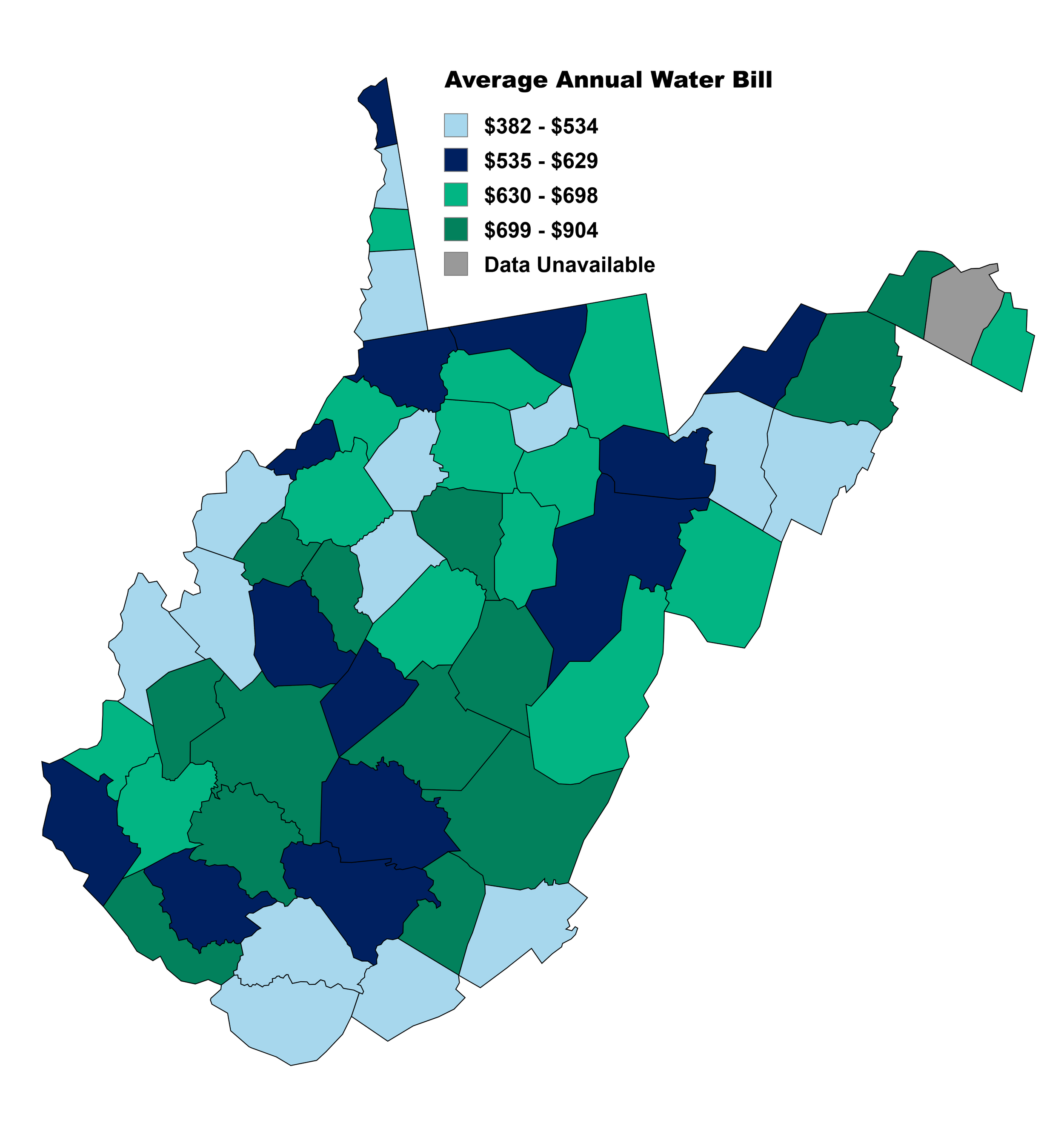
Many West Virginia counties experience high water bills - the highest in the region. Adapted from the Appalachian Regional Commission.
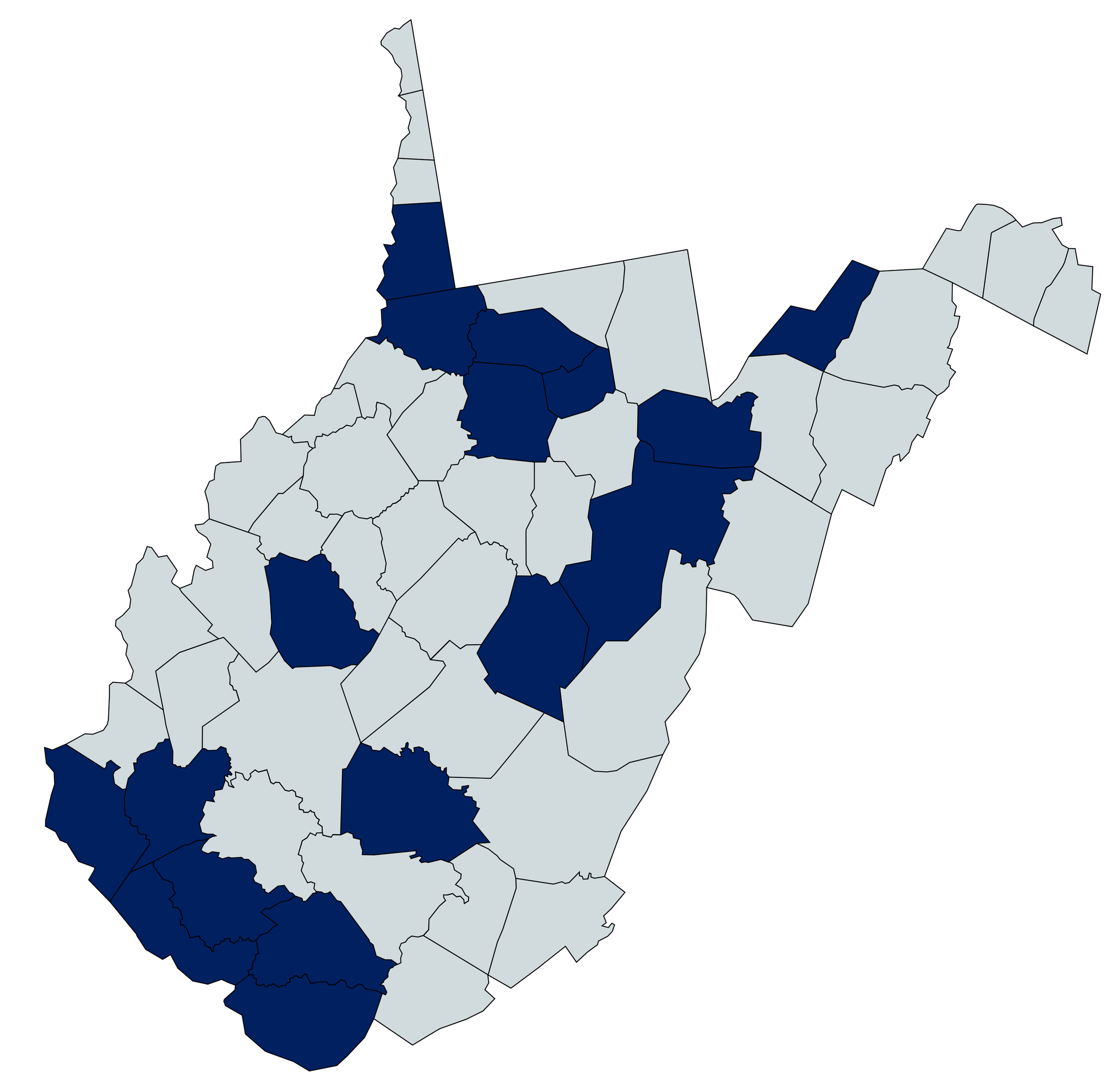
High costs and small customer bases can lead some community water utilities to struggle. The West Virginia Public Service Commission (PSC) is responsible for identifying “distressed and failing” water utilities. Deficiencies most often seen in distressed utilities include a lack of long-term planning, failure to maintain and replace equipment, poor staff training procedures, deficiencies in health and safety protocols, and poor financial solvency. If a distressed utility does not make improvements, it can become a failing utility. This process allows the PSC to target water systems for improvement or mandate their takeover by a water system that is functioning well. As of October 2025, 30% of West Virginia counties contain a distressed or failing drinking water utility.
Community drinking water systems are required to test their water frequently, and abide by state and federal drinking water safety standards. In 2024, West Virginia had the most monitoring and reporting violations of all Appalachian states and the second-most health violations of the Safe Drinking Water Act (SDWA).
Public Drinking Water Regulations
West Virginia’s state drinking water standards, along with federal drinking water standards, provide limits for more than 90 water contaminants, including microorganisms, radioactive materials, metals, and other chemicals. Federal regulations also provide water testing methods and schedules, and provide a monitoring program for emerging drinking water contaminants that lack a health-based limit. Systems are tested regularly for different types of contaminants, and community water systems use various treatment methods to mitigate and remove contaminants from the water. Drinking water contaminants can increase the risk of skin reactions; cancers; developmental delays in children; reproductive, neurologic, and gastrointestinal symptoms; and more. The most common contaminants in West Virginia’s drinking water include radon, bacteria from sewage or manure contamination, and chemicals from industrial or mining wastes.
Public Trust in West Drinking Water
Central Appalachia has a higher number of water systems that are “serious violators” of the SDWA than the rest of the region. There have been more than 3,000 boil water notices for community water system users in West Virginia since May 2025. Many of these are temporary, and can be remedied with upgraded equipment and repairs, but some West Virginia communities have been under continuous boil water advisories for years.
Use of bottled water instead of private or community water systems in Appalachia is increasing. Concerns about water safety and poor taste were the most common reasons for using bottled water. A survey of individuals from the Appalachian regions of Kentucky, Virginia, and West Virginia showed that 83% of people did not trust their tap water. In Morgantown, 37% of people reported primarily drinking bottled water, while 58% reported drinking tap water. This difference continued across the region. One reason for distrust of tap water in West Virginia could be a history of high profile spills and contamination incidents. Prior to the 2014 Elk River spill, nearly all households in the Kanawha Valley used tap water for drinking. 7 weeks after the spill, 12% of households reported drinking their tap water.
Drinking Water Quality Policies
West Virginia regularly updates its state drinking water regulations, most recently in 2025. These updates often include new limits for emerging contaminants, such as perfluoroalkyl and polyfluoroalkyl substances (PFAS).
PFAS are commonly used in the oil and gas industries, as well as in many everyday items. The legislature passed a resolution requesting that PFAS be included in state water studies in 2020; PFAS were detected in 25% of public drinking water sources across the state. PFAS are linked to developmental delays, cancers, obesity, and lower fertility. Enforceable PFAS limits were added to drinking water regulations in 2024, but these regulations were recently rescinded and replaced with a longer compliance deadline. Due to the evolving federal PFAS regulations and detection of PFAS compounds in the state, West Virginia could opt to update state water quality standards to include enforceable levels for PFAS compounds in the state, sooner than federal limitations will go into effect, or could choose to wait for updated federal guidance regarding these compounds.
Counties with at least one failed or distressed drinking water utility, as designated by the West Virginia Public Service Commission.
This Science and Technology Note was prepared by Madison Flory, PhD, West Virginia Science & Technology Policy Fellow on behalf of the West Virginia Science and Technology Policy (WV STeP) Initiative. The WV STeP Initiative provides nonpartisan research and information to members of the West Virginia Legislature. This Note is intended for informational purposes only and does not indicate support or opposition to a particular bill or policy approach. Please contact info@wvstep.org for more information.
Related Notes

Private Drinking Water in West Virginia