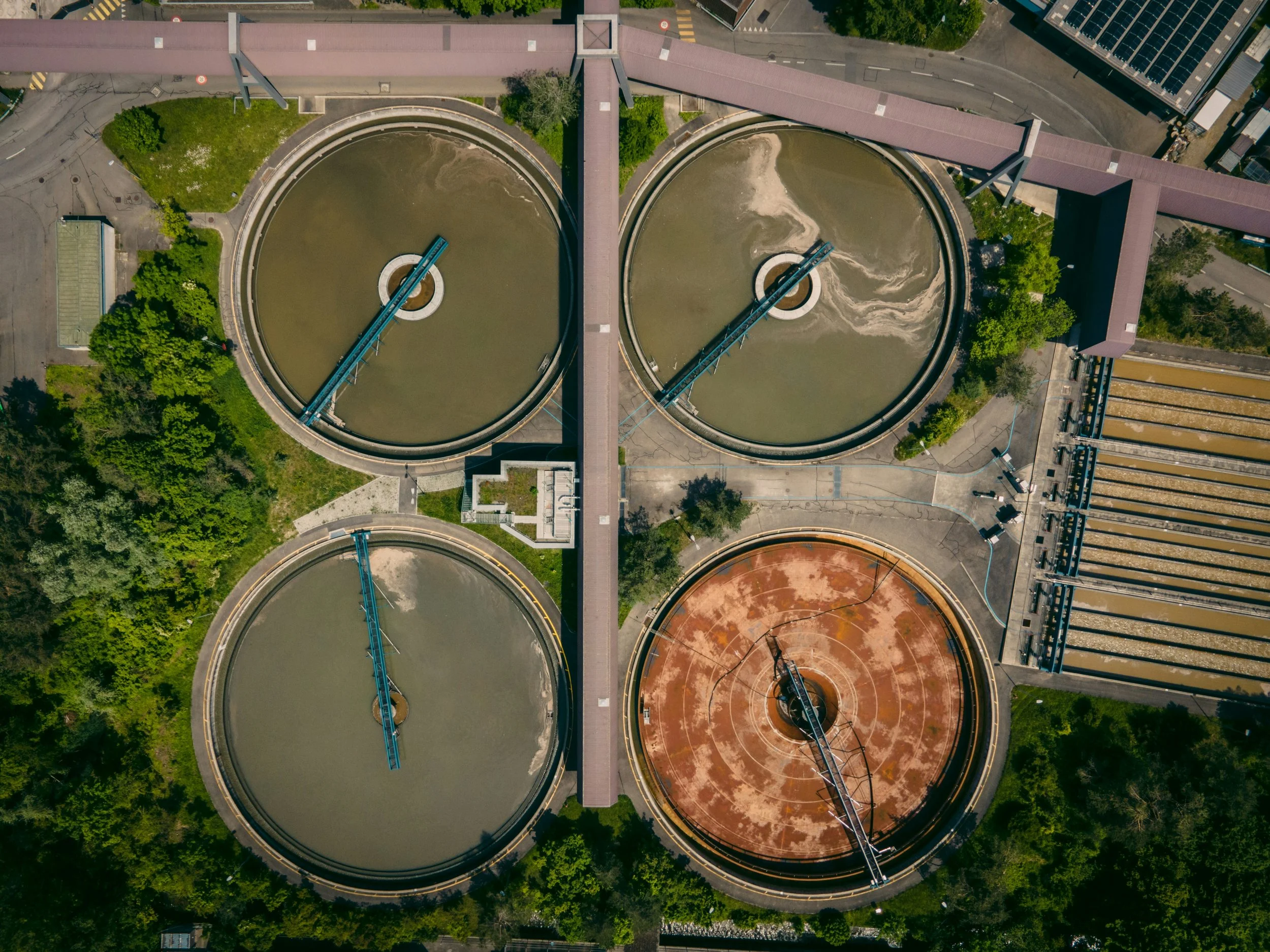
West Virginia’s Wastewater Infrastructure
This Science & Technology Note notes the main processes involved in wastewater treatment, addresses the widespread needs of community and private wastewater systems in West Virginia, and provides a policy option for the state via required septic system inspections.
Updated June 11, 2026
Research Highlights
Wastewater treatment allows water to be cleaned and returned to the environment.
Failures in wastewater treatment are a common cause of drinking and environmental water contamination.
West Virginia has more than $32 million in wastewater investment needs.
Septic systems, the most common method of private wastewater treatment, require regular inspections and maintenance to function properly.
Central Appalachia has a lower rate of household plumbing and wastewater connections than the rest of the Appalachian region. Buildings that have wastewater systems can use a private or community wastewater system. Both of these types of systems can have negative environmental and health impacts if they are not maintained properly. This Science & Technology Note explains how wastewater treatment works, highlights the needs of both community and private wastewater systems, and addresses septic system inspections as a potential policy option for the state.
Wastewater Treatment
Wastewater treatment is designed to remove pollutants and bacteria from water so it can be returned to the environment. The first step is often filtering wastewater to separate liquid and solid wastes. The solid portion of the wastewater, referred to as “sludge”, is often treated to remove harmful bacteria. The sludge can then be burned, buried, composted, or used as fertilizer. The liquid portion can be further filtered, treated, and disinfected before being discharged back into the ground, streams, or rivers. The specific procedures used will often depend on the waste and its properties, and the differences between systems can be large. Failures in wastewater treatment can lead to poor environmental water quality or contamination of drinking water systems. Wastewater contamination is one of the most common causes of bacteria found in drinking water and environmental waters in the state.
Community Wastewater Systems
The American Society of Civil Engineers gave West Virginia’s public wastewater infrastructure a “D” grade, citing poor connectivity to public wastewater systems and high levels of wastewater infrastructure needs. West Virginia has the highest regional need for wastewater investment per capita, requiring about $3,500 per person for a total of $32.5 million to resolve identified public wastewater needs. Nearly 70% of community wastewater systems in West Virginia have at least one identified need. The majority of these needs include repairs to pipe systems, system expansions, and improved wastewater treatment technologies.
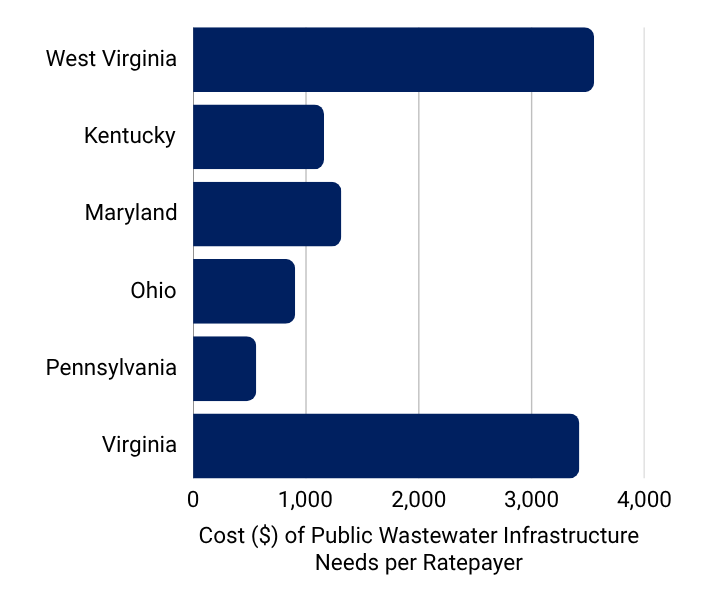
West Virginia has the highest public wastewater infrastructure investment needs per capita out of all Appalachian states. Adapted from Appalachian Regional Commission.
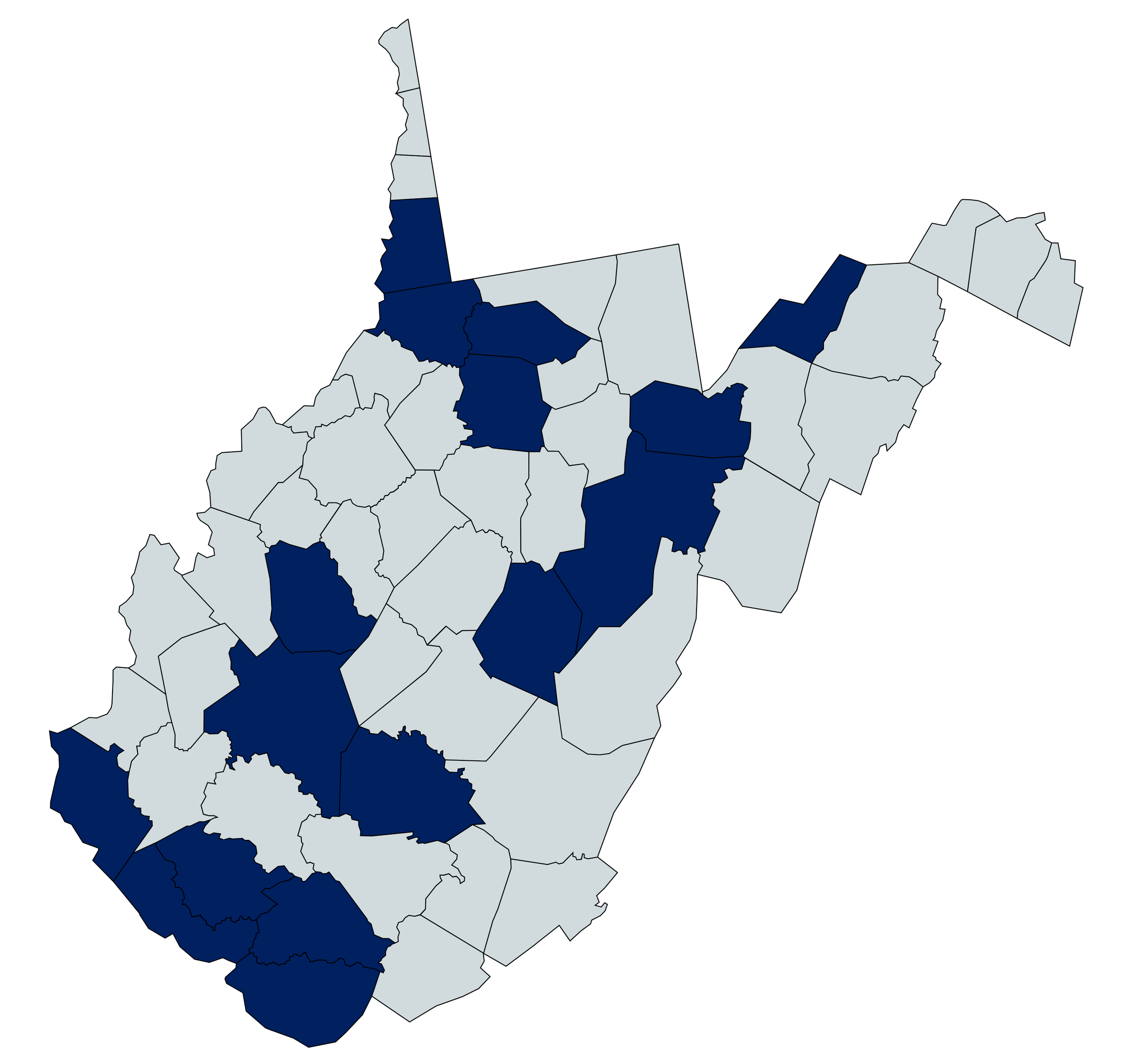
Current community wastewater bills in West Virginia range from $10 - $100 per 3,400 gallons of wastewater. Utilities may raise their rates to accommodate infrastructure improvements, but rate increases must be approved by the West Virginia Public Service Commission (PSC). If community wastewater systems are not serving their customers properly, the PSC can designate utilities as “distressed or failing”. If improvements are not made, the PSC can require another wastewater utility to take over the failing system’s functions. As of October 2025, 25 wastewater utilities across the state were considered distressed or failing.
Private Wastewater Systems
In areas that are not served by a community wastewater system, private wastewater systems are used. Around 40% of West Virginians rely on private systems to clean their wastewater and return it to the environment. Private systems are more common in rural areas. Private septic systems also have fewer regulatory requirements than community systems, and are reliant on proper periodic maintenance to continue to function well. Private systems are classified as conventional or non-conventional, depending on which type of technologies are used. Conventional systems are generally preferred, with non-conventional systems being used in the case of complete conventional system failures or unsuitable soil conditions. Owners are responsible for maintenance and upkeep of their private systems.
Septic tanks, the most common type of private wastewater system, need to be inspected and pumped on a regular basis. Currently, West Virginia only requires inspections if a septic tank will be installed or modified. If inspections and pumping are not performed regularly, the tanks can fail and overload the surrounding area, causing floods or backups of raw sewage. The US Environmental Protection Agency estimates that about 20% of septic systems have some sort of failure. Lack of septic maintenance is a common cause of drinking water contamination in places that use both private wastewater and drinking water systems.
However, not all locations are amenable to septic systems. Installation requires enough room to fit the tank, specific soil types, and specific rates of ground sloping, which can be difficult to find in some areas of the state. Due to this, not all places that are not served by community wastewater systems have private septic systems. In some areas of southern West Virginia, approximately ⅔ of homes discharge untreated wastewater directly into creeks, through a process known as straight-piping. Straight-piping contributes to bacterial contamination of drinking and environmental waters across the state. In the 2026 legislative session, HB 4471 would have explicitly removed straight piping as a wastewater removal method in rental properties across the state, but the bill did not pass the Senate.
Wastewater Policies
If the state wanted to address wastewater infrastructure in the state, one option could be to address frequent septic system failures. Since septic tank inspections are a vital component of system maintenance and water safety, the West Virginia legislature could opt to make ongoing inspections mandatory. Although West Virginia requires initial installations of septic systems to be approved, there is no specific statewide requirement for periodic inspections of private systems. Ohio requires ongoing inspections and maintenance in order to keep an individual septic system operation permit. Implementing a similar system in West Virginia could help to reduce incidences of septic failure and water contamination, however, may introduce an additional cost to septic system owners. Routine inspections often cost $150-$600, but if problems are identified, costs can increase further.
Counties with failing/distressed wastewater systems as determined by the WV PSC.
This Science and Technology Note was prepared by Madison Flory, PhD, West Virginia Science & Technology Policy Fellow on behalf of the West Virginia Science and Technology Policy (WV STeP) Initiative. The WV STeP Initiative provides nonpartisan research and information to members of the West Virginia Legislature. This Note is intended for informational purposes only and does not indicate support or opposition to a particular bill or policy approach. Please contact info@wvstep.org for more information.