Nuclear Waste Recycling in West Virginia
Recycling spent nuclear fuel is a proposed method to reduce the amount of nuclear waste generated from nuclear power plants. Enough spent nuclear fuel exists to power the US for an estimated 150 years, but there are concerns that the recycling process could facilitate building nuclear weapons. This Science and Technology Note builds upon a previous Note focused on nuclear energy and discusses current methods used to store spent nuclear fuel, recycling technologies, and options West Virginia could pursue.
Updated April 27, 2026
Research Highlights
Spent nuclear fuel is stored under large amounts of water or in cement casks, however, neither is considered a permanent storage option.
A new spent nuclear fuel recycling method aims to harness large amounts of energy and decrease concerns surrounding nuclear weapons construction.
West Virginia could seek to attract companies to build spent nuclear fuel recycling facilities similarly to Tennessee, which aims to have one built by 2030.
Nuclear Energy Waste
Nuclear reactors generate spent nuclear fuel (SNF), fuel that has previously been used in a nuclear reactor, as waste. The US currently has about 90,000 metric tons of SNF from commercial nuclear reactors and generates about 2,000 metric tons of SNF each year, enough to fill about half of an Olympic-sized swimming pool. Spent fuel remains radioactive for tens of thousands of years, and therefore needs to be stored in specialized storage facilities to remain safe for the surrounding environment, workers, and residents. There are 70 SNF storage facilities in 35 states around the country, none of which are in West Virginia.
There are two primary ways that SNF is stored. SNF is removed from a reactor after 3-7 years, and is transferred to an SNF pool at the reactor site. These pools are used for initial SNF cooling. The pools maintain at least 20 feet of water above the SNF in order to provide protection from radiation for years. After SNF has cooled for at least one year, it may be transferred to dry cask storage. There are several dry cask storage designs, which generally involve surrounding the SNF with leak-tight steel encased in a concrete vault to provide radiation protection for workers and residents. Dry casks are currently stored at reactor sites, similarly to SNF pools. Due to increased SNF accumulation and space limitations, the Nuclear Regulatory Commission (NRC) is reviewing applications to permit Consolidated Interim Storage Facilities (CISFs). A CISF would enable dry cask storage not at a nuclear reactor site while awaiting a permanent storage solution. The NRC is currently reviewing two CISF applications in Texas and New Mexico.
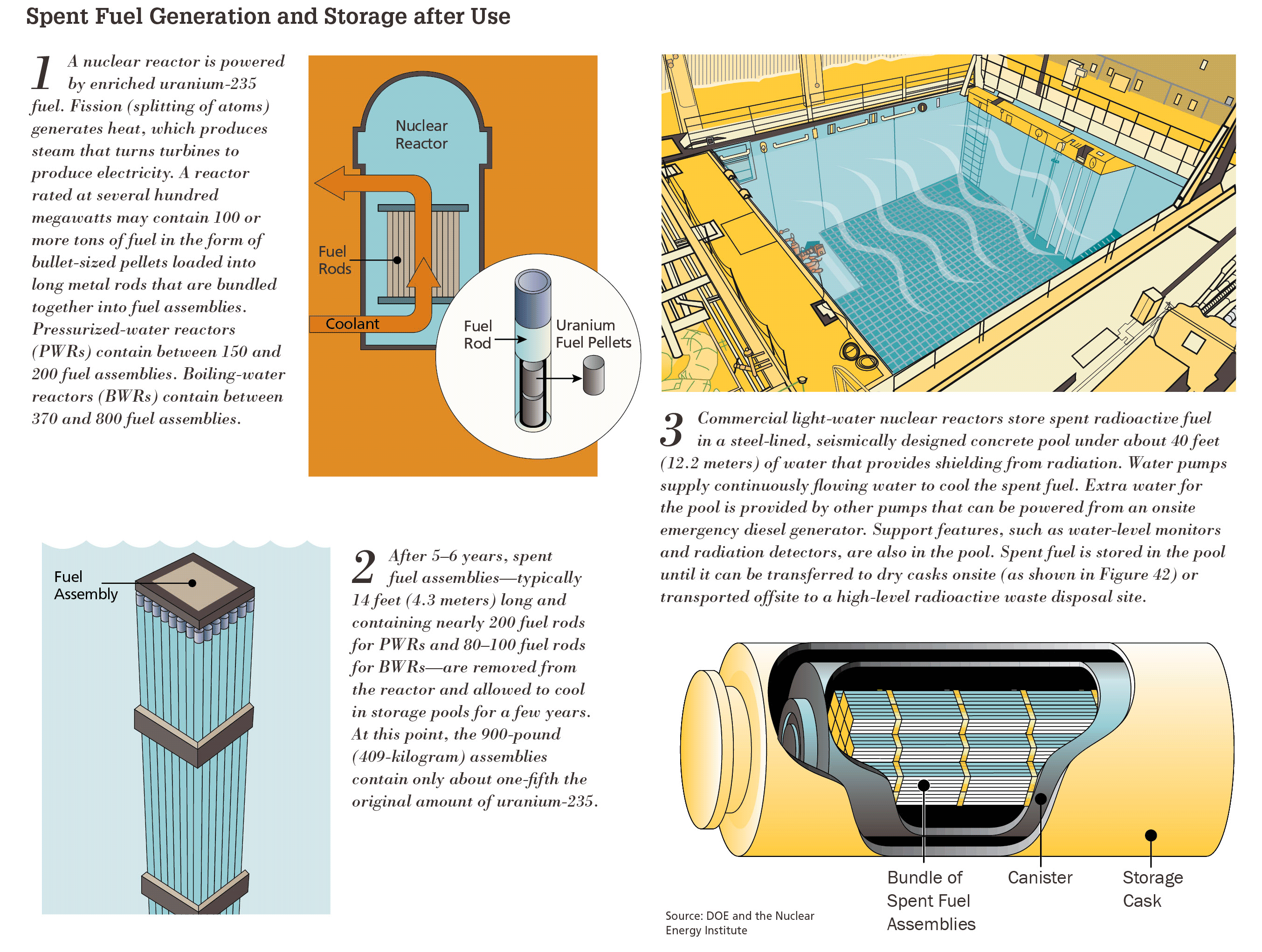
Because SNF remains radioactive for tens of thousands of years, SNF pools and dry cask storage options are considered interim options instead of permanent solutions. To date, policymakers have been unable to decide how to handle SNF in a permanent manner. One solution proposed in 2008 was to store SNF under Nevada’s Yucca Mountain, however NRC review ended in 2011 due to a loss of federal funding. Because of the NRC’s authority over SNF, this is a decision that must be made at the federal level. Though unclear, it may be possible for states to pass legislation preventing SNF to be stored within a state similarly to a state's authority to prevent nuclear reactors from being built.
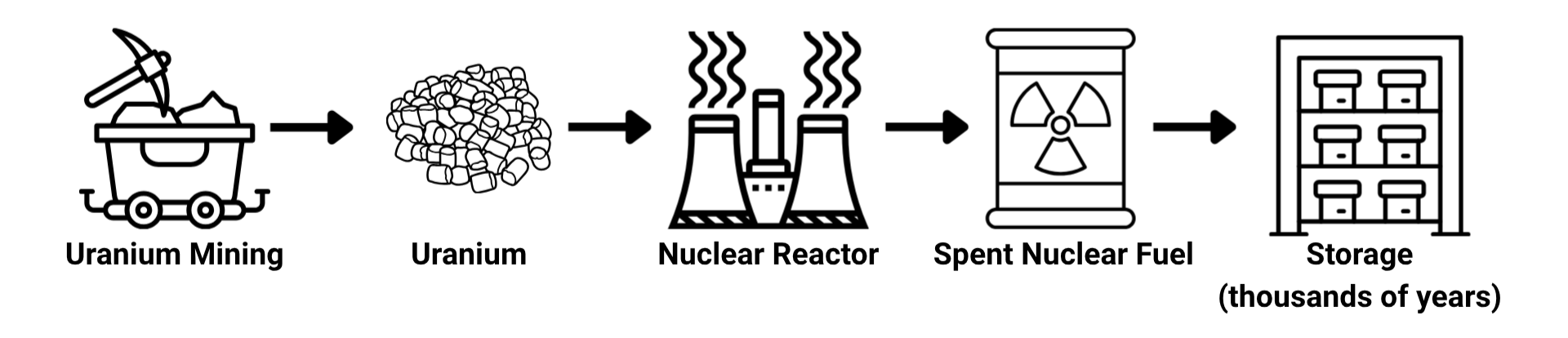
Uranium when used in traditional nuclear power generation.
Spent Nuclear Fuel Recycling
One option to help circumvent the increasing amount of SNF in the US and its need for long term storage is to recycle the SNF. SNF recycling would allow more energy to be harnessed from the uranium used in the reactors. The current reactors in the US use less than 5% of the energy contained in uranium. This is because byproducts from the nuclear energy generation process act like a sponge and absorb the molecules needed to maintain the reaction. When enough of these byproducts build up, the nuclear reaction is not able to be sustained and ends before all of the energy can be used.
Recycling SNF could increase the amount of energy reactors are able to harness. The United States Department of Energy (DoE) estimates that recycling SNF could reduce the amount of uranium needed to operate reactors and reduce the amount of waste by up to 90%. The International Atomic Energy Agency also estimates that because more of the radioactive elements are being used for energy rather than stored, waste from SNF recycling would remain radioactive for 200-300 years as opposed to tens of thousands of years for waste from non-recycled uranium.
The general process of recycling SNF is to submerge it in a liquid and use an electric current to separate the usable uranium from the waste. There are two primary methods used to facilitate the recycling process: plutonium uranium reduction extraction (PUREX) and pyroprocessing. PUREX is the most common method used for SNF recycling and is the only method used at commercial scale. The uranium obtained from the PUREX method is very pure, which has led to concerns that this technology could be utilized to recycle SNF into the type of fuel needed for nuclear weapons. Pyroprocessing was developed more recently than PUREX and results in uranium with some impurities. These impurities alleviate the concern over nuclear weapons generation while still allowing the uranium to be used for energy generation.
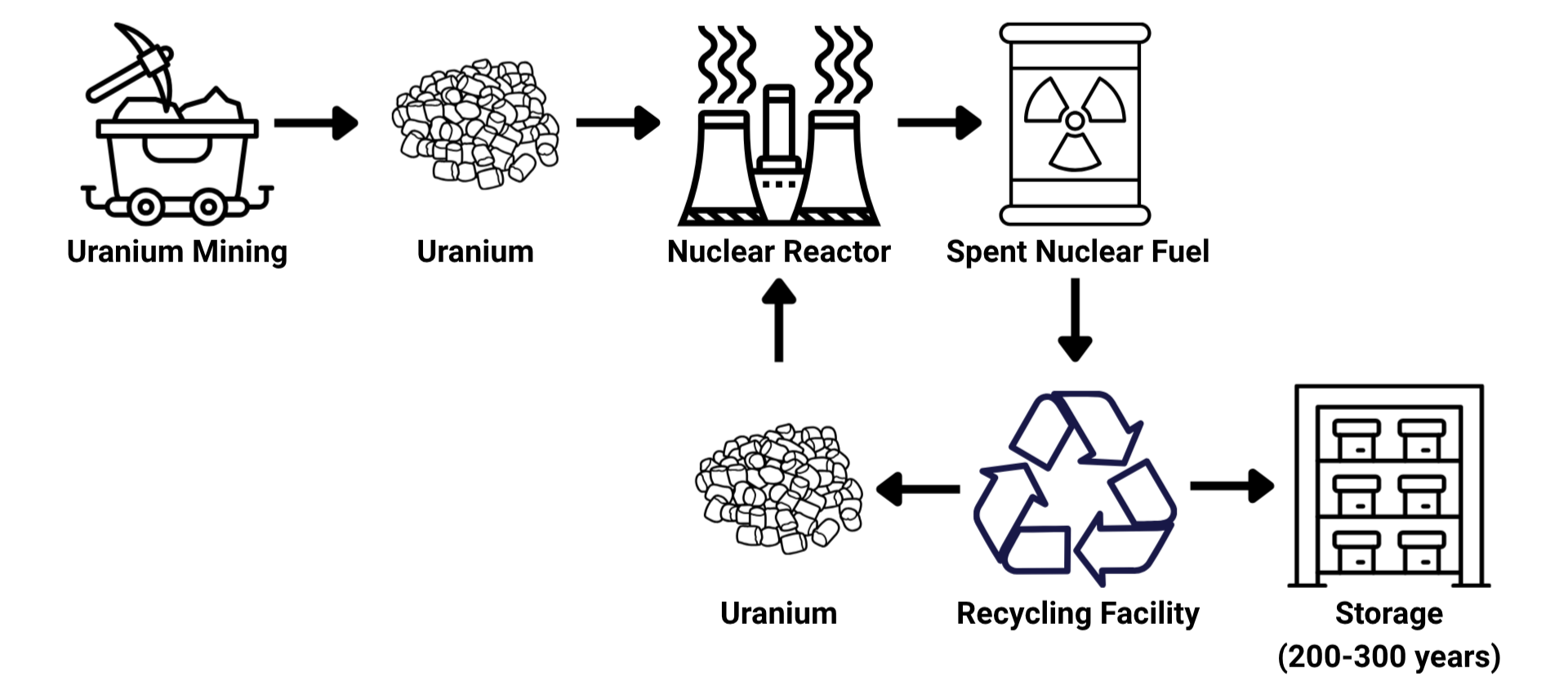
Uranium lifecycle upon SNF recycling.
Opinions on recycling SNF are mixed. Advocates argue that this would reduce the amount of nuclear waste that needs to be buried and decrease the need to mine more uranium. They also estimate that recycling the current supply of SNF would provide enough energy to power the US for the next 150 years. Those against SNF recycling, however, argue that this technology could help create more nuclear weapons and that the waste still remains radioactive for many years.
Recycling options are also costly. A 2005 Harvard Kennedy School of Government study found that the cost of recycled uranium was ~$454 per pound compared to ~$87 per pound of mined uranium, though this study was done before the advent of pyroprocessing so it may be worth revisiting cost differences with this in mind.
Spent Nuclear Fuel Recycling Programs
The US’ ban on SNF recycling was repealed by President Reagan in 1981, however, there are no commercial recycling plants operating in the US. This is in contrast to Russia and France, which have commercial SNF recycling plants, and Japan, where one is finalizing construction. The DoE does support research grants investigating this technology.
Policy Options for West Virginia
West Virginia could work to attract companies seeking to establish SNF recycling facilities. This would be similar to Tennessee, which has provided loans to a company building the first commercial size uranium recycling facility in the US using pyroprocessing technology. This endeavor plans to create 800 full-time jobs and invest about $1.68 billion in the state and is expected to be operational in 2030. If West Virginia were to pursue these facilities, it could lead to job growth and large investments within West Virginia. However, companies would need to make large financial investments in order to bring these to fruition, which have caused other facilities to close. Additionally, state incentives would need to be coordinated with the NRC, which would ultimately have authority over permitting the use of uranium at the facility. The Tennessee plant aims to use pyroprocessing technology which cannot be used to fabricate a nuclear weapon, reducing concern about nuclear proliferation. There is also a lack of nuclear reactors able to process this type of fuel, though several are in the process of being built, including one in Indiana.
West Virginia could also choose not to pursue SNF recycling. This would maintain the current status quo in West Virginia, and would not impact current energy generation programs in the state. Not pursuing these facilities would likely also reduce health concerns that communities have posed about being near nuclear plants, like higher cancer mortality.
This Science and Technology Note was prepared by Nathan G. Burns, PhD, West Virginia Science & Technology Policy Fellow on behalf of the West Virginia Science and Technology Policy (WV STeP) Initiative. The WV STeP Initiative provides nonpartisan research and information to members of the West Virginia Legislature. This Note is intended for informational purposes only and does not indicate support or opposition to a particular bill or policy approach. Please contact info@wvstep.org for more information.