Nuclear Energy in West Virginia
Nuclear power plants generate electricity by breaking uranium apart at a molecular level. This is a technically challenging process that is heavily regulated at both the state and federal levels. Though it is generally considered a clean source of energy due to its lack of emissions, some environmental advocates worry about the potential of nuclear waste to contaminate the environment. This Science and Technology Note explores how nuclear reactors generate electricity, current regulations surrounding nuclear energy production, and policy options West Virginia could seek to pursue.
Updated April 24, 2026
Research Highlights
Nuclear reactors generate electricity by breaking apart uranium at the molecular level.
About 18% of all US energy produced in 2025 was generated by nuclear energy.
With the recent repeal of West Virginia’s ban on nuclear reactor construction, the state could seek to diversify power generation by constructing nuclear power plants, as 28 other states have done.
How do Nuclear Reactors Work?
Nuclear reactors generate electricity using steam produced from nuclear reactions to spin turbines. Most reactors use uranium, which is found naturally in soils and rocks, as fuel. There are two chemical forms of uranium: U-238 and U-235. U-238 makes up about 99.3% of naturally-occurring uranium while U-235 makes up about 0.7%. U-235 is used in nuclear reactors because it is less stable than U-238, but it needs to be enriched to 3-5% U-235 so there is enough of it for the process to occur. Enrichment plants concentrate U-235 the way a salad spinner works by spinning fast enough for water to separate from the lettuce. Similarly, uranium is spun at high speeds to separate U-235 from U-238.
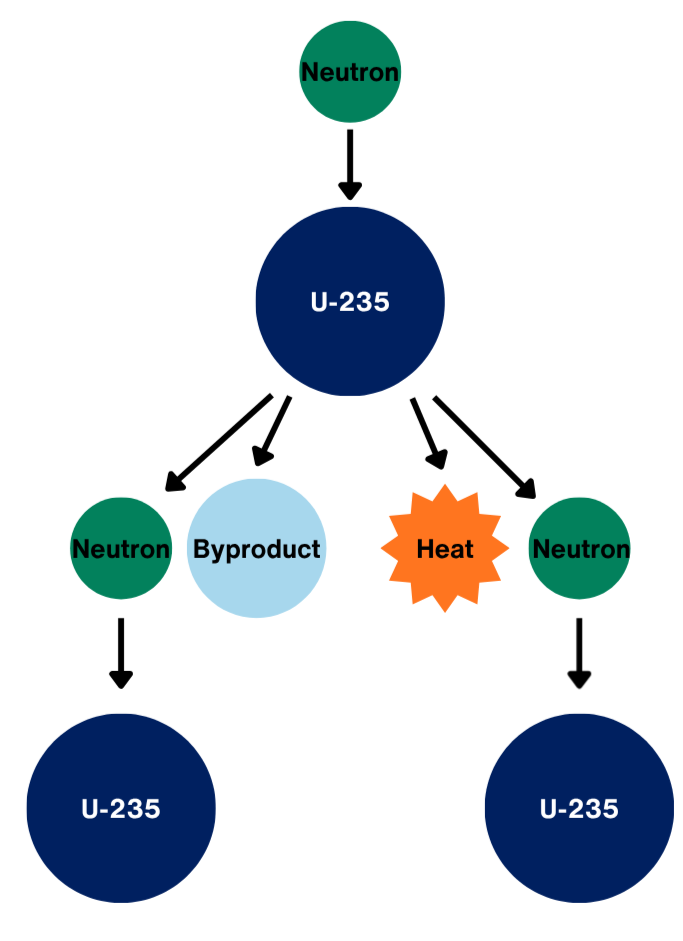
To generate energy in a nuclear reactor, neutrons are shot at U-235, generating more neutrons to continue the chain reaction, and heat to generate energy.
Nuclear reactions generate energy through fission, which involves breaking uranium atoms through a chain reaction. To do this, a neutron (a small molecule) is shot at U-235, breaking it apart. This is similar to how the cue ball breaks apart racked balls on a pool table. When U-235 breaks apart, it generates heat and additional neutrons fly out, breaking apart more U-235, over and over again under controlled conditions. Uranium pellets used in these reactions are packed into metal fuel rods. Fuel rods are surrounded by different coolants depending on the type of reactor used. All commercial nuclear reactors in the US are light-water reactors and use water as a coolant. Alternatively, fast reactors use molten metal or salt as coolants. The coolants transfer heat from the hot fuel rods to water, which becomes steam and turns turbines, generating electricity. There are no fast reactors currently in commercial use in the US, though there are several in the planning stages including in Indiana and Texas.
Nuclear energy is a major electricity generator in the US. In 2025, US nuclear energy produced 784.8 TWh, enough to power over 72 million homes. This represents about 18% of the US’ total power generation and was the second largest power generation method after natural gas. Similarly, nuclear energy accounts for about 18% of the installed capacity on the PJM network, behind natural gas (49%) and coal (21%). Nuclear energy is clean, as it does not release air pollutants and does not generate carbon dioxide emissions. It is a reliable energy source, as nuclear energy plants have operated at full capacity more than 90% of the time since 2016. This is more reliable than coal plants, which supply 87% of West Virginia’s energy, and operate at full capacity 40-50% of the time. Nuclear energy critics point to the risks of nuclear weapons proliferation, as uranium enrichment methods for a reactor are the same used to make bombs. Critics point out the possibility of an accident and release of radioactive waste into the environment. They also point to the waste generated in reactors that needs to be specially stored, as it is radioactive for over 100,000 years. Nuclear energy is expensive, mostly due to construction costs which may decrease with the advent of small modular reactors, though they are cheap to operate. Costs vary depending on the size of the power generation plant, but recent analysis by the Harding Loevner investment firm estimates that costs to build traditional nuclear reactors are almost double that of a coal-fired plant and up to 7 times more than a gas-fired power plant generating the same amount of energy.
Nuclear Energy Regulations
Nuclear power plant and spent nuclear fuel regulation resides with the US Nuclear Regulatory Commission (NRC). States may make economic, zoning, siting, and ratemaking decisions for nuclear power generators. However once a developer is approved for a site upon which to build a nuclear reactor, approval for the reactor plans must be approved by the NRC. West Virginia does not currently have nuclear power plants or waste storage, though it seems poised to allow their construction as the Legislature repealed the ban on constructing nuclear reactors in 2022 (SB 4). The Legislature also sought to include nuclear power generators under the purview of the West Virginia Public Service Commission (HB 2205, 2025), but it did not pass the Senate.
Policy Options for West Virginia
West Virginia could pursue nuclear power generation, which would require constructing nuclear reactors in the state. The most recent nuclear power reactor was completed in 2024 in Georgia. There are no traditional reactors currently under construction, though several applications have been approved, including one in Virginia.
Nuclear power could help diversify West Virginia’s existing power generation sources, which are currently heavily reliant on coal and natural gas. Nuclear power could also help reach Governor Morrisey’s “50 by 50” power generation plan and President Trump’s goals of increasing nuclear energy, including a 2025 deal to bring international investment to build nuclear reactors and federal tax incentives. This could appeal to environmental advocates by utilizing clean energy sources that do not generate pollution. Nuclear power plants in West Virginia are predicted to create thousands of construction jobs in addition to 600 full time jobs, creating economic benefits for communities. However, other estimates suggest that if West Virginia were to pursue nuclear power generation, it would be a costly and time-consuming endeavor, likely requiring at least $4 billion and taking at least 5 years to construct, though newer approaches like small modular reactors may lower costs. The Legislature should also consider possible pushback from the State’s history of coal and natural gas power generation, however data from a Gallup Poll indicate 61% of the US public support the use of nuclear energy.
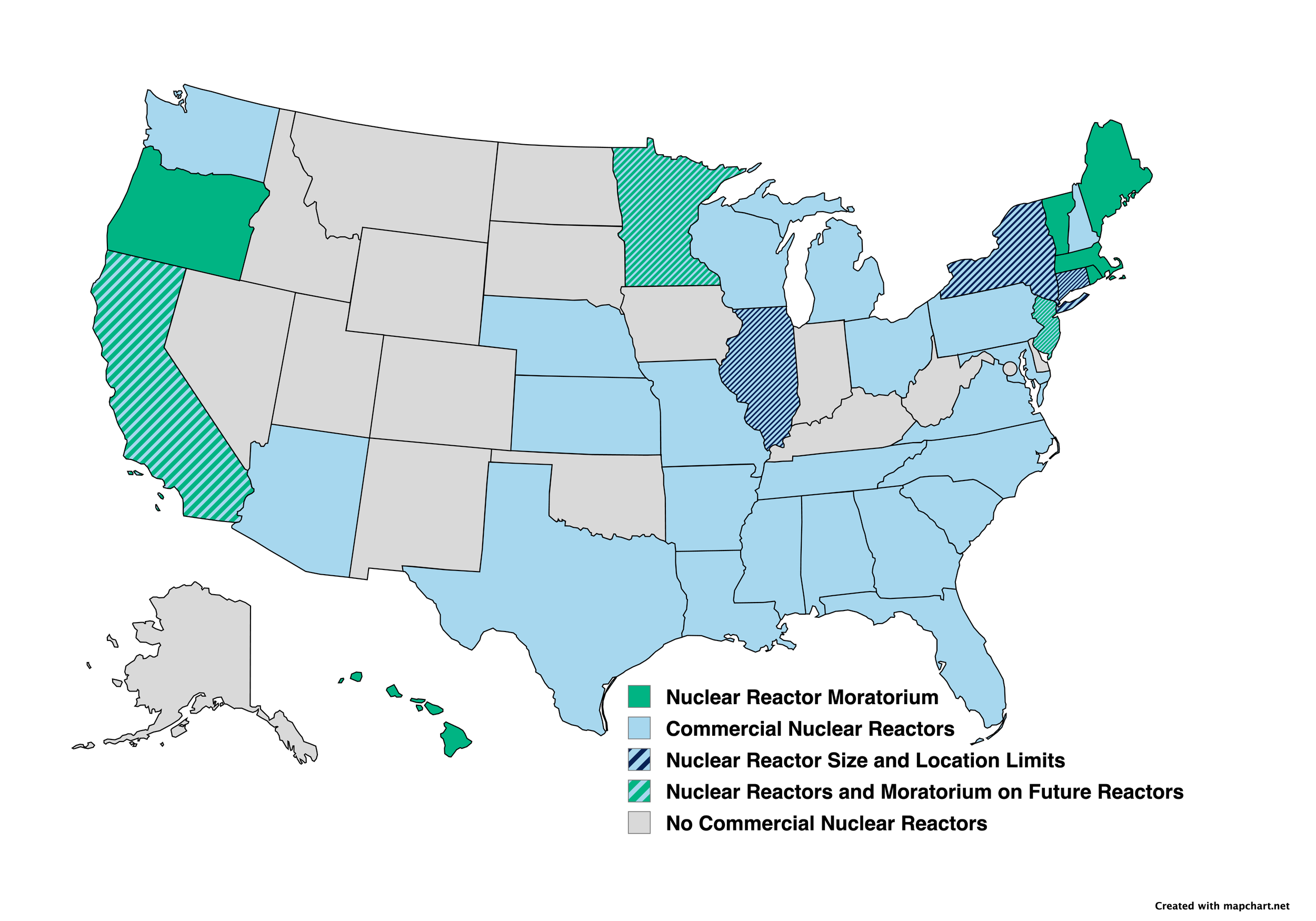
Data from the Energy Information Administration and Department of Energy.
Alternatively, West Virginia could forego nuclear energy. This would be similar to 9 other states that have a ban on constructing new nuclear power plants. Foregoing nuclear energy would likely satisfy public opposition, including the risks of radioactive spillage into the surrounding environment. Relying primarily on coal and natural gas, as West Virginia has done historically, would be cheaper upfront, as infrastructure for those energy generation sources would not need to be built, though power companies are in the process of costly repairs to existing coal-fired power plants. Relying primarily on coal and natural gas, however, would likely upset environmental groups seeking to pursue cleaner, renewable forms of energy, as coal and natural gas are both non-renewable and produce emissions.
This Science and Technology Note was prepared by Nathan G. Burns, PhD, West Virginia Science & Technology Policy Fellow on behalf of the West Virginia Science and Technology Policy (WV STeP) Initiative. The WV STeP Initiative provides nonpartisan research and information to members of the West Virginia Legislature. This Note is intended for informational purposes only and does not indicate support or opposition to a particular bill or policy approach. Please contact info@wvstep.org for more information.