
West Virginia’s Electric Generation Capacity
West Virginia produces approximately 16 GW of electricity. Demand is projected to grow over the next ten years, linked to the growth in data centers and industry. In order to meet this demand, generation capacity must be increased. This updated Science & Technology Note provides information on the increasing demand for electricity, the ability of West Virginia’s 4 major electric utilities to meet projected demand, and analyzes the ability of recent West Virginia legislation to address the increasing need for electric generation capacity.
Updated April 24, 2026
Research Highlights
Regional energy demand may increase by 25 GW by 2030, primarily due to the increase in data centers.
2 of West Virginia’s 4 major electric utilities project that they will not be able to meet demand using their own generation resources by 2035.
West Virginia recently passed the Comprehensive Energy Policy and Development Plan Act of 2026 and the Comprehensive Grid Stabilization and Energy Security Act of 2026, designed to promote increased generation capacity in the state.
Electric Generation Capacity Demand
The demand for electricity, both in West Virginia and across the country, is growing. About 50% of the demand growth across the US is attributed to the growth of data centers. Additional demand is linked to increasing extreme temperatures, electric vehicle adoption, and projected increases in the US manufacturing sector. Power use in the US is expected to outpace generation capacity by 2030, increasing the risk of power outages by over 100x. PJM, the regional system operator that controls generation and transmission in 13 states, including West Virginia, is projected to need an additional 25 GW of generation capacity by 2030, 15 GW of which is derived from data center growth. Increased electric demand was one factor that drove the price of electricity in PJM’s capacity market from $28.92/MW in 2024-2025 to $269.92/MW in 2025-2026. Analysis of the PJM system found that if projected generation retirements occur without any additional generation capacity, reliability and resilience requirements will not be feasible.
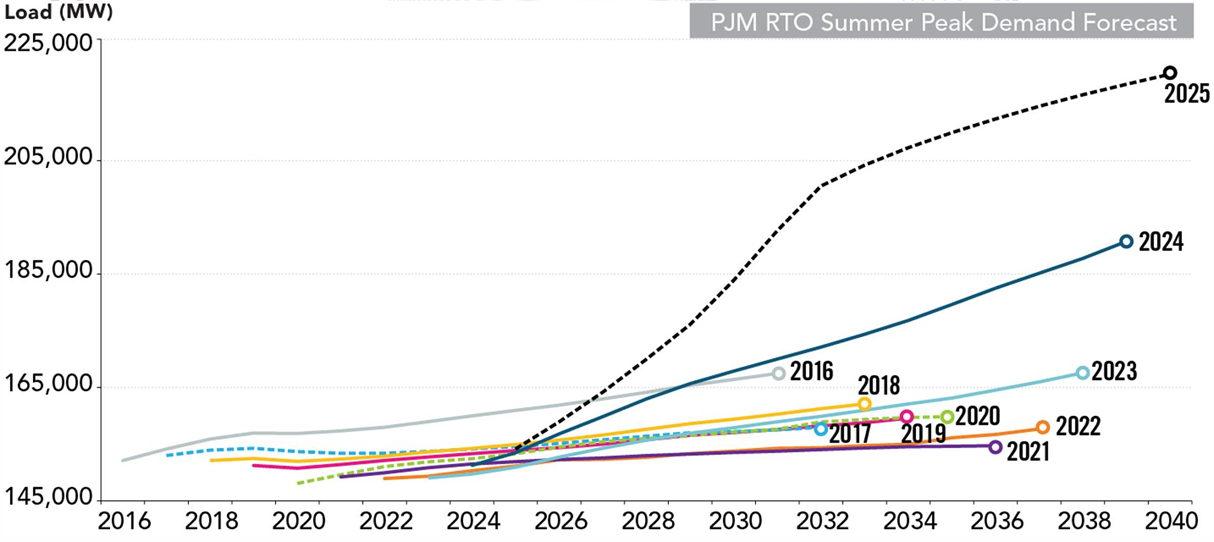
PJM’s projected electricity demand to 2040. Each line shows the demand projection made in that year. Demand is projected to increase strongly between 2026 and 2031, then more gradually to 2040. From June 2025 PJM West Virginia State Infrastructure Report.
Generation capacity can be increased by bringing new generators into operation or by delaying the retirement of older generation plants. Plants can be retired for many reasons, including economic and environmental, and require a two-quarter notice to PJM. As new generators come online and older plants retire, the mix of energy sources is changing. Regionally, PJM currently sources most of their electricity through natural gas, coal, and nuclear generation. West Virginia’s utilities rely heavily on coal, with natural gas and wind as secondary contributors to generation capacity. Plans to bring on additional capacity have focused on more renewable resources, including solar, wind, and battery storage. A large portion of West Virginia’s future capacity is planned to be natural gas. PJM has stated that 21% of their existing capacity is at risk for retirement by 2030, so bringing new generation online is essential to meet the increasing electric demand and required reserve generation requirements.
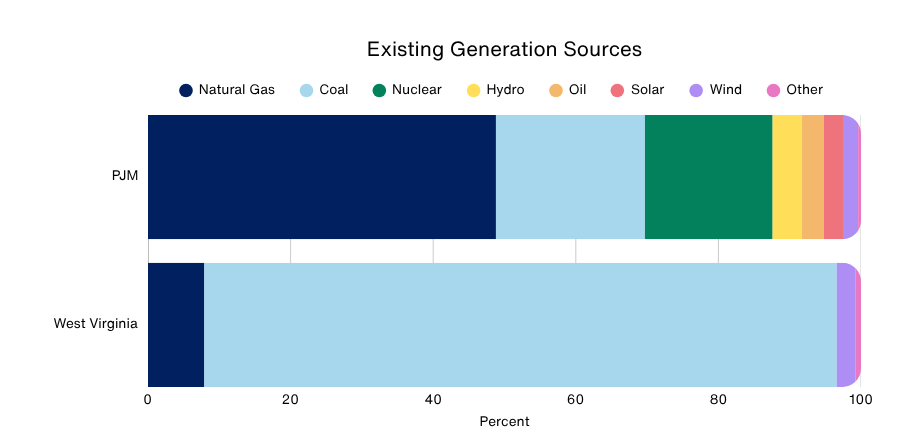
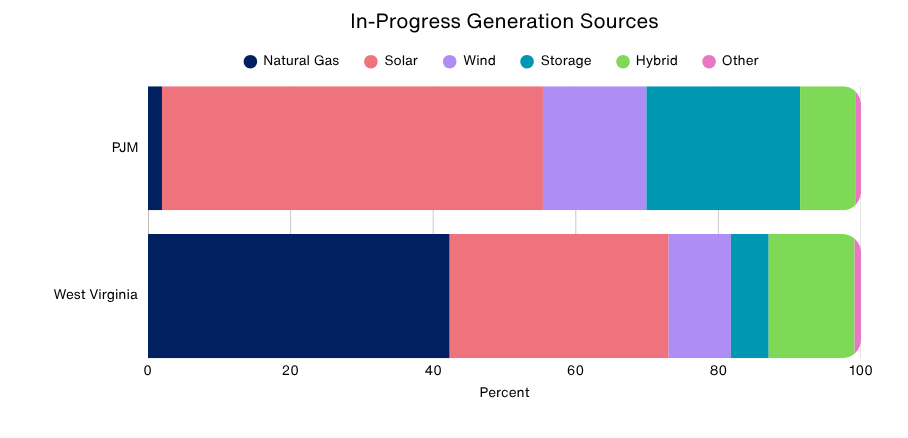
West Virginia currently relies on coal for the majority of its electricity. The wider regional grid uses natural gas for most of its energy. Future projects coming online lean more heavily towards renewable resources.
Sources contributing 2% or less of total generation capacity were combined into the “Other” category. These included biofuels in Existing Generation Sources, and nuclear, hydroelectric power, and coal in In-Progress Generation Sources. Adapted from June 2025 PJM West Virginia State Infrastructure Report.
Some utilities are also delaying the retirement of aging plants to preserve generation capacity, but this may lead to increased maintenance and repair costs that could be passed on to consumers. Even as new generation plants are built, the electric grid must have enough transmission capacity to move the electricity from where it’s generated to where it's needed. Nearly 50 GW of new generation capacity is awaiting grid connection through PJM, often due to extensive permitting and siting issues, supply chain delays, and lack of transmission capacity.
West Virginia’s Electric Utilities
West Virginia has 4 major electric utilities (Appalachian Power Company - APCo; Wheeling Power Company - WPCo; Monongahela Power Company - MPCo; and the Potomac Edison Company - PECo). Over the next 10 years, APCo and WPCo expect to grow their capacity and have a slight decrease in load. They project that they will be able to meet electric generation demand internally. MPCo and PECo expect to experience increased demand without capacity growth. They project a shortfall of ~800 MW of electricity by 2035 that they will need to purchase through the PJM marketplace. There are an additional 5 electric utilities in the state that do not generate their own electricity, and instead purchase it all. Shortfalls in generation capacity may necessitate purchasing of electricity at higher prices, resulting in higher bills for consumers. West Virginia’s electric prices are currently the 21st lowest in the nation, averaging 11.7¢/kWh.
WV Electric Generation Policies
West Virginia’s electricity policy underwent a major overhaul during 2026, as HB 5381 was passed. The Comprehensive Energy Policy and Development Plan Act of 2026 and the Comprehensive Grid Stabilization and Energy Security Act of 2026, contained in HB 5381, aim to prioritize increased energy reliability and efficiency, low energy costs, and energy security. It notes that policies should increase West Virginia’s generating capacity to 50 GW by 2050, allow coal-fired power plants to remain open until 2050, and make the state the leading exporter of electricity in the nation - West Virginia is currently the US’s 3rd leading exporter of electricity per capita. The bill directs state agencies to reduce the regulatory burden surrounding generation projects, including for siting and permitting. These priorities reflect those introduced in Governor Morrisey’s “50 by 50” electric generation plan. Both the development of new generation capacity and the focus on regulatory issues may help to increase the state’s energy production and provide a reliable supply of electricity into the future.
These priorities highlight the differences between West Virginia’s energy policies and the practices of other states in the PJM region. West Virginia is 1 of 3 states in PJM’s 13 state territory that does not have a code requirement for a specific portion of electricity to come from renewable resources. Nationally, 28 states have a renewable energy sourcing goal, with more than 20 of these aiming to source a minimum of 50% renewable energy before 2050. These renewable standards may interfere with Governor Morrisey’s goals of becoming the nation’s leading electricity exporter and preserving coal plants, as states with renewable sourcing goals may be less willing to purchase energy produced in the state.
This Science and Technology Note was prepared by Madison Flory, PhD, West Virginia Science & Technology Policy Fellow on behalf of the West Virginia Science and Technology Policy (WV STeP) Initiative. The WV STeP Initiative provides nonpartisan research and information to members of the West Virginia Legislature. This Note is intended for informational purposes only and does not indicate support or opposition to a particular bill or policy approach. Please contact info@wvstep.org for more information.