
West Virginia Foster Care Placement
This Science and Technology Note explores types of placements West Virginia’s foster children are in, and options West Virginia could pursue to bring foster children placed out-of-state back to West Virginia.
Updated January 19, 2026
Research Highlights
West Virginia prioritizes placing children with other family members or close family friends, but children may be sent elsewhere for special circumstances like needing medical treatment.
There is a lack of available capacity to treat all foster care children that need medical or mental health care in West Virginia, causing many of them to be sent to out-of-state care facilities.
The legislature could seek to fund state property renovations to increase foster care capacity, which could help bring out-of-state foster care children back to West Virginia.
West Virginia has 6,008 children placed in foster care and the highest number per capita of any state in the US. There are various reasons as to why a child can be removed from their home and placed in the foster care system, which we have previously discussed in another Note. Many of these children are housed outside of West Virginia. This Science and Technology Note explores types of placements West Virginia’s foster care are in, and options West Virginia could pursue to bring foster children placed out-of-state back to West Virginia.
Foster Care Placements
There are many different types of housing in which foster care children can be placed depending on the child’s needs and space availability. West Virginia requires children to be placed in kinship care unless they need out-of-home medical or mental health treatment or if a suitable home cannot be identified. Kinship care can be provided by a family member such as an aunt or grandparent, or a close family friend the child knows. Half of all of West Virginia’s foster children are in kinship care. Though West Virginia works to ensure the least amount of disruption to a child’s life by trying to house them in kinship care as close to their home as possible, sometimes a child’s only other family lives in another state. In that case, the State places the child with their family out of state.
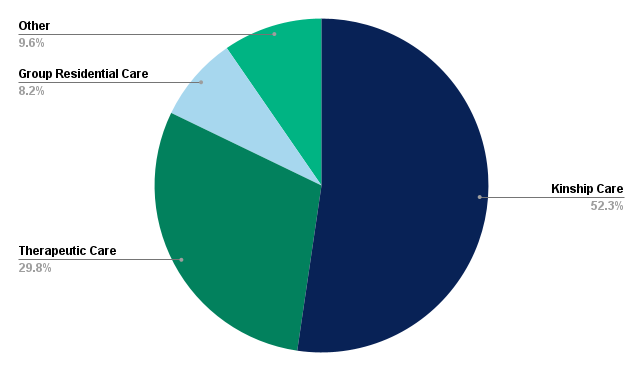
As of November 2025, almost 9% (534 children) of all West Virginia foster care children were residing out of state. Placements span the entire country, but the three states with the most placements are Virginia (109 children), Pennsylvania (107 children), and Alabama (58 children). Though some (27.34%)are living with relatives, the majority live in either group residential care facilities (54.12%) or psychiatric hospitals (17.23%). These placements are likely due to West Virginia’s lack of capacity to house children with acute mental or behavioral health issues.
West Virginia’s foster care placements in West Virginia and out of state. Based on data from the West Virginia Child Welfare Dashboard. “Other” includes placements in: transitional living (3.62%), agency emergency shelters (3.02%), detention (1.3%), psychiatric hospitals (0.53%), transitional living for vulnerable youth (0.51%), specialized family care (0.44%), and hospitals (0.18%).
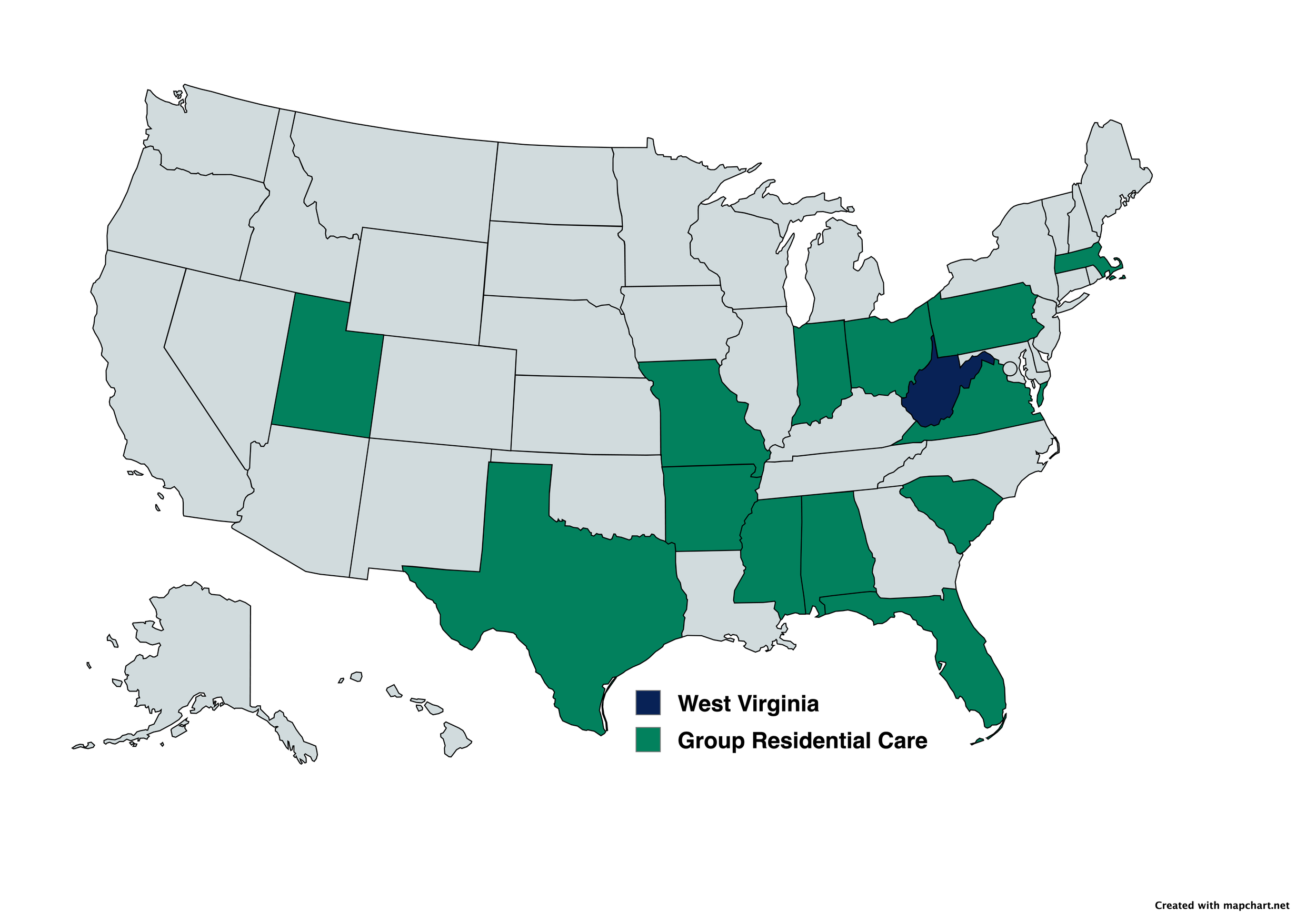
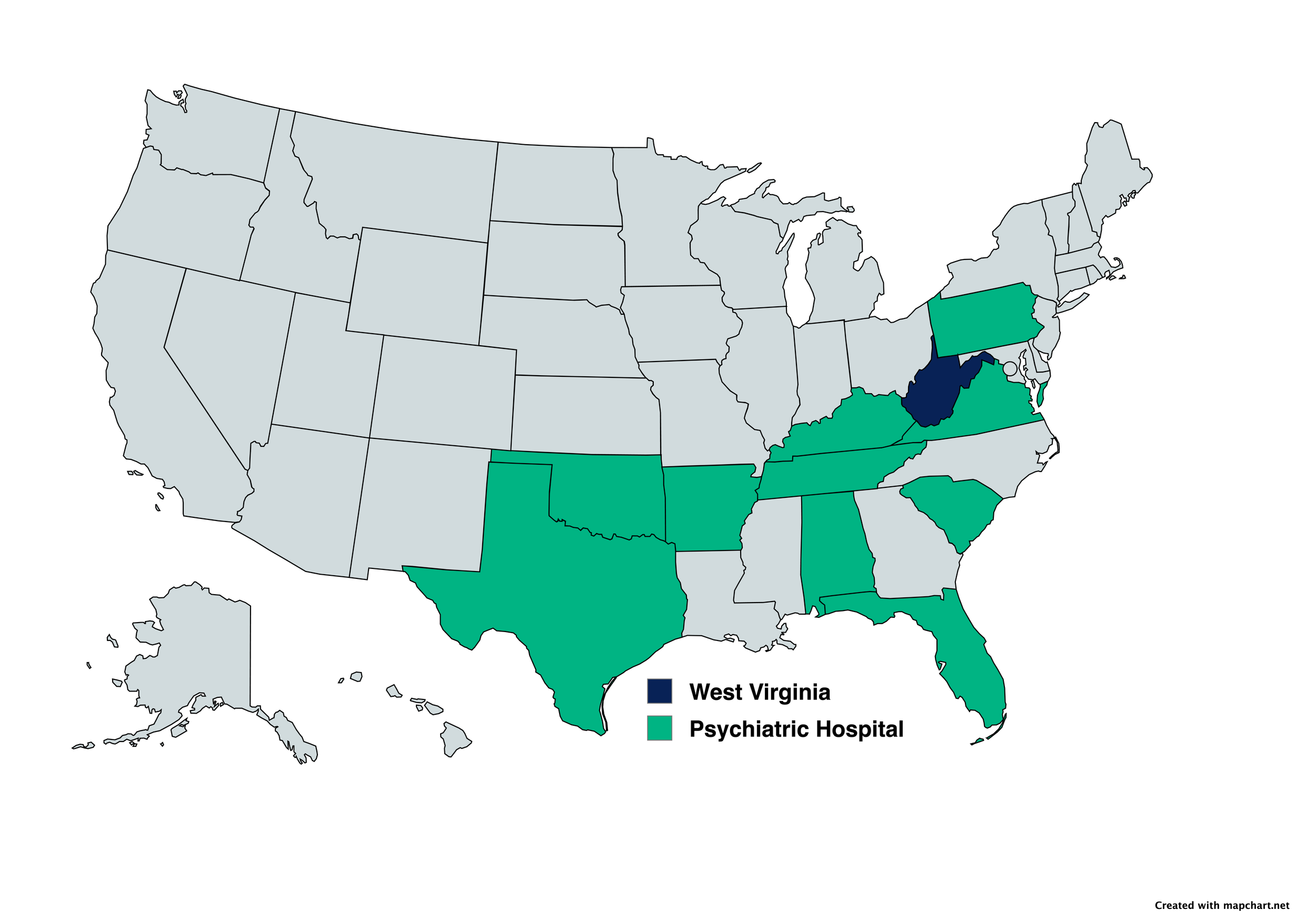
Locations of out of state placements based in group residential care (top) and psychiatric hospitals (bottom). Based on data from the West Virginia Child Welfare Dashboard.
Action in WV
Bringing foster care children placed in out-of-state facilities back to West Virginia has been a stated focus of the legislature and Governor Morrisey, including at the December 9, 2025 Legislative Oversight Commission on Health and Human Resources Accountability. Most out of state placements are in facilities because West Virginia lacks capacity to house enough foster care children. The lack of capacity does not appear to be improving. For example, Barboursville School, a 22-bed youth psychiatric treatment facility near Huntington, recently announced that it will be closing in February 2026 and current patients may be relocated to care facilities out of state. These buildings are owned by the State and leased by River Park Hospital, which cited the need for costly renovations due to recent flooding as the reason for closure. Governor Morrisey recently announced his request to establish a fund to renovate state-owned facilities in order to treat foster care children.
One possible source of funding to help prepare facilities is the Rural Health Transformation Fund. The state was just awarded $199 million for 2026 for this program, with additional funding expected for the next 5 years. One of the stated goals is to help recruit healthcare workers in rural settings. If the legislature sought to renovate properties in rural areas to treat foster children, it could help create jobs to recruit healthcare workers to treat foster care children in these areas. The Rural Health Transformation Fund also seeks to recruit, train, and retain a rural healthcare workforce. If some of these facilities are located in rural areas of the state, these funds could be used to fund loan forgiveness programs for healthcare and mental health workers seeking to work in foster care treatment settings upon their graduation, similar to loan forgiveness programs for medical students seeking to work in underserved areas. This could potentially also lead to increased indirect full-time jobs to staff the facilities, helping others in those communities.
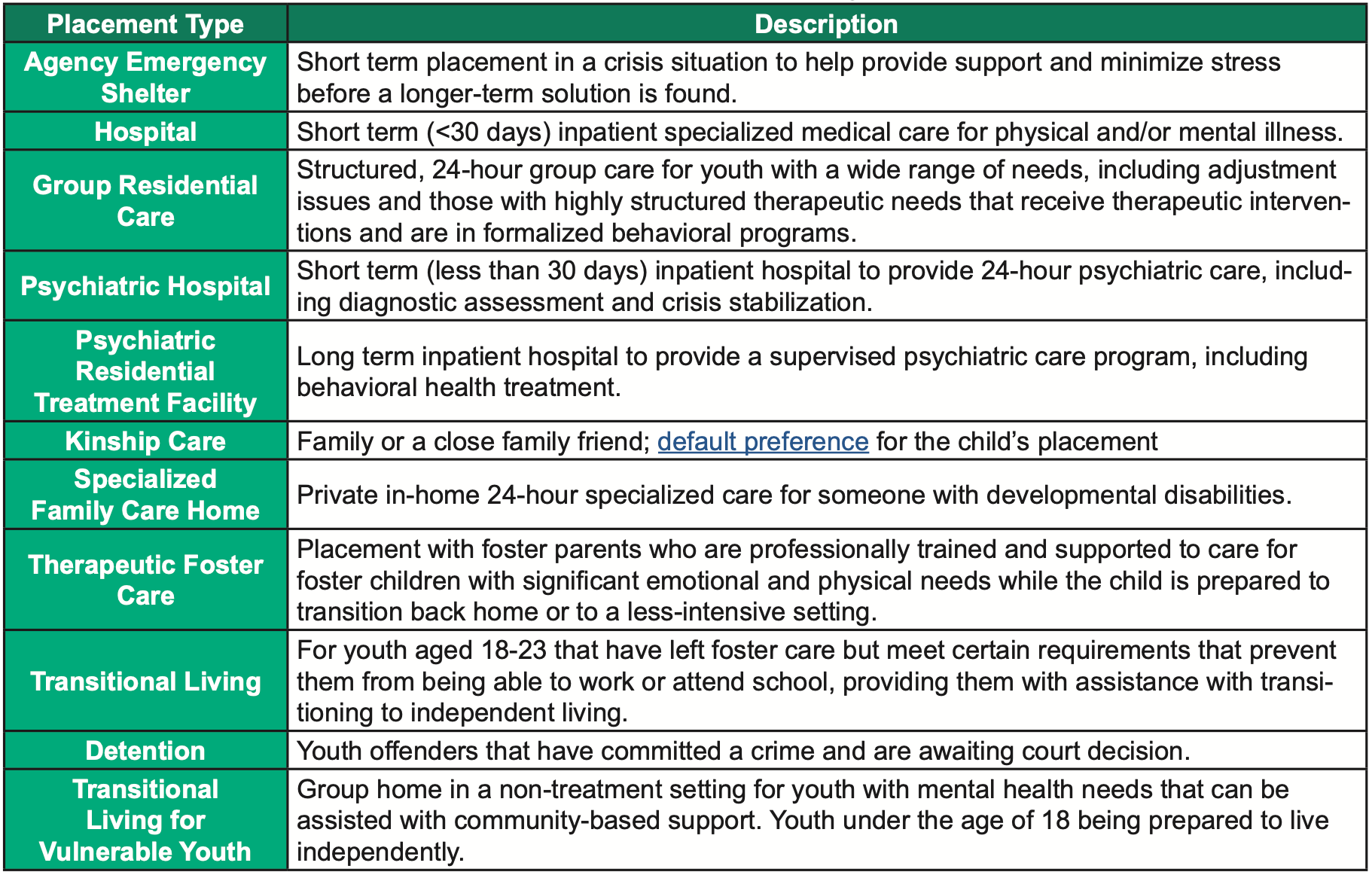
Based on the West Virginia Child Welfare Dashboard.
This Science and Technology Note was prepared by Nathan G. Burns, PhD, West Virginia Science & Technology Policy Fellow on behalf of the West Virginia Science and Technology Policy (WV STeP) Initiative. The WV STeP Initiative provides nonpartisan research and information to members of the West Virginia Legislature. This Note is intended for informational purposes only and does not indicate support or opposition to a particular bill or policy approach. Please contact info@wvstep.org for more information.
Addendum: Out of State Foster Care Placements
West Virginia has a total of 6,008 children in state custody as of November, 2025, the most recent data available. Of those, 534 (about 9%) of them have been placed out of state. Though some of these children are in kinship care outside of West Virginia, the majority (381 children, 71%) are housed in group homes or psychiatric hospitals. Estimates indicate that West Virginia spends an average of $62.4 million each year on out of state foster care placements, not including travel costs for required monthly visits by state employees or family visitation [1]. Additional estimates indicate that the State may save up to $2.78 million per year for every 20 out-of-state children returned to West Virginia1This Science and Technology Note addendum analyzes the type of care West Virginia foster care children are in out of state.
[1] Testimony from the Alex Mayer, Secretary of the Department of Human Services at the January 19, 2026 House Committee on Health and Human Resources meeting.
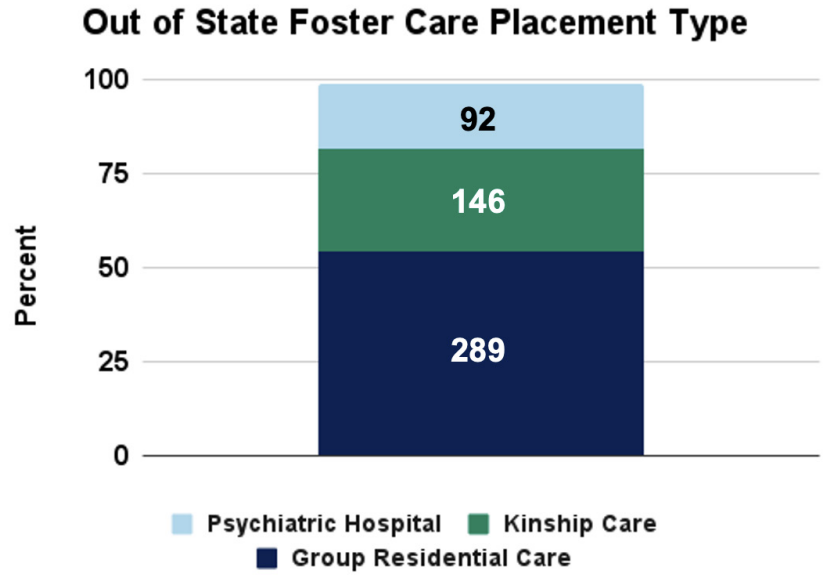
Based on data from the Department of Human Services Child Welfare Dashboard. Numbers indicate the total number of children in each type of placement. Note that the total percent is not 100 due to the State witholding data to protect confidentiality of small numbers of children placed in specialized family care, hospitals, or specialized care facilities.
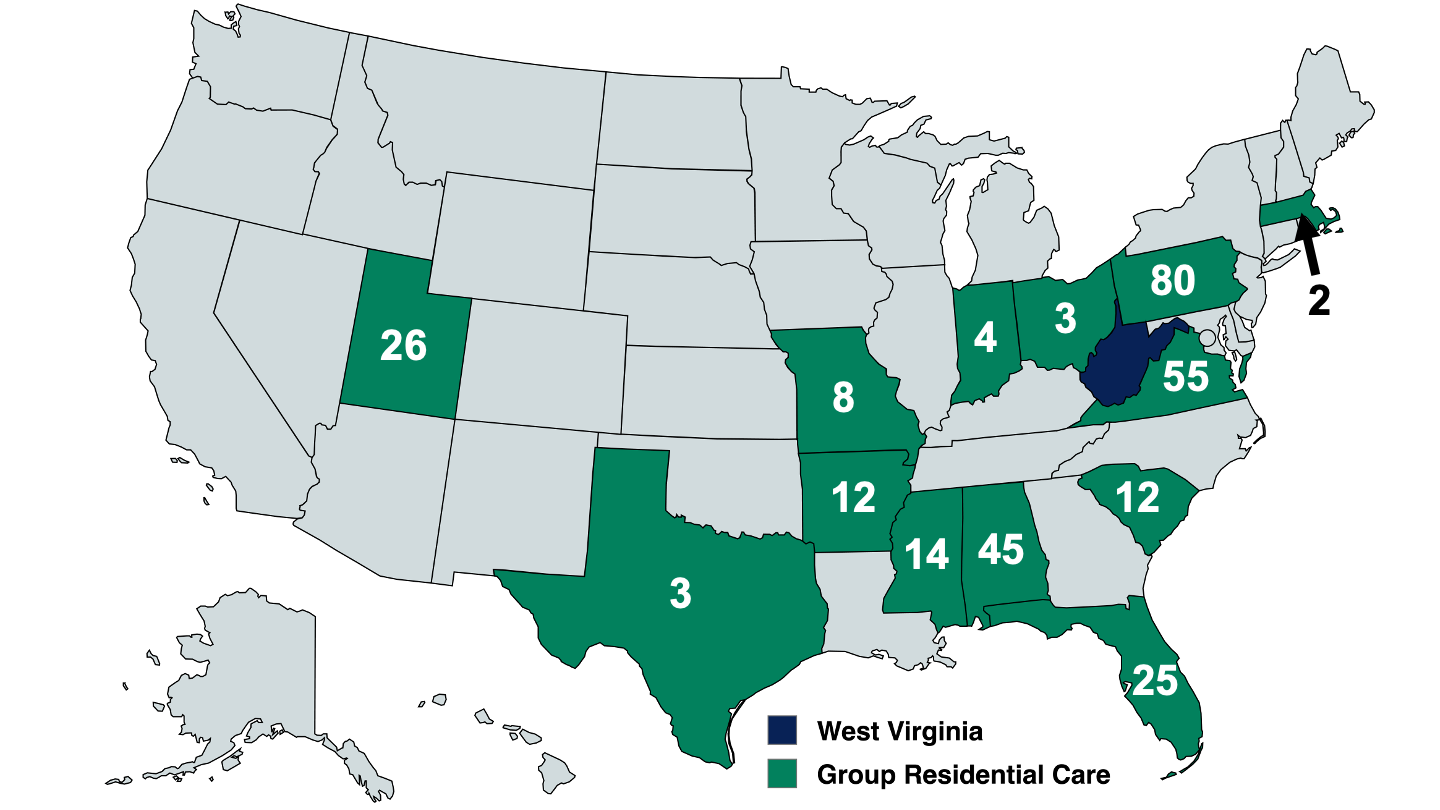
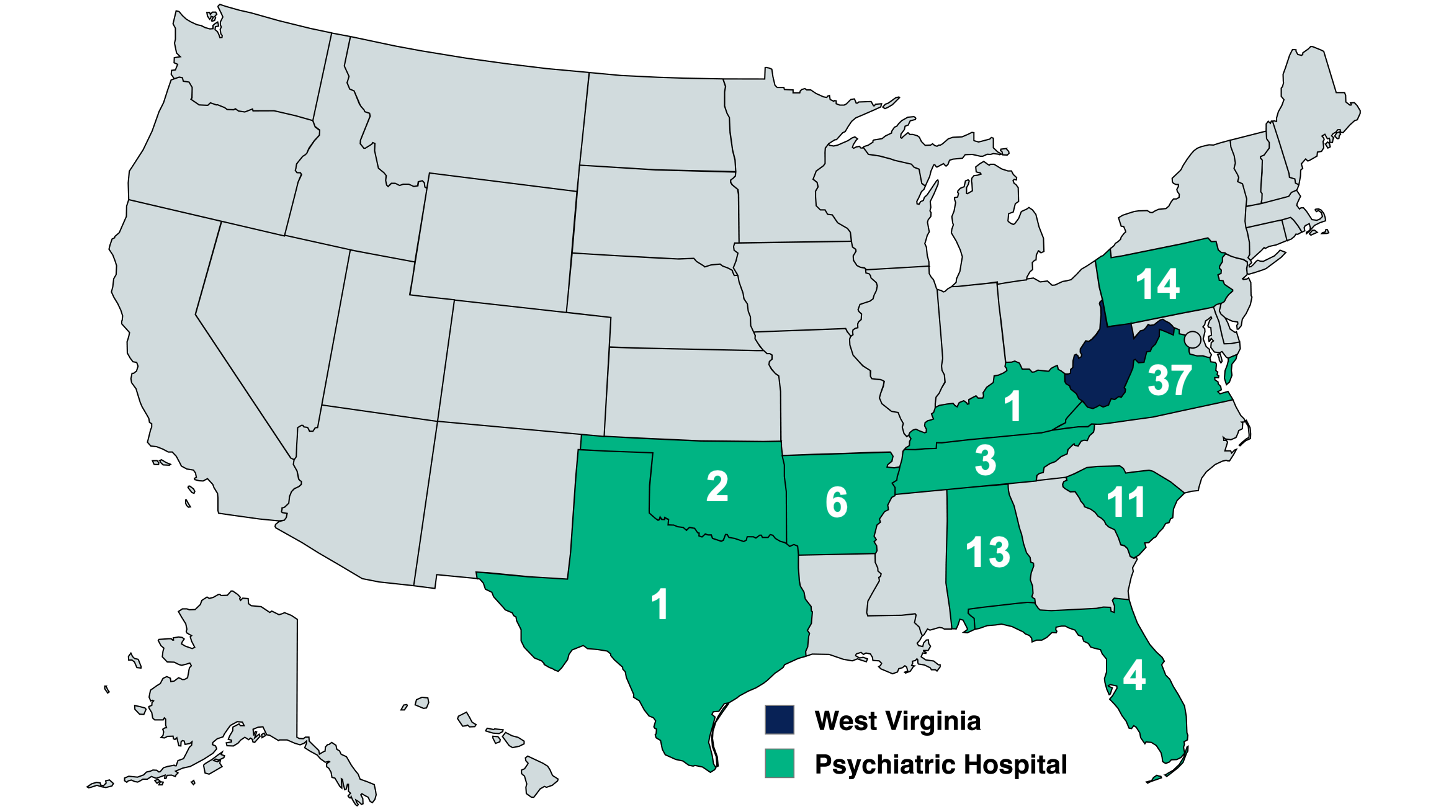
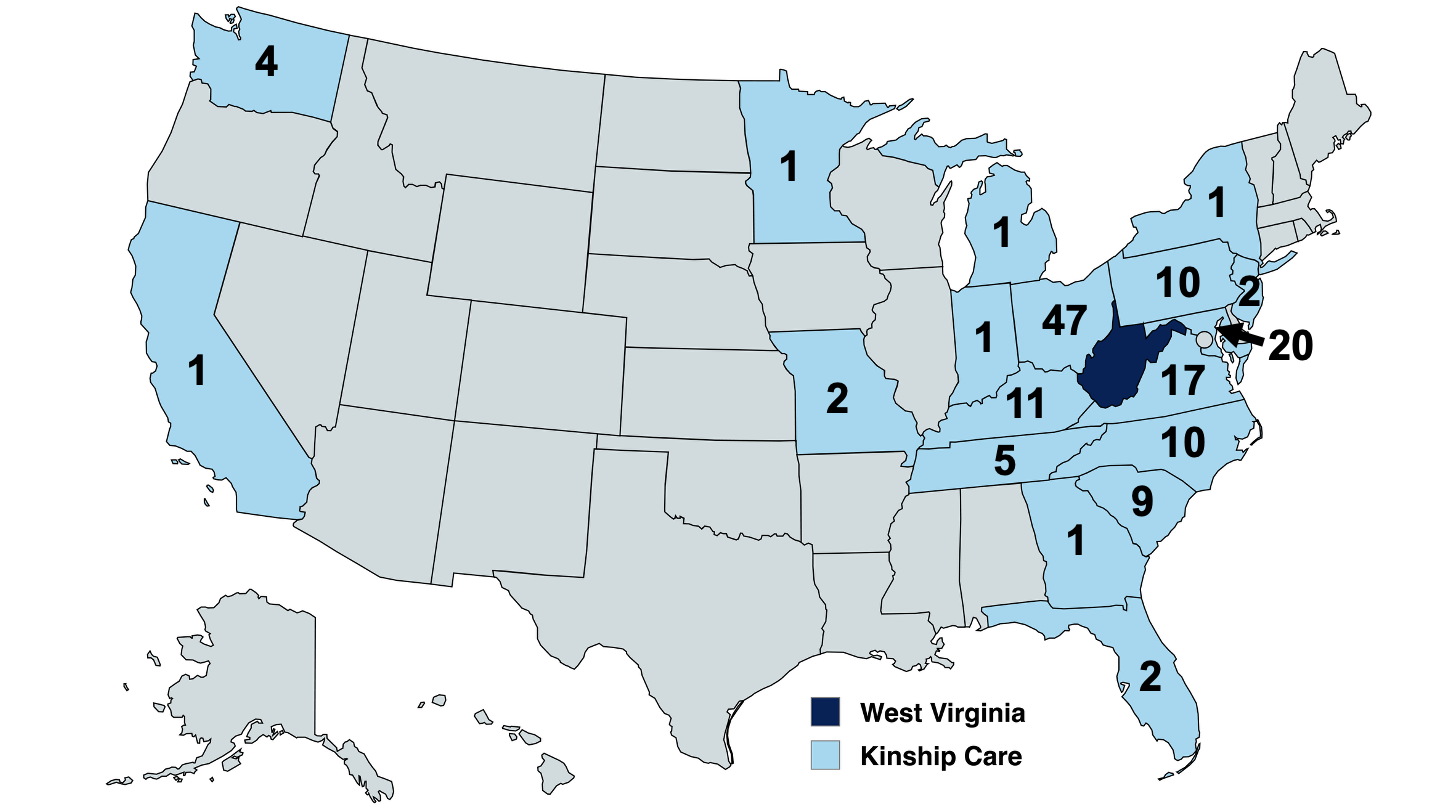
Based on data from the Department of Human Services Child Welfare Dashboard. Numbers indicate the number of children placed in each state.
Related Notes