
Teacher Retention in West Virginia
This Science & Technology Note highlights teacher turnover rates in West Virginia, identifies current state programs and incentives that promote teacher retention, and proposes policy options that may help to retain more West Virginia teachers.
Updated July 22, 2026
Research Highlights
West Virginia’s early-career teachers are leaving public schools at twice the national rate.
Increased compensation is a key method to improve teacher retention.
West Virginia’s Underwood-Smith programs, increased compensation for board certification, and Teachers ASCEND program may help to improve teacher recruitment and retention in the state.
Approximately 10% of West Virginia’s teachers leave the state’s public school system every year. Common reasons cited for lack of teacher retention include a lack of support for continued improvement and low pay relative to the expectations of teachers. There are several programs in West Virginia that may help to improve teacher retention. This Science & Technology Note provides teacher retention statistics in West Virginia, highlights programs that may help to improve teacher retention in the state, and provides policy options to build on existing teacher retention programs.
Teacher Shortages in WV
West Virginia has a high degree of teacher shortages. All counties in the state are considered high-need for special education teachers, and math, science, and elementary teachers, along with school counselors, are additional areas of need. About ⅓ of West Virginia’s schools have shortages in world language teachers. Shortages are caused not only by fewer people entering the teaching profession, but a lack of retention of current teachers. About 10% of West Virginia’s teaching workforce leaves the profession annually. Additionally, beginning teachers in West Virginia are leaving the profession at twice the national average, nearly 30% each year. The West Virginia Department of Education’s TeachWV: Addressing the Shortage report identified low pay and benefits, a lack of respect for the teaching profession, fewer teachers entering the field, and inadequate ongoing professional development and support as reasons that West Virginia’s teachers may be leaving the classroom. In response to the ongoing teacher shortage, the West Virginia Department of Education highlights the potential to provide competitive compensation, increase recognition for outstanding teachers, and provide increased opportunities for professional development. After Virginia increased teacher compensation, their teacher retention rate increased by 35%.
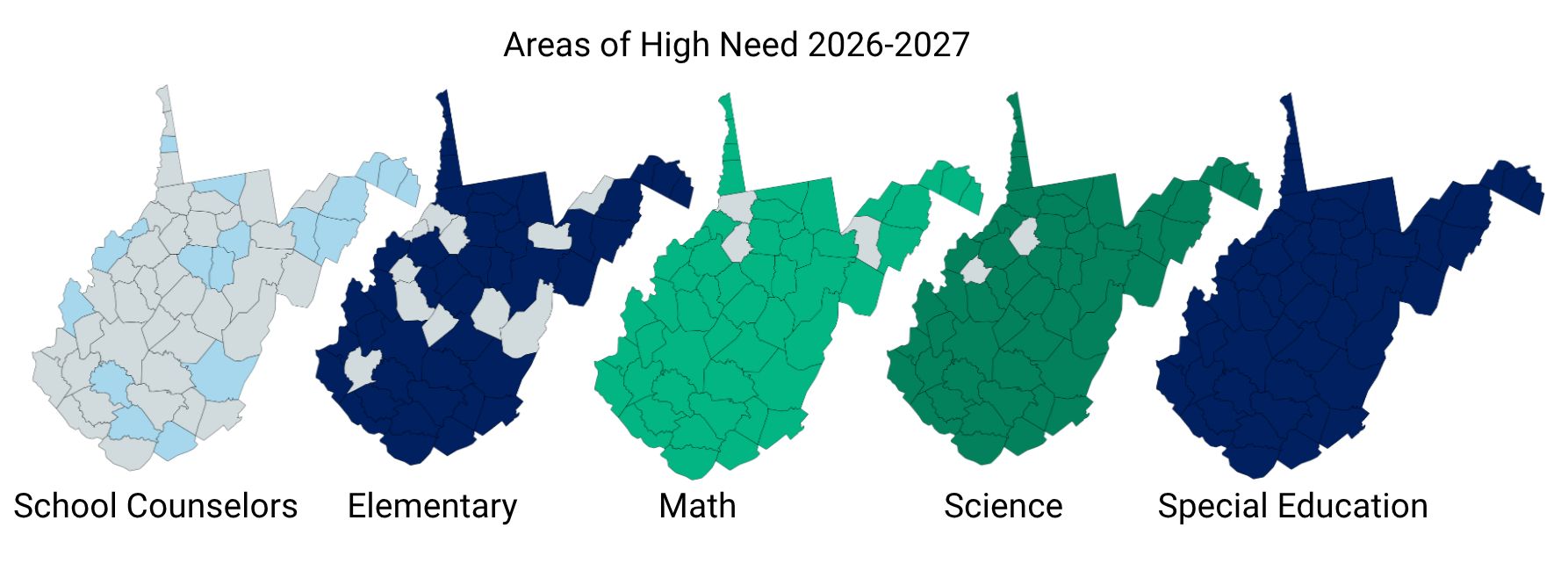
All West Virginia counties are classified as “areas of high need” for educational personnel in at least one area. Counties in grey are not considered high need, while shaded counties are considered to be areas of high need. Data from College for West Virginia.
Teacher Retention Programs in WV
There are several programs that may promote teacher recruitment and retention. For teachers outside of West Virginia, the Teachers ASCEND program may aid in relocation to the state. This program currently partners with Berkeley, Monongalia, Morgan, and Preston Counties to provide financial incentives for a 2-year period to live and teach in West Virginia. This program may help to bring experienced teachers, who are more likely to stay in the profession, into the state.
Recognition of quality teachers is another component that may lead to teacher retention. West Virginia has a relatively large number of national board-certified teachers, with the 15th most in the country. Board-certified teachers are 6% less likely to leave their positions. Additionally, students of board-certified teachers performed 5-10% better on literacy assessments than students of non-board-certified teachers. In an effort to increase compensation and reward high-performing teachers, board-certified teachers in West Virginia are eligible for increased compensation, which the Southern Regional Education Board has noted as a way to increase retention. Teachers who are pursuing board certification are also eligible to be reimbursed for their application fees. If board certified teachers elect to work in a low-performing school and become certified as a mentor teacher, they may also be eligible for additional increases in compensation.
High burdens of student debt comparable to salary is a common reason teachers may choose to leave the field. West Virginia’s Underwood-Smith Teacher Loan Assistance program may be beneficial in retaining teachers considering leaving the profession due to relatively low salaries and high student loan debt. This program provides up to $3,000 in federal student loan repayment assistance annually for teachers in high-need positions, in exchange for 2 years of service in a West Virginia public school. Targeting those applying to teacher preparation programs instead of those already in the programs, West Virginia’s Underwood-Smith Teaching Scholars program provides up to $40,000 in financial assistance for teacher preparation programs, in exchange for 5 years of teaching in an area of critical need in West Virginia public schools after completing the program. The Underwood-Smith programs may help to alleviate the financial burden of attending a teacher preparation program, and could result in an increased number of teachers in difficult-to-staff positions in West Virginia. The first Underwood-Smith Teaching Scholars were selected in 2020, so the impact of this program on teacher retention after their service commitment is yet to be determined.
Policy Options
According to the West Virginia Department of Education, increasing compensation is one of the key ways that teacher retention could be increased. In response to this, SB 516 was introduced in the 2026 legislative session. This bill would have increased teacher salaries to a minimum of $50,000, however, it did not make it out of committee. A fiscal note accompanying the bill cited an estimated cost of implementation of $66 million. A minimum salary of $50,000 for teachers would raise their compensation to exceed that of Ohio and Kentucky and be more comparable and competitive with those of Pennsylvania, Virginia, and Maryland. This could aid in potentially recruiting or retaining more teachers that live along West Virginia’s borders, areas that have a high need for teachers. The bill would have also provided a raise for all teachers, which could further help in retention efforts.
Some West Virginia teachers are eligible for increased compensation due to their certifications, including national board certification. In order to receive increased compensation for becoming board certified, teachers in West Virginia must be designated as a mentor teacher by their school district. As this is not a component of the national board certification process, additional requirements to be eligible for increased compensation through the state could disincentivize some teachers from applying for board certification. Matching the state requirements for increased compensation for board certified teachers to the national board certification requirements could help to streamline this process and increase the number of teachers applying for board certification, which is associated with retention and performance benefits.
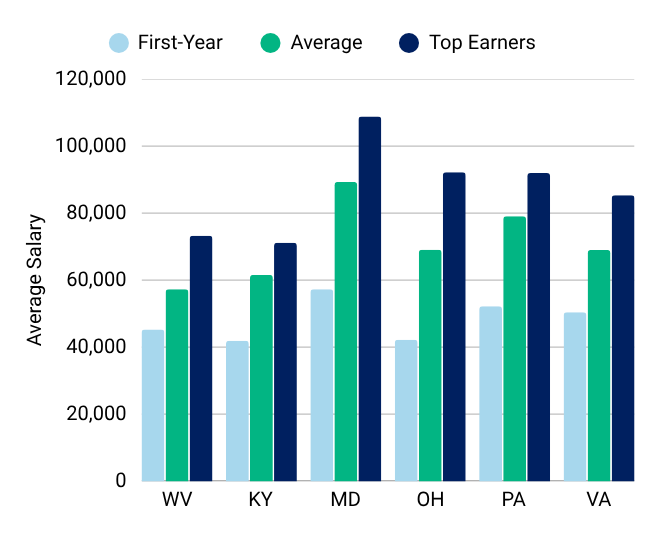
West Virginia has the lowest average teacher salary in the region. The state’s average first-year teacher salary is fairly comparable to surrounding states, but the average experienced teacher’s salary is relatively low. Data from National Education Association’s 2024-2025 Teacher Salary Benchmark Report and Rankings of the States 2025 and Estimates of School Statistics 2026.
This Science and Technology Note was prepared by Madison Flory, PhD, West Virginia Science & Technology Policy Fellow on behalf of the West Virginia Science and Technology Policy (WV STeP) Initiative. The WV STeP Initiative provides nonpartisan research and information to members of the West Virginia Legislature. This Note is intended for informational purposes only and does not indicate support or opposition to a particular bill or policy approach. Please contact info@wvstep.org for more information.