
Teacher Licensure in West Virginia
This Science & Technology Note provides the basic requirements for teacher licensure in West Virginia, explores the debate surrounding licensure testing requirements, and includes policy options surrounding teacher licensure testing that West Virginia could consider.
Updated July 22, 2026
Research Highlights
Approximately 6.5% of teachers in West Virginia lack certification or are teaching a subject or grade level that they do not have a specific certification for.
West Virginia has some of the most comprehensive requirements for teacher licensure in the country.
Some states have eliminated standardized tests and GPA licensure requirements in an attempt to reduce their teacher vacancy rates.
Teacher licensure requirements are sometimes considered a barrier of entry to the profession, and may be a contributing factor to West Virginia’s teacher shortages. There are many different types of teacher licensure in the state. This Science & Technology Note explains the basic requirements and options for teacher licensure in West Virginia, highlights the current debate around licensure testing requirements, and provides policy options impacting licensure testing requirements.
Teacher Licensing in West Virginia
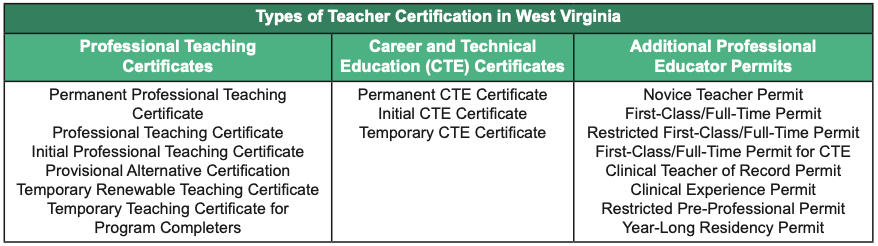
West Virginia has a variety of licensure categories for educators, including Professional Teaching Certificates, Career and Technical Education Certificates, Professional Educator Permits, Substitute Permits, Adult Education Credentials, and Authorizations. All West Virginia teaching licenses follow the same basic requirements: an individual must be at least 18 years old, eligible to work in the United States, pay the application fee for the license ($35-$100), undergo a background check, and be physically, mentally, and emotionally qualified to teach. Degrees and coursework that are being used to apply for licensure must be from an approved, regionally accredited institution, and most licenses require that an applicant have achieved a GPA of at least 2.5. Candidates must also complete any required testing for their specific license. Veterans who have a bachelor’s degree and meet GPA requirements, through West Virginia’s Option 5 program, can obtain a West Virginia teaching license after completing the required tests.
Licensure Testing
Required testing is often a major barrier to teacher licensing. First-time pass rates average 46%, and more than 20% of people who initially fail do not retake the tests. Low pass and retake rates could lead to a significant number of potential teachers not entering the classroom. Tests range from $60-$300, potentially providing a significant financial burden to future teachers. However, some studies conclude that licensure testing is a good predictor of teacher quality. An analysis of 15 different studies found that students who were taught by teachers that had passed their licensing tests scored higher on standardized tests in math and reading. Studies that examined the impact of licensure test score waivers on teacher quantity, diversity, and effectiveness found that waivers increased teacher diversity, had no measurable impact on the number of teachers entering the profession, and may have contributed to decreased student performance on standardized tests. The Southern Regional Education Board, of which West Virginia is a member state, recommends licensure testing as a way to improve teacher effectiveness.
3 areas of testing are required for traditional teacher licensure in West Virginia: pre-professional skills assessments, content area assessments, and a professional education assessment. Pre-professional skills assessments are designed to ensure candidates have basic knowledge of reading, writing, and mathematics. Content area assessments are specific to the area that the candidate intends to teach; for example, an individual wishing to teach high school chemistry would take the chemistry content exam, while a future elementary school teacher would be required to take tests in reading and language arts, mathematics, social studies, science, and a special test known as TREE, or Teaching Reading for Elementary Education. Finally, the professional education assessment is designed to test a future teacher’s knowledge of pedagogy and ability to teach. Future teachers may also be eligible for financial assistance to help pay for their testing.
In West Virginia, first-time pass rates on licensure tests range from 42% to 100%. Test scores are valid for 12 months, and tests can be retaken every 28 days. Even if an individual does not pass all of their licensure tests, there are methods to allow uncertified teachers to gain licensure and teach. The West Virginia Board of Education has approved the Praxis Bridge option for some tests, offering a way for individuals who were close to passing their tests to complete additional learning as an alternative way to demonstrate competency. In West Virginia, a First-Class/Full-Time Permit allows those without specific certification to teach in high-need positions, and other licenses provide additional exceptions to testing requirements. The Clinical Teacher of Record Program allows candidates in their final year of a teacher preparation program to serve as a full-time teacher in order to fill high-need positions. Around 6.5% of West Virginia teachers don’t hold full certification in the area they are teaching, and in math and science classes, nearly 20% of teachers lack subject-area credentials.
Policy Options for Teacher Licensure
West Virginia has some of the most stringent requirements for teacher licensure in the country, requiring all of the 7 most common national requirements for full licensure. West Virginia is one of 8 states with a minimum GPA requirement for licensure. Recently, the trend in educator licensing has been to decrease testing requirements, with 7 states dropping pre-professional skills test requirements. West Virginia could opt to lower or eliminate its testing and GPA requirements for new teachers, but the state already has exceptions in place surrounding these requirements. Some states, including Virginia, saw decreases in their teacher vacancy rates after eliminating some testing requirements, although the Virginia Department of Education notes that this was likely primarily due to a nearly 20% increase in pay. Nationally, evidence suggests that lowering testing requirements is unlikely to result in an increase in teachers entering the workforce, but altering these requirements could be beneficial for some individuals to become teachers.
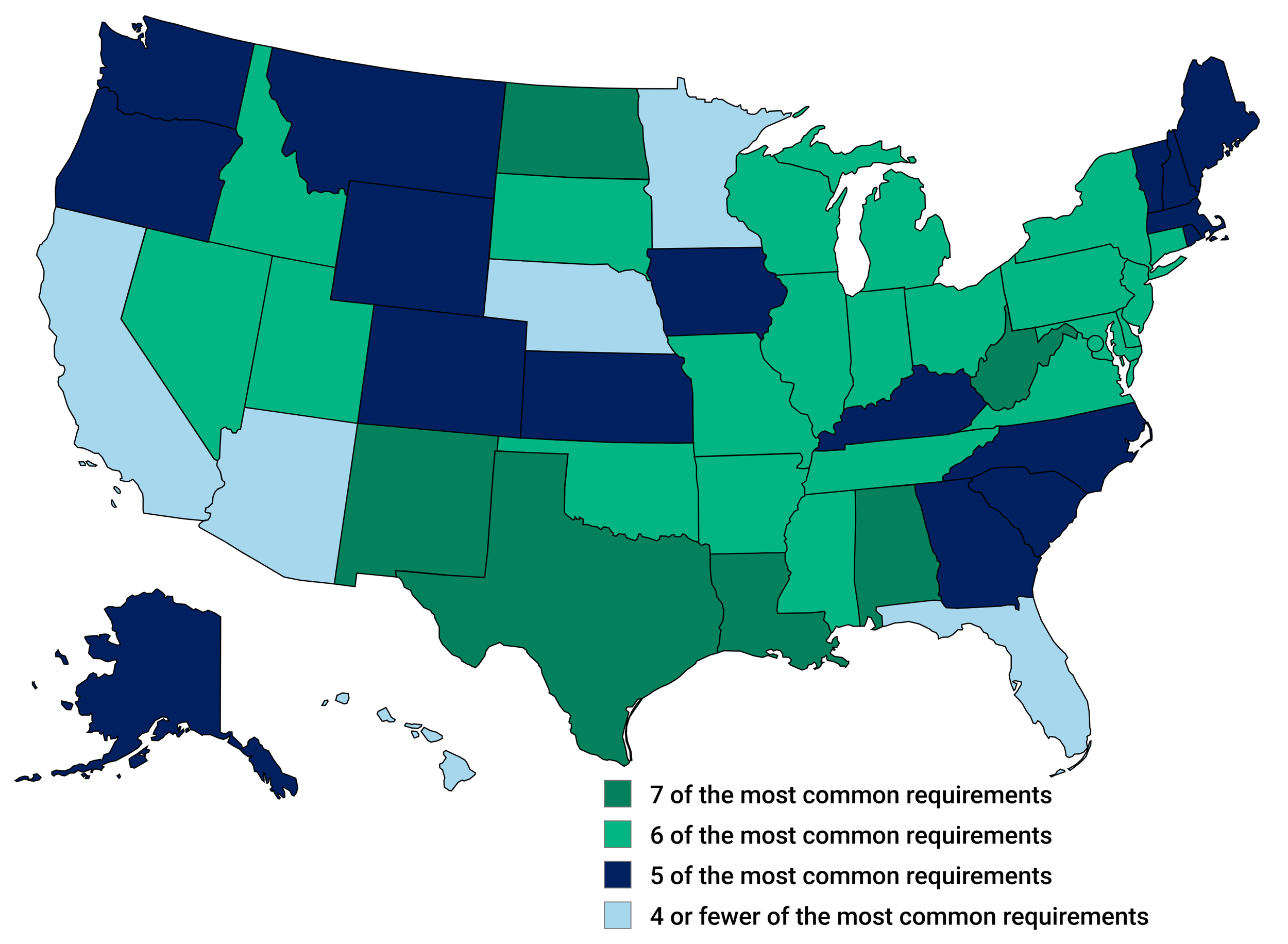
The most common requirements for teacher licensure across the country are completion of an educator preparation program, required tests, a minimum GPA, specific course requirements, completion of a degree, hands-on experience, and a criminal background check. For a full professional teaching license, West Virginia requires all of these items. Adapted from Guide on Teacher Workforce Credentialing.
West Virginia could also decide to leave testing and GPA requirements in place, as exceptions already exist, and some research found a decrease in students’ test scores when licensure testing was not required. Licensure testing requirements may exclude some potential teachers from entering the classroom, but may help to ensure a higher standard of teaching and increased student achievement.
This Science and Technology Note was prepared by Madison Flory, PhD, West Virginia Science & Technology Policy Fellow on behalf of the West Virginia Science and Technology Policy (WV STeP) Initiative. The WV STeP Initiative provides nonpartisan research and information to members of the West Virginia Legislature. This Note is intended for informational purposes only and does not indicate support or opposition to a particular bill or policy approach. Please contact info@wvstep.org for more information.