
Rendering Animal Carcasses in West Virginia
After an animal dies, there are many options for using and disposing of the carcass. Rendering is one option that is often used to convert carcasses into usable products. This Science & Technology Note provides information on carcass disposal options, the rendering process and products that can be produced, and an overview of regulatory considerations for some common products made from rendered materials.
Updated April 10, 2026
Research Highlights
Rendering breaks down an animal’s carcass using temperature, pressure, and time to produce fats, high-protein solids, and water.
Rendered products can be used to produce a number of products, including soap and pet food.
West Virginia primarily follows federal guidelines for regulating sales of rendered products.
Uses for Animal Carcasses
There are many ways that animals can be disposed of once they are deceased. The method of disposal of an animal carcass may depend on several factors, including how and why the animal died, any drugs that may have been given to the animal, how many carcasses need to be disposed of, and the safety, environmental impact, and cost-effectiveness of various disposal methods. Common carcass disposal methods include incineration, landfilling, composting, and chemical decomposition. However, before a carcass is disposed of, components of carcasses that cannot otherwise be used can be further processed through a method known as rendering. The outputs from this process can be used to make additional products, helping to maximize the usefulness of an animal carcass.
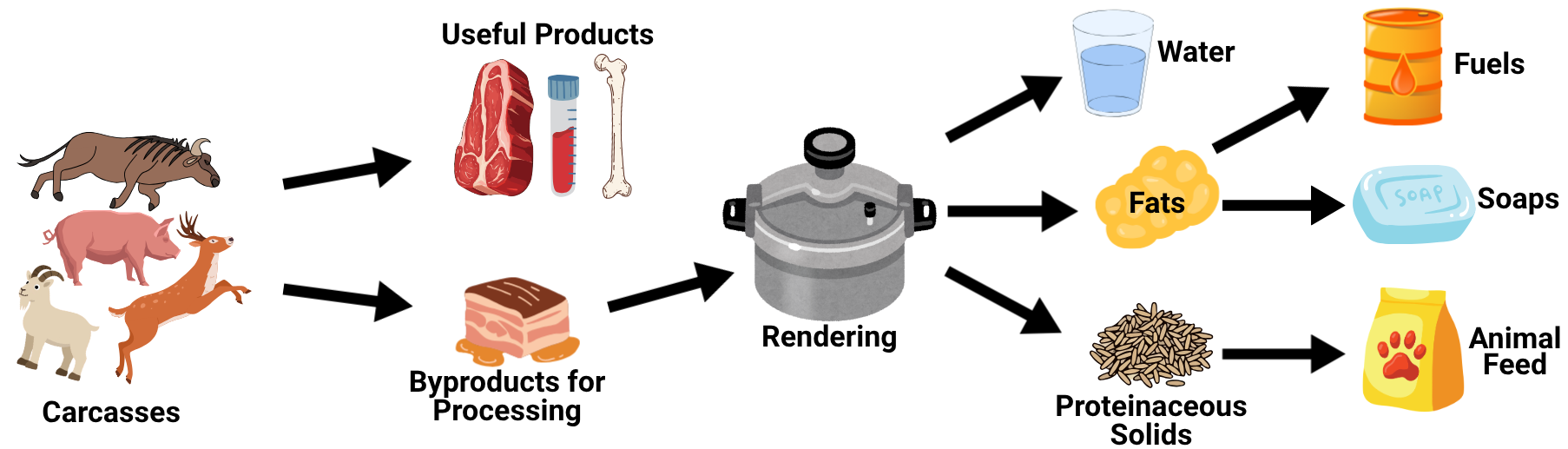
Rendering animal carcasses breaks carcass byproducts down into water, fats, and high-protein solids. These ingredients can be used to make useful products, such as fuels, soaps, and animal feed, allowing byproducts from animal carcasses to be made into economically viable products.
Rendering
Rendering is a process that allows typically unusable parts of animals to be ‘recycled’ into useful materials, providing continued economic value and reduced environmental impact. In the rendering process, parts of an animal carcass are cooked at specific heats, pressures, and temperatures, producing high-protein solids, fats, and water. These materials can be used to make many products, including animal feeds, soaps, fuels, and more. Rendering can be performed commercially or on a small scale.
Although animal carcasses are often thought of as unsanitary, the rendering process typically makes products that are safe, as rendering removes most germs and smells. Still, if an animal carcass will be rendered, it should be kept cool, and rendering should take place within 24-48 hours of the animal’s death. There are several methods of rendering. It can be ‘dry’ or ‘wet’ and is performed at different temperatures and pressures depending on the carcass specifics. All methods often take several hours to fully break down a carcass.
The end products from rendering can be used in many applications: food for livestock, pets, poultry, and aquaculture; in the chemical industry; for fertilizer; as fuel; and for soaps, personal care products, pharmaceuticals, and cosmetics. The quality of rendered products, and therefore what they can be used for, depends on the quality of the carcasses and how they were processed. Different species of animals produce rendered products with different proportions of fat, high-protein solids, and water. For example, cattle typically produce about 10% fat, while sheep produce about 20% fat, and swine 30%.
Some animals, primarily cattle, sheep, goats, and deer, are at a higher risk of carrying a disease known as transmissible spongiform encephalopathy (TSE). TSE is an untreatable, fatal brain disease that can infect multiple species, including humans, if food containing infectious material is eaten. Strict testing and tracking protocols have greatly reduced the risk of TSE in many farmed animals, however, TSE in deer populations has been spreading. Rendering may not completely eliminate the risk of transmitting this disease, so in an effort to prevent it, federal regulations require animal feed made from specific rendered materials to be labeled and tested. Before these requirements came into effect, many animals died from TSE transmission from contaminated food made from rendered products. In further efforts to prevent TSE spread, rendered tallow (fat) should contain a maximum of 0.15% insoluble impurities, as the impurities may contain infectious material.
Laws Surrounding Animal Carcass Use
Carcasses may be sourced from agricultural production, hunting, or sometimes, roadkill. West Virginia allows individuals to possess roadkill if an individual notifies a law enforcement agency within 12 hours and acquires a non-hunting game tag within 24 hours. For safety, it is recommended that carcasses of unknown origin or time of death not be used to produce edible products.
If an individual renders a carcass to produce other products, two common products are pet foods or tallow-based personal care products. Specific permits and licences may be required based on the specifics of an individual business. For example, selling products out-of-state requires compliance with interstate commerce regulations, and the West Virginia Department of Agriculture requires registration of businesses producing pet food. Soaps and other personal care products are a common option to make with rendered fats. Federal regulations classifying a product as a soap, cosmetic, or drug are stringent (see table). West Virginia uses these federal regulations as guidance for soaps and other products that may be made from the fat of rendered animals, and specifies that the products cannot be adulterated. Pennsylvania provides additional guidance on rendering products that will be eaten or used in cooking.

One policy option that West Virginia could adopt would be to write laws or guidance for the state to specifically address home rendering and the sale of rendered products, providing more clarity surrounding production and safety of these products. Providing improved guidance may improve consumer trust in the products, and may increase the confidence of small producers that they are compliant with regulations. Current cottage laws in West Virginia only address food products, not any soaps or personal care products, so additional guidance for small, local producers may be beneficial.
West Virginia code notes that the West Virginia Board of Pharmacy, as well as county or municipal health officers can inspect cosmetic manufacturing facilities, which some products made from rendered tallow may be classified as. Some states have additional requirements for required registration or inspection for cosmetics sales, including Ohio and Pennsylvania. West Virginia could opt to make inspection or registration a requirement if an individual is producing items classified as cosmetics. This could increase product safety, but may discourage small producers from making and selling products due to increased regulatory requirements.
This Science and Technology Note was prepared by Madison Flory, PhD, West Virginia Science & Technology Policy Fellow on behalf of the West Virginia Science and Technology Policy (WV STeP) Initiative. The WV STeP Initiative provides nonpartisan research and information to members of the West Virginia Legislature. This Note is intended for informational purposes only and does not indicate support or opposition to a particular bill or policy approach. Please contact info@wvstep.org for more information.