
Postpartum SUD Treatment in West Virginia
Pregnancy can provide an opportunity to identify substance use disorders (SUD) and connect patients with treatment, but treatment needs do not end at delivery. This Science & Technology Note examines SUD during and after pregnancy in West Virginia, continuity of postpartum treatment, and the role of Medicaid coverage and state programs in supporting ongoing care.
Updated November 17, 2026
Research Highlights
Substance use disorders (SUD) contributed to 40% of pregnancy-related deaths reviewed between 2017–2023 in West Virginia.
5.7% of Medicaid-covered deliveries in 2016-2019 included a SUD diagnosis; opioid-related diagnoses decreased while stimulant and other non-opioid diagnoses increased.
In 2024, 12.7% of West Virginia pregnancies had documented intrauterine substance exposure, while 3.7% of births were affected by neonatal abstinence syndrome.
Longer Medicaid coverage and care coordination may support postpartum treatment continuity. Policy options include reducing coverage disruptions, strengthening transitions to ongoing SUD treatment, and extending recovery support beyond the first postpartum year.
SUD During and After Pregnancy
Substance use disorder (SUD) includes opioid, stimulant, alcohol, and other substance use disorders. Medications for opioid use disorder (MOUD) varies by substance; medications such as buprenorphine and methadone are evidence-based treatments for opioid use disorder (OUD), while treatment options for stimulant use disorder differ and may include antidepressants and antipsychotics. After delivery, reduced contact with maternity providers, changing insurance or providers, caregiver responsibilities, and other barriers can make continued treatment more difficult.
Pregnancy and SUD in West Virginia
State perinatal (pregnancy and postpartum) surveillance data from 2024 indicates that 12.7% of West Virginia infants had documented intrauterine substance exposure, while 3.7% were diagnosed with neonatal abstinence syndrome (NAS). Substance exposure can include alcohol, and prescribed medications, including medications used to treat OUD, and therefore does not necessarily indicate untreated maternal SUD. NAS can occur if substance-exposed newborns develop withdrawal symptoms after birth. According to the West Virginia Perinatal Partnership, the state's rate of substance exposure is roughly 10 times the national rate, and West Virginia has the second-highest rate of clinically documented OUD among pregnant and postpartum Medicaid enrollees.
A study of over 49,000 pregnancies from 2016-2019 found that 5.7% of mothers had a SUD diagnosis at delivery. This is narrower than the state's substance-exposure measure, includes exposure to prescribed medications, and does not necessarily indicate an SUD diagnosis. Opioid-related diagnoses declined 29.3%, while non-opioid SUD diagnoses increased 55.8%, including an increase in stimulant use disorder diagnoses. SUD also contributes to maternal mortality. SUD was identified as a contributing factor in 40% pregnancy-related deaths in West Virginia from 2017-2023. While most postpartum care occurs within six weeks after delivery, most drug-related deaths happen after this period.
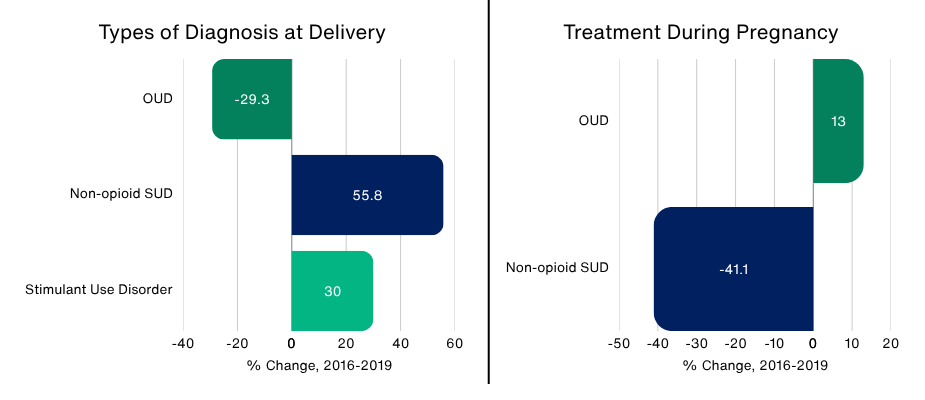
Non-opioid and stimulant use disorder diagnoses increased among Medicaid-covered pregnancies in West Virginia from 2016–2019, while opioid-related diagnoses declined. Treatment increased for opioid use disorder but declined for non-opioid substance use disorders. Data from Journal of Women's Health.
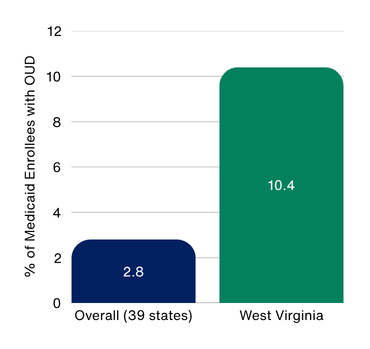
Clinically documented opioid use disorder was more common among pregnant and postpartum Medicaid enrollees in West Virginia than across the states included in the KFF analysis.
Postpartum Treatment Landscape
West Virginia has pregnancy-focused treatment infrastructure through Drug Free Moms and Babies (DFMB) and related programs. DFMB integrates maternity care, behavioral health, SUD treatment, care coordination, and recovery support. Medicaid reimburses DFMB care during pregnancy and through the first year postpartum, while the program’s recovery coach provides follow-up for two years after birth. Among DFMB participants, negative drug screens increased from 25.1% at program entry to 64.2% at delivery.
National evidence suggests that maintaining treatment postpartum remains challenging. Among Medicaid beneficiaries who initiated medication for OUD during pregnancy, 58% of those who started buprenorphine and 49% of those who started methadone discontinued medication treatment within one year postpartum. Another Medicaid study also found that use of medication for OUD declined as the postpartum period progressed. These studies do not indicate whether these gaps reflected recovery, treatment barriers, or a return to opioid use.
Insurance continuity is one factor associated with treatment retention. A 2026 study found that continuous Medicaid enrollment requirement was associated with increases of 14.4% in six-month MOUD retention and 16.3% in 12-month retention. A separate national analysis found that extending postpartum Medicaid coverage from 60 days to 12 months was associated with modest increases in Medicaid-financed treatment and continuation beyond 60 days.
Approaches in Other States
Some states provide SUD services after the first postpartum year. New Hampshire's Maternal Opioid Misuse (MOM) Program serves Medicaid beneficiaries with OUD during pregnancy and up to two years postpartum, combining MOUD and other SUD treatment with behavioral health care, peer support, case management, and assistance with social needs. Among participants in 2024, 53% enrolled in the postpartum period and 94% had at least one health-related social need like transportation, childcare, housing and food access. The program provides an example of extending integrated services into the second postpartum year, although available enrollment was insufficient to determine effects on health outcomes.
Washington's Parent-Child Assistance Program (PCAP) provides three years of case management by connecting participants with SUD treatment, health care, housing, and other services. Among participants enrolled from 2006–2017, nearly 90% received SUD treatment and 76.3% experienced at least six months of abstinence during the program. Among graduates from 2018–2024, 71% were abstinent for 6 months or more during the program.
Considerations for West Virginia
West Virginia already has infrastructure for SUD treatment and recovery support during and after pregnancy, including DFMB recovery support that can continue for two years after delivery. As these programs continue, the state could examine whether patients remain connected to clinical treatment as they transition from pregnancy into longer-term recovery. Measures such as continuation of MOUD, treatment visits, insurance status, and engagement at 6, 12, and 24 months postpartum could identify when patients become disconnected from care. Tracking these outcomes could also help distinguish gaps associated with insurance coverage from those related to provider availability, transportation, child care, or other barriers. Models in other states illustrate additional approaches for combining longer-term case management, peer support, and connections to clinical treatment.
This Science and Technology Note was prepared by Anika Zaman, PhD, West Virginia Science & Technology Policy Fellow on behalf of the West Virginia Science and Technology Policy (WV STeP) Initiative. The WV STeP Initiative provides nonpartisan research and information to members of the West Virginia Legislature. This Note is intended for informational purposes only and does not indicate support or opposition to a particular bill or policy approach. Please contact info@wvstep.org for more information.