
Postpartum Mental Health in West Virginia
In West Virginia, recent efforts have expanded postpartum mental health screening, provider training, and psychiatric consultation, but a 2026 statewide assessment identified gaps between screening and treatment. This Science & Technology Note examines postpartum mental health needs, access to treatment, and policy approaches in West Virginia and other states.
Updated October 9, 2026
Research Highlights
In 2018, 19.4% of West Virginia respondents reported postpartum depressive symptoms, compared with 13.2% across 31 surveyed states.
In a 2026 West Virginia assessment, 94% of perinatal providers reported routinely screening for behavioral health concerns, but only 42% felt confident treating mental health concerns.
West Virginia expanded its perinatal mental-health infrastructure in 2026, but gaps remain between identification and treatment.
Other states have used Medicaid payment and integrated-care models to create additional opportunities for screening and strengthen follow-up care.
Mental health conditions can begin during pregnancy, emerge after childbirth, or continue from conditions that existed before pregnancy. Depression and anxiety are among the most common, although other conditions can also require care. In West Virginia, recent efforts have expanded screening, provider training, and psychiatric consultation, but a 2026 statewide assessment identified ongoing gaps between screening and treatment. This Science & Technology Note examines postpartum mental health needs, access to treatment, and policy approaches in West Virginia and other states.
Postpartum Mental Health
Postpartum mental health conditions include depression and anxiety, as well as less common but serious conditions, such as bipolar disorder and postpartum psychosis. Symptoms may begin during pregnancy or after delivery, while preexisting mental health conditions may continue or worsen throughout the same period. Up to 1 in 5 moms will experience a mental health condition and when left untreated, can have harmful effects on women and their children. The American College of Obstetricians and Gynecologists (ACOG) recommends screening for depression and anxiety during pregnancy and postpartum care. A positive screening result does not diagnose a mental health condition but rather identifies someone who needs further evaluation and treatment. Mental health needs may extend beyond the traditional postpartum period. Addiitonally, a review across 18 countries, found that depression persists into the second year postpartum.
Postpartum Mental Health in West Virginia
In the national 2018 Pregnancy Risk Assessment Monitoring System (PRAMS), 19.4% of West Virginia respondents reported postpartum depressive symptoms, compared with 13.2% across the 31 participating PRAMS sites. Additionally, West Virginia's maternal mortality review process attributed 20% of pregnancy-related deaths between 2017-2023 to mental health conditions. West Virginia's first statewide assessment of perinatal behavioral health services found that 94% of surveyed perinatal providers reported routinely screening for behavioral health concerns. However, less than half of providers felt confident treating mental health concerns though many reported having a standard process for connecting patients to mental-health resources. Among surveyed patients who received a behavioral-health referral, the majority reported that they did not attend a behavioral-health appointment. More broadly, surveyed patients identified cost, lack of available health professionals, and difficulty taking time off work as common barriers to care.
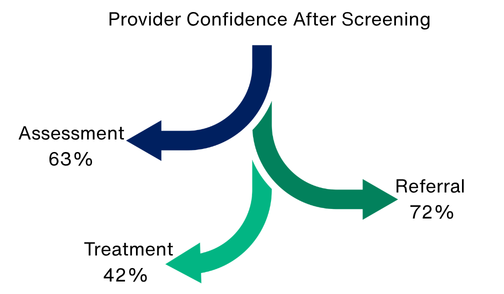
Although 94% of providers reported routinely screening for behavioral health concerns, fewer reported confidence assessing, referring, or treating patients. Percentages describe respondents to the 2026 WV Perinatal Behavioral Health Needs Assessment and are not statewide prevalence estimates.
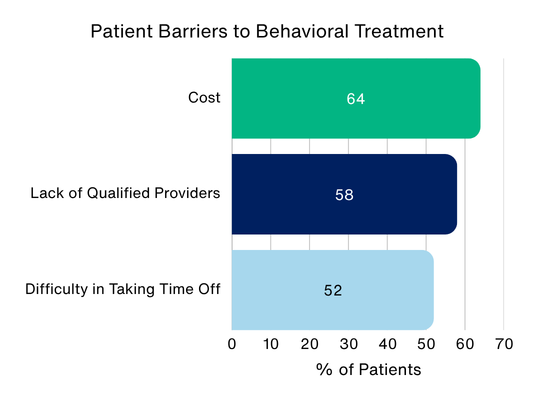
Cost, provider availability, and difficulty taking time away from work were among the most commonly reported barriers to postpartum mental health treatment. Source: 2026 WV Perinatal Behavioral Health Needs Assessment.
Following the assessment, West Virginia has expanded provider capacity. Using federal maternal mental health grant funding, the state has awarded more than 120 scholarships for perinatal mental health training and additional scholarships for certification, helping increase the number of certified mental health professionals. The state also launched the West Virginia Perinatal Psychiatric Access Program (WV PPAP), which gives health care providers access to psychiatry consultation, treatment guidance, and referrals for their patients. The initiative has sponsored over 200 full scholarships for specialized postpartum training and integrated more than 30 certified perinatal mental health providers into the state network.
Mental Health Beyond the First Postpartum Year
West Virginia Medicaid currently provides pregnancy-related coverage through the first postpartum year. SB 505, introduced in 2026, proposed extending eligibility for qualifying individuals through 24 months postpartum, but did not advance beyond committee. The proposed extension overlaps with mental health needs that continue into the second postpartum year. However, most research on extensions examined the earlier change from 60 days to 12 months in 2022, and evidence specifically for a second year of coverage remains limited. Coverage may reduce insurance disruptions, but does not by addressing provider shortages or other barriers to mental health treatment.
Approaches in Other States
Massachusetts Child Psychiatry Access Program for Moms (MCPAP) is a statewide program that gives healthcare providers access to psychiatric consultation, training, and help locating treatment for pregnant and postpartum patients. The program enrolled 145 obstetric practices, trained 1,174 health care providers, and served over 3,000 patients in the first 3.5 years. Greater use of the program was associated with higher rates of participating clinicians treating perinatal mental health conditions themselves. WV PPAP follows a similar model; Massachusetts provides a longer-running example of its potential success.
Illinois Medicaid allows maternal depression screening to be reimbursed through an infant's Medicaid coverage during well-child visits throughout the first year. This approach creates additional opportunities for screening after routine obstetric care becomes less frequent. West Virginia could examine whether a similar approach could create additional opportunities for screening, while ensuring that positive screens are connected to evaluation, treatment, and follow-up.
Considerations for WV
West Virginia’s recent expansion of perinatal health services creates opportunities to evaluate how patients are moving from screening into treatment. As WV PPAP is implemented, measures such as provider participation, geographic reach, consultation use, referrals, and provider confidence could assess whether the program is increasing treatment capacity. Tracking referrals, appointment completions, treatment initiation, and follow-up, in addition to screening, can identify where patients are disconnected from care.
Additionally, West Virginia could examine whether existing Medicaid payment policies and pediatric practices are able to provide similar opportunities as Illinois and how positive screens are connected to treatment, as Medicaid coverage and provider capacity address separate barriers to postpartum mental health care.
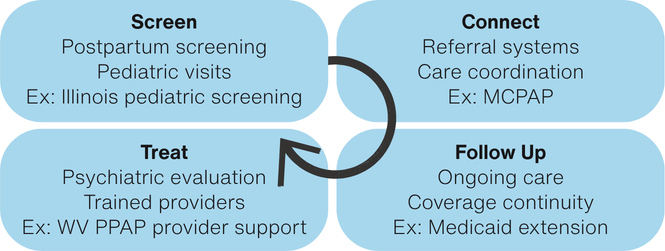
Policy approaches can address different points between identifying postpartum mental health needs and receiving ongoing care, including additional screening opportunities, referral and care coordination, provider support, and continuity of coverage.
This Science and Technology Note was prepared by Anika Zaman, PhD, West Virginia Science & Technology Policy Fellow on behalf of the West Virginia Science and Technology Policy (WV STeP) Initiative. The WV STeP Initiative provides nonpartisan research and information to members of the West Virginia Legislature. This Note is intended for informational purposes only and does not indicate support or opposition to a particular bill or policy approach. Please contact info@wvstep.org for more information.