Postpartum Cardiovascular Health in West Virginia
The postpartum period provides an opportunity to identify, monitor, and care for cardiovascular conditions that develop during pregnancy or after birth. This Science & Technology Note examines the link between cardiovascular health and pregnancy, postpartum monitoring and follow-up, recent West Virginia policy, and approaches used in other states.
Updated October 9, 2026
Pregnancy can reveal cardiovascular risks that continue after delivery. High blood pressure during pregnancy can increase the risk of chronic high blood pressure and cardiovascular disease later in life. The postpartum period therefore provides an opportunity to identify future cardiovascular risk, monitor cardiovascular conditions that developed during pregnancy, and connect patients from obstetric care to ongoing primary or cardiovascular care. This Science & Technology Note examines the links between cardiovascular health and pregnancy, postpartum monitoring and follow-up, recent West Virginia policy, and approaches used in other states.
Cardiovascular Health and Pregnancy
Pregnancy places additional demands on the heart and blood vessels. Some people develop cardiovascular conditions during pregnancy, while pregnancy complications can also cause future health risks after delivery. Hypertensive disorders of pregnancy (HDP) is a group of complications including gestational hypertension, which is high blood pressure that develops after 20 weeks of pregnancy, and preeclampsia, which is high blood pressure with evidence of organ dysfunction. Other complications include heart failure, stroke, blood clots, chronic hypertension, and cardiomyopathy, which affects the heart muscle and can make it more difficult for the heart to pump blood. These pregnancy complications can serve as early indicators of increased cardiovascular risk.

1 in 10 women who previously did not have high blood pressure before or during pregnancy are diagnosed with it within a year after childbirth. Data from the American Heart Association.
Cardiovascular Health in Pregnant and Postpartum West Virginians
There were 25 pregnancy-associated deaths among state residents from 2017-2023. Cardiovascular conditions, like cardiomyopathy, accounted for 12% of pregnancy-related deaths, while blood clots accounted for another 12%. These deaths represent the most severe outcomes and do not measure how many West Virginians experience high blood pressure or other cardiovascular conditions after pregnancy. Cardiovascular risks do not necessarily end when postpartum care ends, typically 6-8 weeks after delivery.
One study found elevated cardiovascular risk markers two years after pregnancy in women who had preeclampsia. Another study of nearly 120,000 pregnancies linked HDP to increased risk of cardiovascular disease, heart failure, cardiomyopathy, stroke and related conditions up to two years after pregnancy. Some conditions like heart failure, cardiomyopathy, and stroke occurred more often in the initial postpartum period, while chronic hypertension was often diagnosed later. 9.7% of women with HDP developed newly diagnosed chronic hypertension compared to 1.5% of women without one.
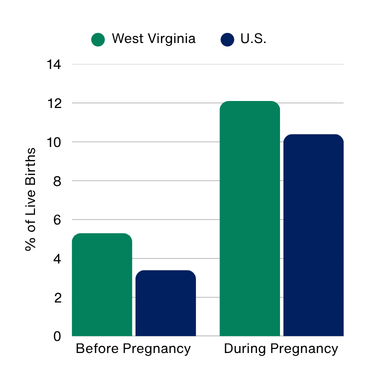
Hypertension before and during pregnancy is higher in West Virginia births compared to the US births. Hypertension during pregnancy includes gestational hypertension and pregnancy-induced hypertension or preeclampsia. Data from March of Dimes 2025 Report Card
West Virginia Postpartum Medicaid
West Virginia provides 12 months of postpartum coverage through pregnancy-related Medicaid and WVCHIP, which serves some pregnant people who are ineligible for Medicaid and lack other health insurance. In 2026, SB 505 proposed extending Medicaid through 24 months postpartum and was referred to the Senate Health and Human Resources Committee but did not advance further. The proposed second year overlaps with documented postpartum cardiovascular risk, which can persist into the second postpartum year, but evidence on the cardiovascular effects of extending pregnancy-related Medicaid eligibility from 12 to 24 months is not yet available. Pregnancy complications can identify people at increased cardiovascular risk, creating an opportunity for earlier screening and management of hypertension and other risk factors. Evidence on which postpartum interventions reduce long-term cardiovascular disease is limited. Currently, clinical guidance recommends early blood-pressure assessment after pregnancies complicated by hypertension.
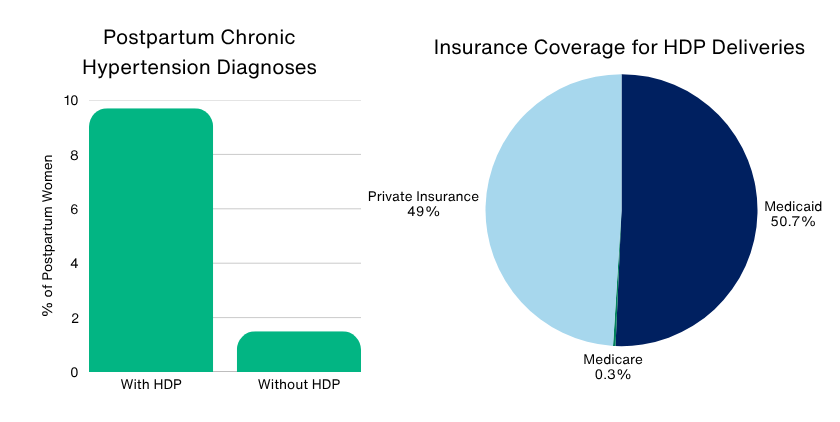
New chronic hypertension within 24 months after delivery is higher among patients hypertensive disorders of pregnancy (HDP) than without. Over half of HDP deliveries are covered by Medicaid. Data is from Maine and should not be interpreted as estimates for West Virginia. Data from American Journal of Obstetrics and Gynecology
Approaches in Other States
Rural states have used several approaches to improve cardiovascular follow-up after pregnancy. The University of Mississippi Medical Center tested remote blood-pressure monitoring among pregnant patients at increased risk for hypertension in a predominately rural, Medicaid-covered population. The pilot participants reported high satisfaction with the program. However, the study did not assess maternal outcomes. The state is also considering a bill with Rural Health Transformation Program (RHTP) funding identified as a potential funding source. Mississippi participates, along with West Virginia, in the federal Transforming Maternal Health Model, which supports states using approaches such as telehealth for pregnancy-related hypertension. Maine is also developing a similar program through its RHTP to monitor and coordinate care for high-risk postpartum women with a history of hypertension. New York Medicaid reimburses remote patient monitoring during pregnancy and up to 84 days postpartum, including device setup and patient education, transmission of readings such as blood pressure, and clinical management of remotely collected data. Many of these programs are relatively new; evidence on their implementation and impact on maternal cardiovascular outcomes remains limited.
Considerations for West Virginia
West Virginia is already investing in remote monitoring infrastructure. In 2026, the state announced approximately $9.1 million in RHTP funding for outpatient remote patient monitoring, including Bluetooth-enabled blood-pressure devices for chronic conditions like hypertension. West Virginia’s RHTP includes funding for remote monitoring of hypertension, including home blood-pressure devices, but the funding is not specifically designated for pregnant or postpartum patients. West Virginia lawmakers considered this approach in SB 649, which would have required Medicaid to provide validated home blood-pressure devices and related services to pregnant and postpartum enrollees with uncontrolled hypertension once the relevant RHTP funding was exhausted. The bill was vetoed, so RHTP remains one potential source of funding for home blood-pressure monitoring, without a maternal-specific requirement.
Additionally, the state recently awarded $855,400 to the West Virginia Health Information Network to strengthen exchange of clinical information as part of the Connected Care Grid, which could support coordination between obstetric, primary-care, and other providers. New York provides one Medicaid model for reimbursing both the technology and clinical services involved in prenatal and postpartum remote monitoring. As West Virginia expands remote monitoring through the RHTP, implementation questions include how pregnant and postpartum patients would access these services, who would be responsible for reviewing and responding to readings, and how patients with persistent hypertension would transition to ongoing care.
This Science and Technology Note was prepared by Anika Zaman, PhD, West Virginia Science & Technology Policy Fellow on behalf of the West Virginia Science and Technology Policy (WV STeP) Initiative. The WV STeP Initiative provides nonpartisan research and information to members of the West Virginia Legislature. This Note is intended for informational purposes only and does not indicate support or opposition to a particular bill or policy approach. Please contact info@wvstep.org for more information.