Natural Gas-Fired Electricity Generation in West Virginia
Natural gas is West Virginia’s second-largest source of electricity. West Virginia is poised to increase its natural gas-fired electricity generation capacity in the near future as part of the state’s push to have 50 GW of generation capacity by 2050 and to power data center microgrids. This Science and Technology Note discusses the status of natural gas-fired electricity generation in West Virginia, current legislation, and policy options from other states.
Updated August 31, 2026
Research Highlights
Natural gas consumption for electricity generation in the United States is projected to increase by 19% from 2025 to 2050. West Virginia is the nation’s fifth-largest natural gas producer. One percent of West Virginia’s gas production was used for electric power generation in-state in 2024.
Natural gas is West Virginia’s second-largest source of electricity generation.
West Virginia has passed legislation to encourage the development of natural-gas fired electricity generation to power data center microgrids.
States including Texas and Ohio have passed legislation encouraging new gas-fired power plant construction by providing financial assistance, reducing regulation, and lowering taxes.
West Virginia is the fifth-largest producer of natural gas in the United States, producing 2.6 trillion cubic feet in 2025. This would fill approximately 30 million olympic-size swimming pools and could generate enough electricity to power about 33 million homes for a year. Natural gas was responsible for 6% of West Virginia’s electricity generation in 2025 versus 0.2% in 2010. About 10% of West Virginia’s natural gas production was consumed in-state and the remaining 90% is exported to other states via pipelines. West Virginia ranked 43rd in the nation for the amount of natural gas used for power generation in 2025, however, this amount has increased by 18x from 2010 to 2025. Gas consumption for energy use in the United States is projected to increase by 19% from 2025-2050. West Virginia’s gas-fired electric generation capacity is poised to increase in the near future.
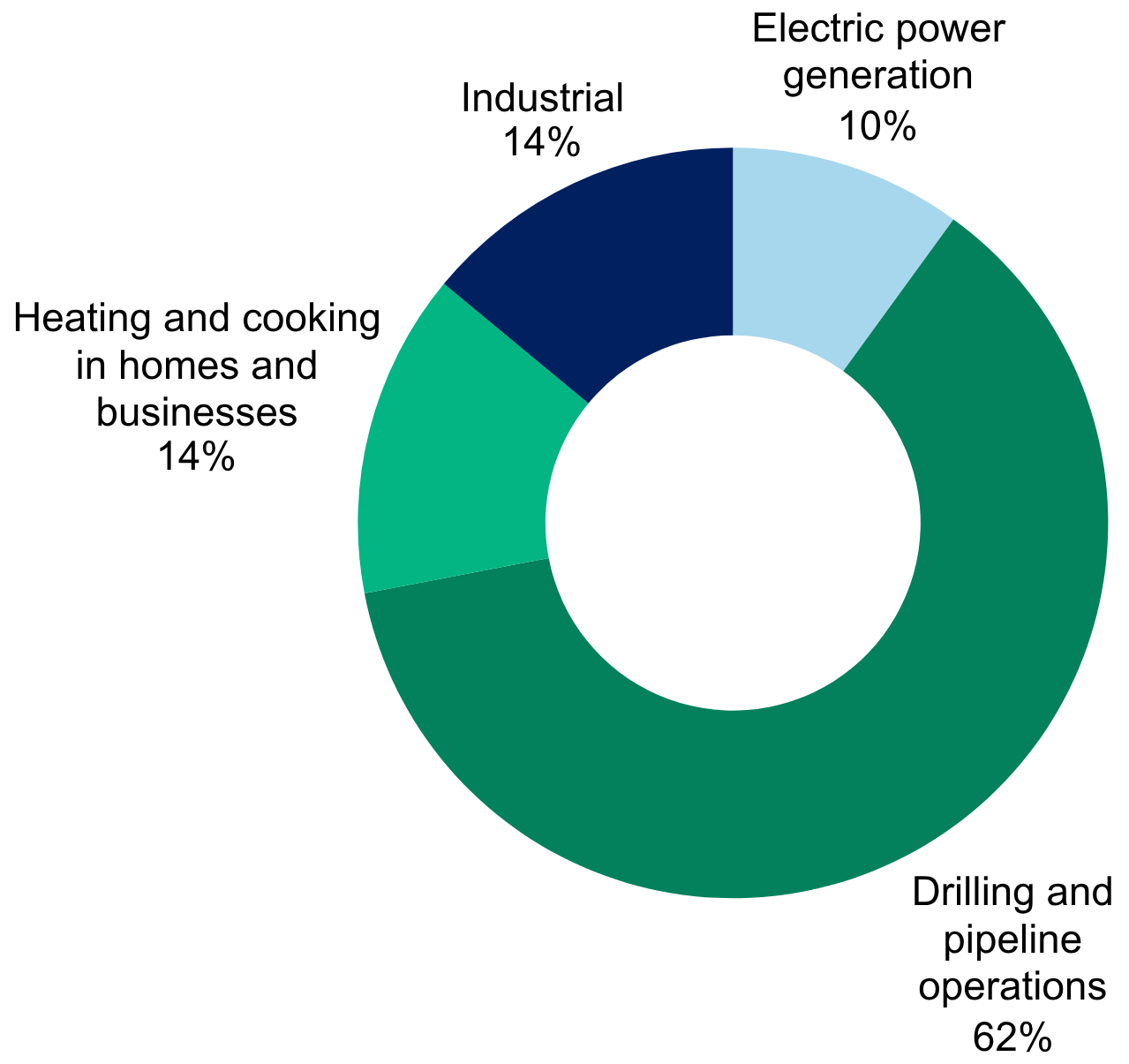

Natural gas consumption by end use in West Virginia in 2024. Source: EIA.
West Virginia’s Gas-Fired Power Plants
Four utility-scale gas-fired power plants are currently in operation out of 40 total power plants in West Virginia. These plants generated 432 MW compared to 5.8 GW for all utility-scale power plants in West Virginia in 2024. Out of the ten largest power plants by electricity generation in West Virginia in 2024, two (Pleasants Power Plant and the Axiall Natrium Plant) were gas-fired power plants. The 432 MW generated using natural gas in 2024 was a 26x increase from 15.9 MW generated in 2010. West Virginia generates a smaller share of its electricity from natural gas (8%) compared to the PJM regional transmission network (48%).
Future Developments
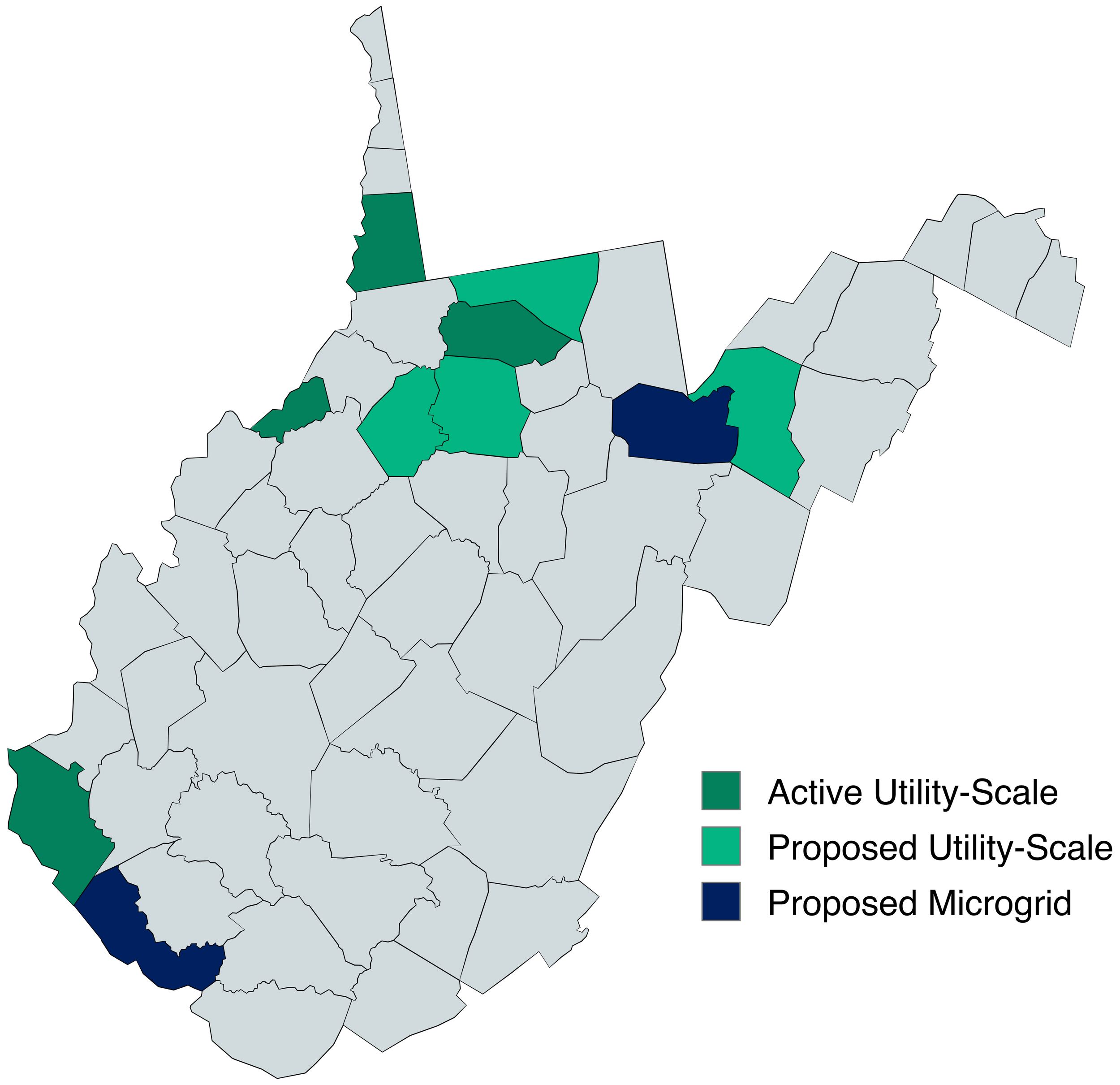
Announced projects in West Virginia include the 1.2 GW First Energy Plant in Monongalia County, the 625 megawatt (MW) Wolf Summit Energy Power Station in Harrison County, the 2.1 GW CPV Shay Energy Center in Doddridge County, and the 2.6 GW Mt. Storm Combined-Cycle Station in Grant County. These projects would be the first combined-cycle gas turbine plants in West Virginia and would more than quadruple West Virginia’s current gas-fired electric generation capacity. According to PJM, approximately three quarters of future projects in West Virginia will use natural gas.
Gas-fired power plants have also been proposed to provide electricity for data center microgrids in West Virginia. The Adams Fork Energy Project proposes to build two natural gas-fired power plants to power a data center complex in Mingo County with an initial capacity of around 2.4 GW upgradeable to 9.6 GW. The proposed Ridgeline Facility in Tucker County has an initial proposed power capacity of around 0.8 GW upgradeable to 3.9 GW.
Percent of West Virginia natural gas consumption used for electric power generation from 1997-2024. Source: EIA.
Counties with active and proposed natural gas-fired power plants. Source: GridInfo.
Current Legislation
In 2026, the West Virginia State Legislature passed HB 5381, which encoded the governor’s plan to increase West Virginia’s electricity generation capacity from 16 to 50 GW by 2050. The law includes provisions to increase the demand for natural gas produced in West Virginia. The law also addresses the need for pipeline and transmission infrastructure to deliver the gas to power plants and the electricity to customers. Natural gas was also designated as critical energy infrastructure, and the Office of Energy was directed to identify and list designated sites for natural gas electric generation projects.
HB 2014 was passed by the West Virginia State Legislature in 2025. The law encourages the construction of gas-fired electricity generation capacity to power data center microgrids in West Virginia. SB 505, passed in 2025, requires the Public Service Commission to set electricity rates based in part on reliability scores provided by PJM for coal (84%), natural gas (62-79%), wind (35%), and solar (14%). Both major electric utilities with operations in West Virginia (FirstEnergy and AEP) opposed the bill on the grounds that it would disincentive construction of new electric plants including gas-fired power plants. Natural gas was likely given a lower score due to the difficulty of storing extra natural gas on-site in the event of a supply interruption.
Policy Options
In Texas, lawmakers created the Texas Energy Fund in 2025, approving more than $7 billion in low interest loans specifically for gas-fired power plant construction. In West Virginia, lawmakers could consider a similar loan program as part of a push to increase overall electricity generation capacity. Opposition to new energy projects often stems from a desire to avoid passing the costs of construction to consumers, which a state-supported energy fund could lessen or avoid.
In Ohio, lawmakers lowered the tangible personal property tax assessment rate for new, converted, or repowered electric generation equipment. A similar policy could support new gas-fired electric generation in West Virginia because coal-fired power plants are increasingly being converted to run on natural gas nationwide, although none have been converted in West Virginia. This would likely face opposition from environmental and coal industry-aligned groups, as natural gas could replace at least some of the current coal fired power plants via conversion.
On the other hand, the 2020 Virginia Clean Economy Act of 2020 mandated that Virginia’s two major utilities produce energy from 100% renewable sources by 2050. This may cause issues with expanding West Virginia’s gas-fired electric generation capacity if other states enact similar legislation discouraging the purchase of electricity generated by nonrenewable sources, as 40% of electricity generated in West Virginia in 2025 was exported to other states.
This Science and Technology Note was prepared by David Ramotowski, PhD, West Virginia Science & Technology Policy Fellow on behalf of the West Virginia Science and Technology Policy (WV STeP) Initiative. The WV STeP Initiative provides nonpartisan research and information to members of the West Virginia Legislature. This Note is intended for informational purposes only and does not indicate support or opposition to a particular bill or policy approach. Please contact info@wvstep.org for more information.