West Virginia Medical Cannabis
The two primary components of medical cannabis, THC and CBD, cause various effects in the body. These effects can be therapeutic for a variety of medical conditions, but state medical cannabis regulations vary. This Science and Technology Note explores how cannabis is used for medical treatments, how states regulate cannabis, and possible options West Virginia could explore.
Updated April 10, 2026
Research Highlights
THC and CBD are the two most abundant components in cannabis.
Medical cannabis can be used to treat different medical conditions.
West Virginia permits medical cannabis use for patients with certain medical conditions and a physician recommendation.
West Virginia could seek to expand the list of medical conditions for which medical cannabis can be prescribed, similarly to Pennsylvania.
What is Cannabis?
The two most abundant chemicals in cannabis (marijuana) are delta-9-tetrahydrocannabinol (THC) and cannabidiol (CBD). THC and CBD work by attaching to cells to cause a reaction. These cells are found all over the body, but are particularly abundant in the brain. THC and CBD have different effects because of how they interact with brain cells. THC affects one’s mind and behavior, whereas CBD does not, though both are thought to lead to beneficial effects to treat various medical conditions.
Medical Cannabis Uses
Medical cannabis (MC) is used to help treat patients with conditions like Parkinson’s disease and multiple sclerosis because these patients have fewer signals that interact with the same cells as THC and CBD. Parkinson’s disease affects 3.76 per 1,000 people in West Virginia (compared to 3.18 per 1,000 nationally). MC is used to help manage Parkinson’s disease symptoms like tremors and pain. MC has been shown to help reducemultiple sclerosis symptoms, including pain and muscle tightness. Multiple sclerosis affects about 1.68 per 1,000 West Virginians (compared to 1.49 per 1,000 nationally). Other studies indicate that MC may help migraine patients experience fewer headaches and decrease pain in patients with fibromyalgia.
Reactions to the use of MC are mixed. Publicly, 87% of Americans say cannabis should be legal for medical use. Some researchers, however, argue that evidence does not support MC’s use for most of the conditions for which it is prescribed. They cite an analysis that concluded that MC was moderately effective at alleviating nausea and vomiting, but did not alleviate many common symptoms such as pain and insomnia. One analysis found that there is not compelling evidence to use MC for Parksinson’s disease, though they did find it alleviated some symptoms. They argue that many studies are poorly designed and recommend additional research to gain a better understanding of MC’s efficacy.
CBD alone has also been investigated to treat several conditions. Studies found that CBD reduces anxiety, which affects a higher number of people in West Virginia (33%) than nationally (28.2%). Furthermore, CBD has been found to have beneficial effects when treating epilepsy, insomnia, diabetes, and schizophrenia.
There are possible side effects that may occur during cannabis use, though the general consensus is that more research is needed. The most common short-term side effects include euphoria, anxiety, and hallucinations. Others include increased appetite and heart rate, nausea, and vomiting; which are experienced by ~17% of users and generally depend on the dosage and its potency. Some are concerned about long-term effects of cannabis use, as a study found that long-term use leads to a 25% increase in the odds of stroke or heart attack. However, these rates are lower than those found in tobacco users, and similar studies have not been conducted on more conventional treatments for these conditions. Additionally, long-term cannabis smoking may lead to bronchitis or airway inflammation at similar rates as tobacco use.
West Virginia Medical Cannabis
West Virginia allows MC for certain conditions. SB 386 (2017) established the Medical Cannabis Program (MCP). The MCP requires that patients be diagnosed with a serious medical condition, including cancer, Parkinson’s disease, epilepsy, or a terminal illness. West Virginia allows MC to be dispensed in multiple forms including pills, vapes, and liquid and does not allow MC to be smoked.
The MCP has grown since its inception. In 2025, the Office of Medical Cannabis (OMC) reported a total of 35,394 in the MCP, including 18 minors (who must have a caregiver to administer MC). They also reported no side effects. In October 2025, there were 123 physicians and 26 telemedicine companies registered with the OMC to certify patient eligibility.
Total West Virginia MC sales rose from ~$3.5 million in November 2022 to ~$7.6 million in November 2025 and incur a 10% sales tax. Taxes and other fees (including application and permitting fees) are appropriated to the Medical Cannabis Program Fund. In total, ~$34 million has been raised but not disbursed. This may be due to cannabis being a Schedule I narcotic in West Virginia and the fund’s unclear legal status. Other states with MC revenue, like Ohio, have disbursed their funds. A recent federal executive order reclassified cannabis to be less restricted, which may alleviate these concerns. HB 5074, which was vetoed by the governor, allocated this funding. It allotted $5 million to both the Supreme Court of Appeals to establish a Child Protection Commission and the Division of Primary Care. It allocated the remaining funding to the OMC, the Department of Agriculture, the Fight Substance Abuse Fund, Marshall and West Virginia University for research, the Child Protection Commission, and the Division of Administrative Services.
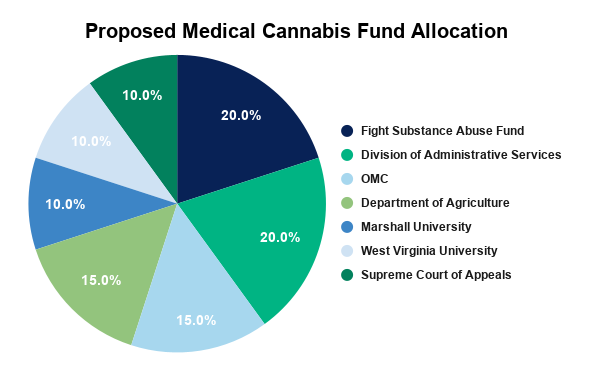
Funding allocation based on HB 5074.
State Cannabis Policies
State cannabis policies vary. 8 states permit products with CBD for medical purposes as long as they have low THC concentrations. Additionally, 40 states have a MC program like West Virginia. Pennsylvania’s approved medical conditions for MC use includes more conditions than West Virginia. Kentucky approves similar conditions as West Virginia,, though they stipulate that the Kentucky Center for Cannabis may determine other medical conditions or diseases that qualify. One option West Virginia could seek is to expand the list of approved conditions MC can be prescribed for similarly to Pennsylvania, or allow the OMC to make determinations, like Kentucky. Expanding the criteria could enable more patients to enroll in the MCP which may increase state tax revenue, though the medical benefits of using MC for other conditions should be considered. Additionally, West Virginia and Pennsylvania do not permit edible MC to be sold. The West Virginia House passed HB 5260 (2026) which would have permitted edible MC, similarly to Ohio and Kentucky, but it did not advance out of Senate committee.
There were several other bills proposed on cannabis use that did not advance out of their respective committees. 24 states permit adult recreational cannabis use, which SB 634 and HB 4371 (2026) both sought to implement in West Virginia. There are no medical stipulations for recreational use and users must be at least 21 years of age and not consume cannabis in public. Virginia and Ohio allow adults to grow cannabis plants at their residence, which was proposed for West Virginia MC users in HB 5259 (2026). If West Virginia were to implement a recreational cannabis program, it would likely see increased tax revenue as it would be available to adults without a prescription, though it may take growers and processors time to prepare for a possible increase in demand. Additionally, cannabis is still federally banned and possible complications of cannabis use, including with federal background checks and ability to purchase a firearm, should be considered.
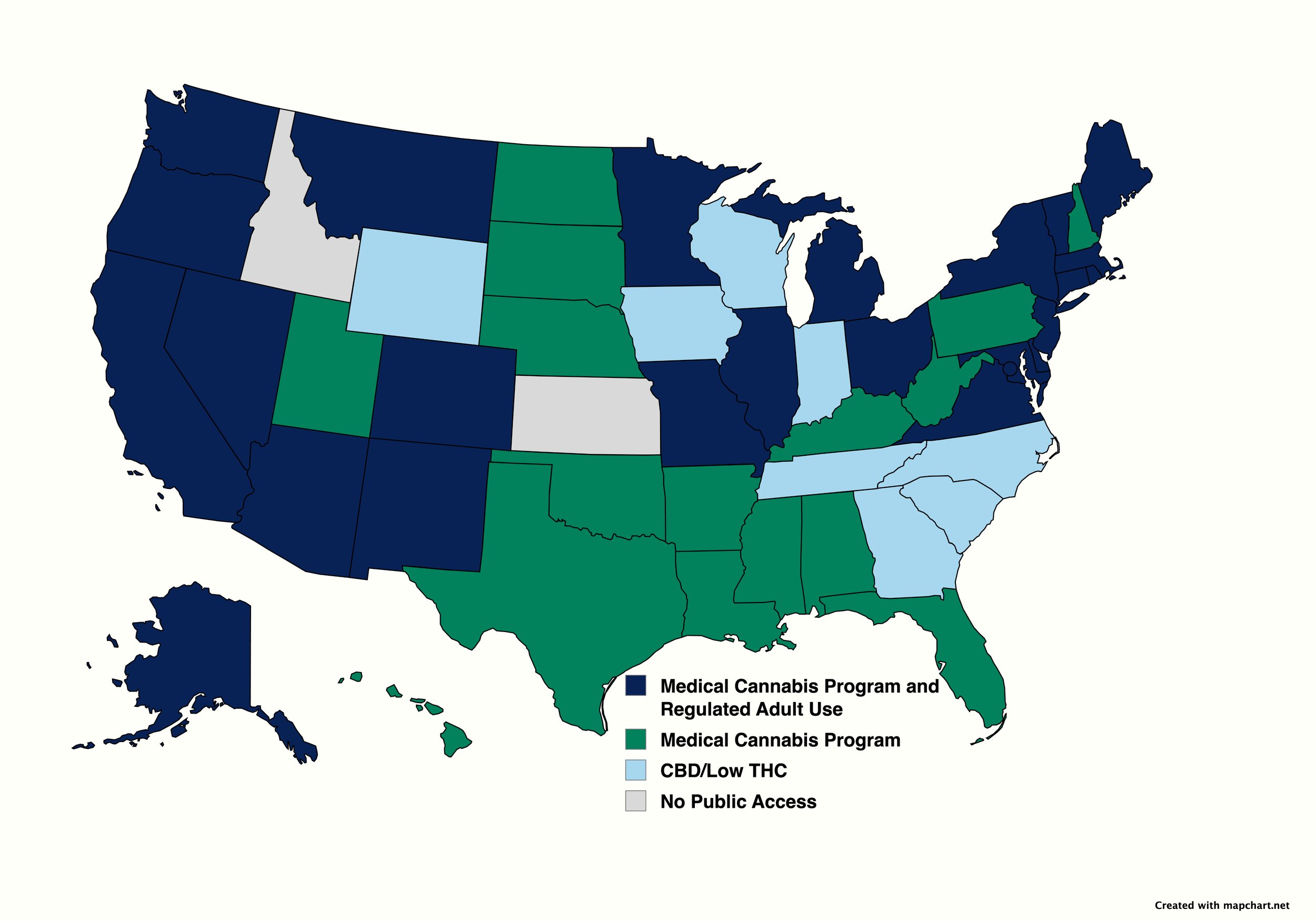
Based on analysis from NCSL.
This Science and Technology Note was prepared by Nathan G. Burns, PhD, West Virginia Science & Technology Policy Fellow on behalf of the West Virginia Science and Technology Policy (WV STeP) Initiative. The WV STeP Initiative provides nonpartisan research and information to members of the West Virginia Legislature. This Note is intended for informational purposes only and does not indicate support or opposition to a particular bill or policy approach. Please contact info@wvstep.org for more information.