Lung Cancer Screening in West Virginia
Lung cancer is the leading cause of cancer death in West Virginia. Many cases are diagnosed at more advanced stages when treatment is less effective. Annual screenings can reduce mortality of lung cancer in high-risk individuals, but many residents are not up to date on their screenings. This Science & Technology Note summarizes current evidence on lung cancer screenings, describes screening efforts in West Virginia, and highlights policy considerations to improve screening rates.
Updated August 20, 2026
Research Highlights
15.4% of eligible West Virginians are up to date on recommended lung cancer screening.
Approximately 64% of lung cancer cases in WV are diagnosed after the cancer has spread, when treatment is less effective and likelihood of mortality is higher.
Rates of diagnosis at early stages of cancer in West Virginia have improved by 13% in the past 5 years.
Statewide initiatives in states like Kentucky have increased lung cancer screening and reduced late-stage diagnoses by 10%.
Lung Cancer in West Virginia
Lung cancer remains the leading cause of cancer death in West Virginia. The state has the second-highest rate of lung cancer in the nation, behind Kentucky. It accounts for 18% of all new cancer diagnoses in the state, with 2,047 diagnoses and 1,460 deaths annually. Smoking is the biggest risk factor for lung cancer, and adult smoking rates in WV are nearly twice the national average.
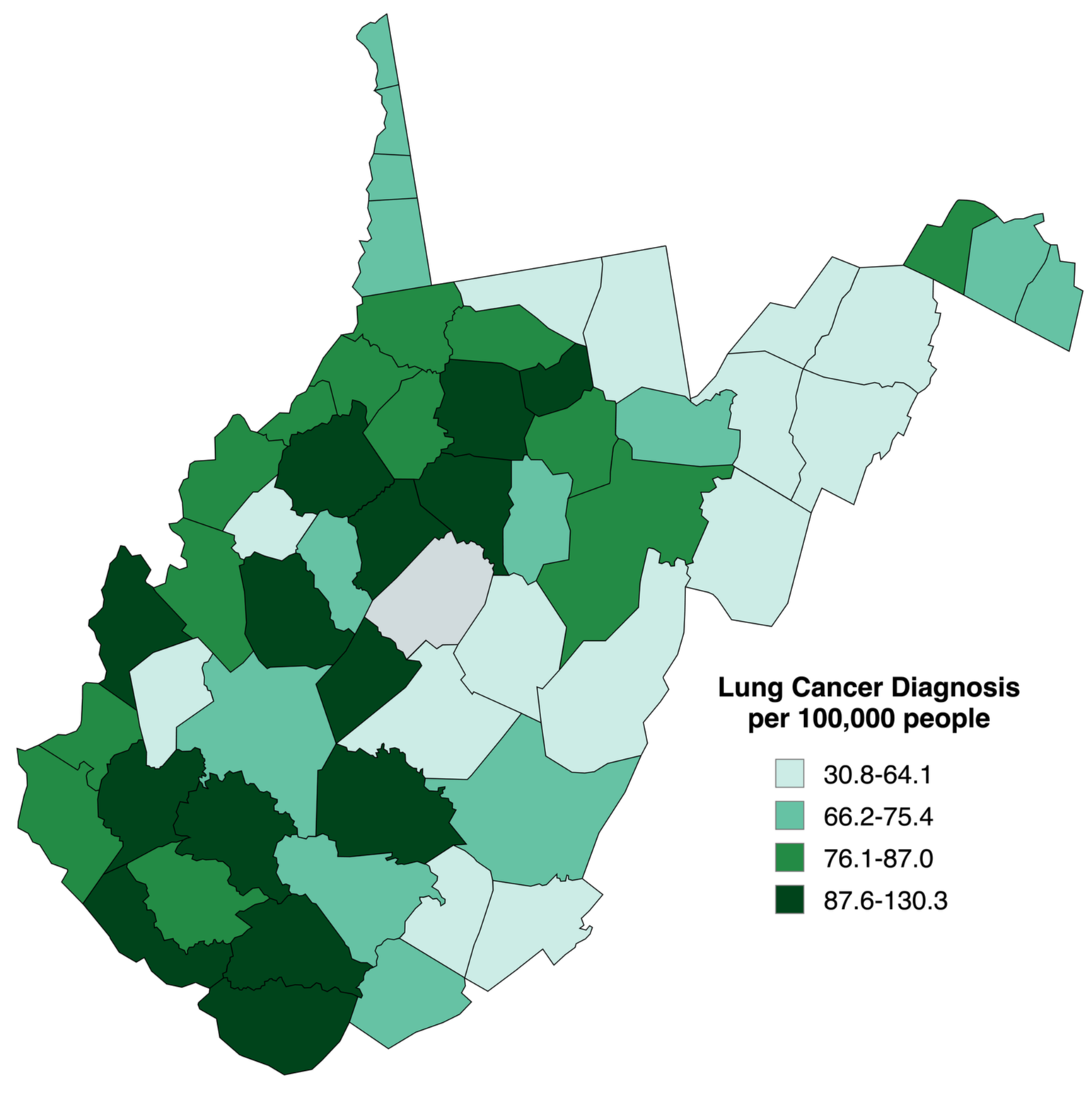
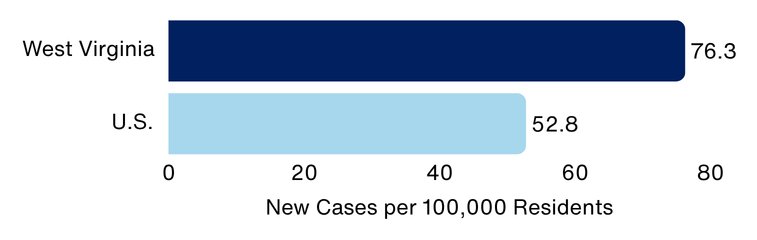
The rate of new cases in West Virginia is higher than the US rate, with southwestern counties experiencing the highest rates in the nation. Map adapted from United States Cancer Statistics: Data Visualizations and data from State of Lung Cancer (2025): West Virginia
Symptoms include persistent cough, bloody cough, shortness of breath, hoarseness or wheezing and recurring respiratory infection. However, because lung cancer often causes few symptoms until it has reached an advanced stage, early detection is critical. The U.S. Preventative Services Task Force (USPSTF) recommends an annual low dose CT (LDCT) scan for high-risk adults aged 50-80 years old who have a 20 pack-year smoking history (smoking a pack a day for 20 years or equivalent), currently smoke, or quit within the past 15 years. Medicare and Medicaid cover screening for eligible individuals. The scan can identify tumors before symptoms appear, when treatment is more effective.
Early detection substantially improves survival. In West Virginia, individuals diagnosed at early stages of the disease have a 65% five year survival rate, compared with 37% for regional and 10% for distant disease. However, only 28% of lung cancers are diagnosed while still localized, while 64% are diagnosed after regional or distant spread and 8% of diagnoses have insufficient information to determine the stage of the tumor. West Virginia is below both the national screening and survival rates.
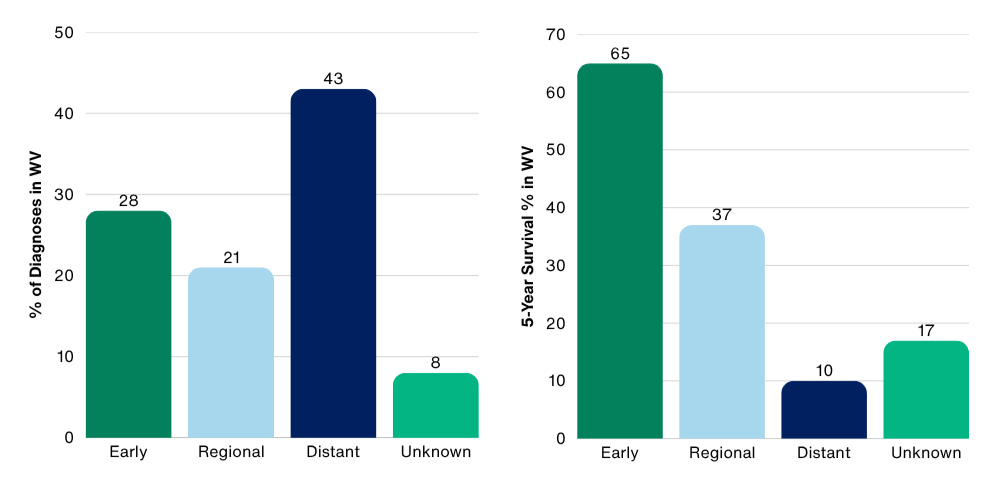
A fraction of West Virginians are diagnosed at early stages of lung cancer which has the highest 5-year survival outcomes. Adapted from State of Lung Cancer (2025): West Virginia
Barriers to Screening
LDCT screening is covered for eligible individuals (as defined by the USPSTF) and 15.4% of eligible West Virginians are up to date on recommended lung cancer screening. Major challenges include limited access and follow-up costs. Currently, there are 26 American College of Radiology-accredited facilities across 18 counties that can bill Medicare or Medicaid for lung cancer screening in West Virginia. Nationally, 7% of screened individuals undergo follow-up procedures. The average bill for screening and follow-up care was $740.06 per person, including an average $62.46 paid out of pocket by patients. Additional barriers include a fear of receiving a cancer diagnosis, time constraints, transportation challanges, and a lack of awareness of screening eligibility, recommendations and insurance coverage.
Current Screening Efforts
The WVU Cancer Institute Lung Cancer Screening Program provides risk assessment, patient navigation, smoking cessation counseling, and self-referrals for LDCT screening. The LUCAS Mobile Screening Program expands access by bringing LDCT screening directly to 42 rural and medically underserved communities, reducing transportation barriers with its route coordinated to stop in areas lacking lung cancer screening facilities. Financially, it operates at a net annual operating loss (nearly $400,000 combined with Bonnie’s Bus in 2024), which is subsidized by the 340B Drug Pricing Program and grants. Its clinical return on investment is measured in early detection: screening over 6,400 residents and identifying at least 87 lung cancers since 2021.
Lung Cancer Screening Legislation
In 2026, lawmakers introduced SB 810, the Lung Cancer Prevention and Education Act. The bill proposed establishing a statewide Lung Cancer Prevention and Education Program within the Bureau for Public Health, creating a Lung Cancer Screening and Education Fund, supporting grants for education and screening programs, covering LDCT screening for eligible residents, requiring annual public education campaigns, and reporting program outcomes to the Legislature. The bill was referred to the Senate Health and Human Resources Committee but did not advance before the end of the legislative session.
Other State Models
Several states have statewide programs that may provide useful models.The Kentucky LEADS Collaborative initially used a $7 million private grant to expand provider education, patient navigation, and quality improvement. Between 2017 and 2023, annual screenings increased from 372 to nearly 3,000, while early-stage diagnoses increased by 14% and late-stage diagnoses declined by 10%. In 2022, the Kentucky General Assembly passed HB 219, establishing a Lung Cancer Screening Program and dedicated fund within the Department for Public Health. The law created an advisory committee to guide implementation and authorized state appropriations and other funding sources to support screening. Kentucky has since drawn national attention by becoming a leader in lung cancer screening participation while also having the highest lung cancer burden in the US.
Delaware uses tobacco settlement revenue to support a broader state cancer prevention infrastructure. In 1999, the General Assembly passed SB 8 establishing the Delaware Health Fund, which directs tobacco Master Settlement Agreement revenue toward healthcare access, disease prevention, and other health priorities. State appropriations from tobacco settlement funds have supported cancer prevention and screening programs administered by the Division of Public Health. Delaware's Screening for Life Program provides free lung cancer screening for eligible uninsured and underinsured residents, while the Delaware Cancer Treatment Program can provide treatment assistance following a cancer diagnosis. In its first four years of implementation, the rate of lung cancer decreased, and 18% of treatments were for lung cancer.
This Science and Technology Note was prepared by Anika Zaman, PhD, West Virginia Science & Technology Policy Fellow on behalf of the West Virginia Science and Technology Policy (WV STeP) Initiative. The WV STeP Initiative provides nonpartisan research and information to members of the West Virginia Legislature. This Note is intended for informational purposes only and does not indicate support or opposition to a particular bill or policy approach. Please contact info@wvstep.org for more information.