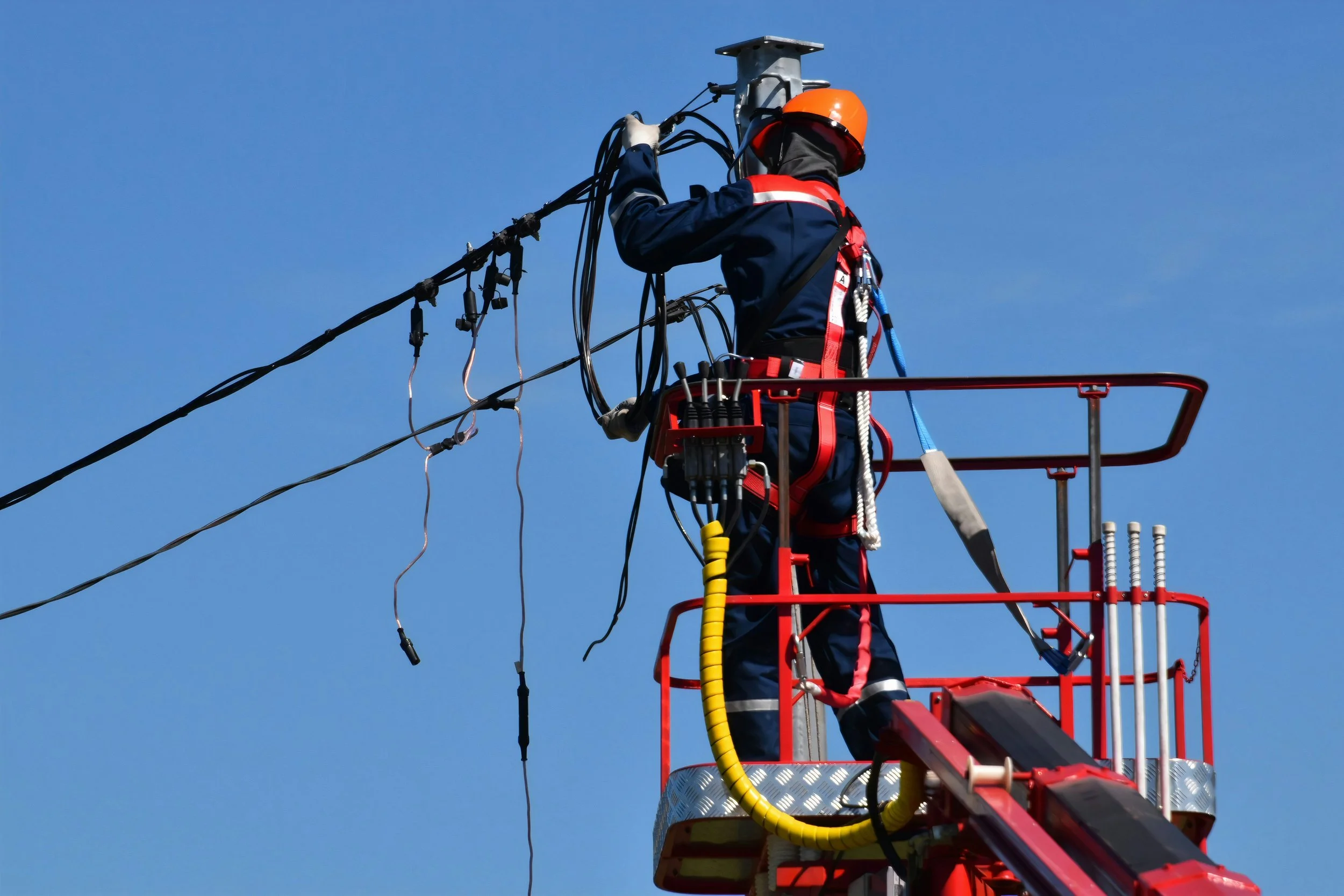
West Virginia’s Electric Resilience
The resilience of the electric grid is increasingly important as the US becomes reliant on electricity. People depend on electricity for heating and cooling, communications, transportation, and more. Resilience is a measure of how well the electric grid can prepare for and respond to electric outages. West Virginia performs poorly on many outage measurements. This updated Science & Technology Note explains resilience challenges in West Virginia, provides key examples of resilience technologies, and gives options that the state could adopt to promote grid resiliency.
Research Highlights
West Virginia experiences the 2nd highest number of electrical outages in the US, demonstrating poor electric resiliency. West Virginia has the 7th most minutes of lost power per year.
There are various methods of improving electric grid resilience, including those that reduce the number of outages occurring and those that reduce the impact of outages that do occur.
West Virginia began to address resiliency planning with a requirement for the state’s Energy Security Plan to include resilience considerations.
What is Grid Resilience?
Electrical grid resilience includes the everyday reliability of electricity, as well as the ability of the power system to respond to unexpected challenges. Preventing and recovering from electrical outages is a key component of electrical grid resilience. Although West Virginia has a large electrical generation capacity, the state has a high rate of outages. Around 40% of utility poles, wires, and transformers are past their intended lifespan, and PJM, the regional reliability coordinator for West Virginia and surrounding states, has identified over 80 potential transmission projects in West Virginia that could increase resilience. In addition to poor existing grid resilience, challenges to the grid are increasing. Severe weather is the most common threat to the grid, and West Virginia’s region is one of the most vulnerable regions to severe weather events in the US.
The average electric customer in West Virginia will lose power at least twice per year, experiencing 19.5 hours of outages. This is the 2nd highest number of outages and the 10th highest length of electricity lost per outage. Cabell, Kanawha, Mercer, and Wayne counties are particularly impacted by electrical outages, experiencing many impacted customers and extended times to service restoration.
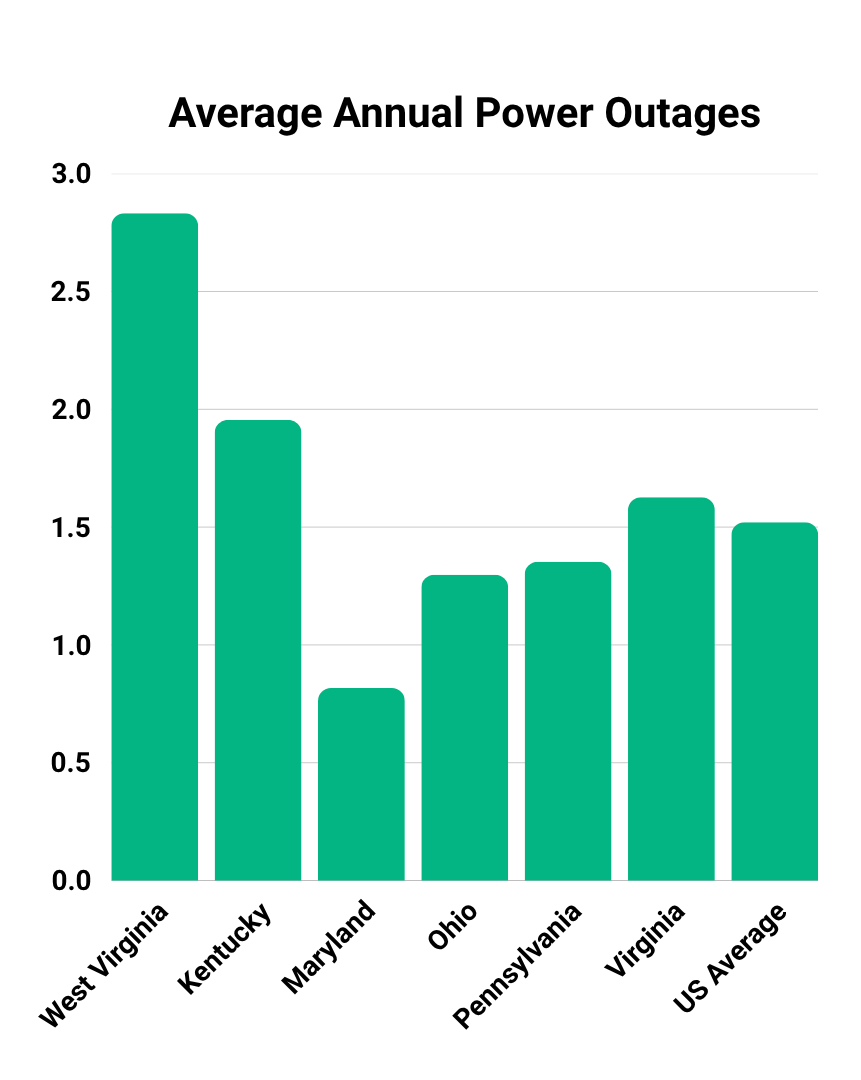
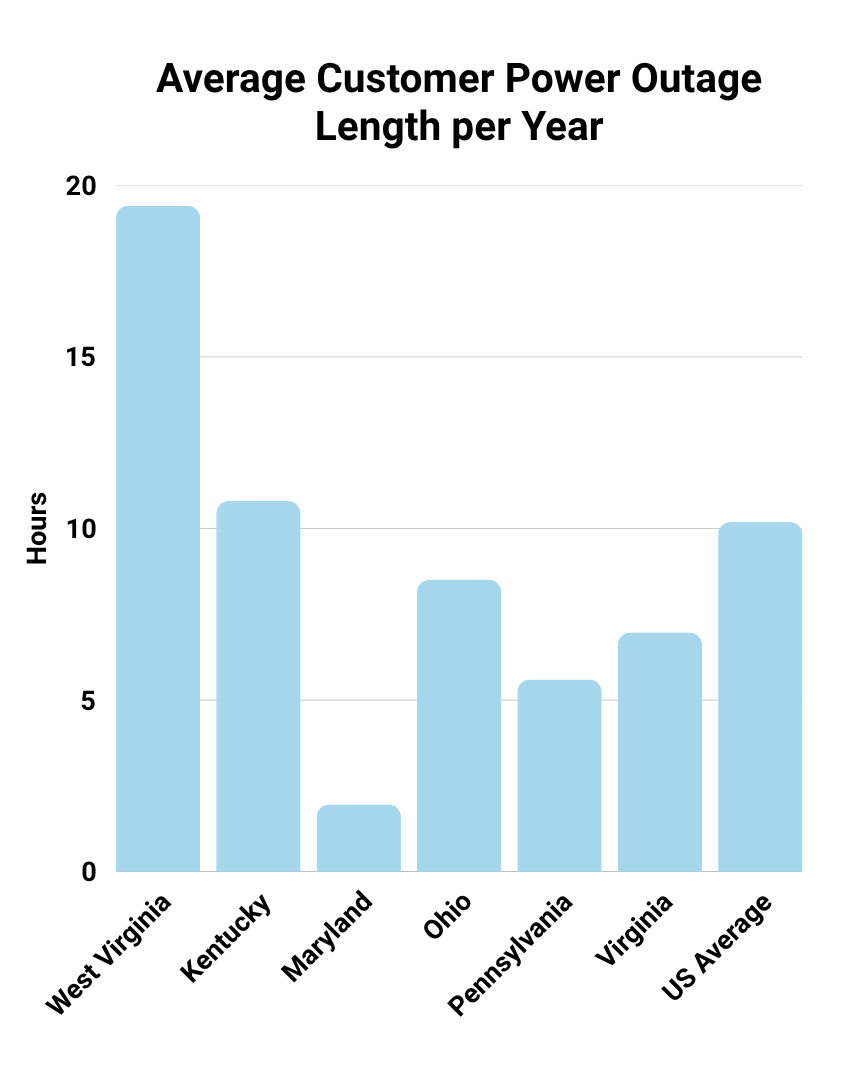
The average West Virginian will lose electricity at least twice per year, for a total of nearly 20 hours. Adapted from Electric Power Annual.
Losing power brings a number of risks. Power outages are linked to increases in carbon monoxide poisoning, likely due to improper generator use, and gastrointestinal illnesses, attributed to food poisoning from improper storage. Hospitalizations and deaths rise during power outages. Over 35,000 West Virginians rely on electrical medical equipment, putting them at high risk during a power outage. Power outages have a larger negative economic impact on commercial and industrial users compared to residential users.
Some of West Virginia’s low electric resiliency may be due to geography. The rural, mountainous land in West Virginia increases the expenses per customer required to update and maintain electric infrastructure, and low population density may extend the time it takes a utility to restore power, as crews often have to travel farther in between jobs. Power outages also last longer and occur more often in areas with lower incomes.
Resilience Technologies
There are many strategies that can be used to enhance grid resilience. These strategies can be targeted to impact the electric generation system, the high-voltage transmission system, or the low-voltage distribution system. However, these strategies are often associated with higher initial costs, which can be a deterrent for grid operators, though funding for resilience technologies is available. The West Virginia Office of Energy recently opened applications for the West Virginia Resilience Planning Project. Funded through the federal Infrastructure Investment and Jobs Act, applicants are eligible to receive matching funds to perform projects that will increase grid resilience, including upgrading infrastructure, reconductoring, undergrounding, and other resilience technologies. At the federal level, the Department of Energy’s Grid Resilience and Innovation Partnerships program recently announced its third round of funding availability, targeted at increasing the resilience of the nation’s electric transmission infrastructure. These funding sources provide opportunities for utilities and other stakeholders to invest in improving West Virginia’s electric resilience.
Grid Resilience Efforts in West Virginia
Resiliency is a factor in planning for the future of the electric grid. West Virginia has recently made steps to address grid resiliency. One component of HB 5381 (effective June 12, 2026) requires the state Office of Energy to develop an Energy Security Plan that considers reliability and resilience. The first iteration of the plan is scheduled to be released by December 1, 2026, and will be updated every 5 years. However, the bill does not provide information on which resilience considerations should be incorporated into the plan. The legislature could consider expanding the resiliency requirements for the state Energy Security Plan noted in HB 5381 to provide more specific guidance as to what resilience hazards should be planned for and the types of resilience measures that could be included in resilience planning.
In addition to statewide energy resilience plans, at least 14 states require specific resilience plans from their regulated utilities. These plans are often designed to address specific hazards that that utility may face, such as flooding or wildfires. The legislature could also consider requiring individual utilities in West Virginia to file independent resilience plans to address their specific risks and resilience measures.
This Science and Technology Note was prepared by Madison Flory, PhD, West Virginia Science & Technology Policy Fellow on behalf of the West Virginia Science and Technology Policy (WV STeP) Initiative. The WV STeP Initiative provides nonpartisan research and information to members of the West Virginia Legislature. This Note is intended for informational purposes only and does not indicate support or opposition to a particular bill or policy approach. Please contact info@wvstep.org for more information.