
Cancer Screening for West Virginia Firefighters
Firefighters face occupational exposure to hazardous materials that can increase the risk of certain cancers. This Science & Technology Note examines firefighter cancer risk, evidence for established and emerging screening technologies, and approaches considered in West Virginia and other states to expand access to cancer screening.
Updated September 10, 2026
Research Highlights
Firefighters experience occupational exposure to carcinogens, and international and federal research has identified elevated risks for several cancers in firefighters.
West Virginia recognizes six cancers as ‘potentially occupational’ for qualifying professional firefighters under WV Code §23-4-1.
West Virginia lawmakers considered state-funded and insurance-based approaches to expanding firefighter cancer screening in 2026, including established screening methods and emerging multi-cancer detection (MCD) blood tests.
Other states use approaches including recurring screening benefits, employer-funded screening, and state grants.
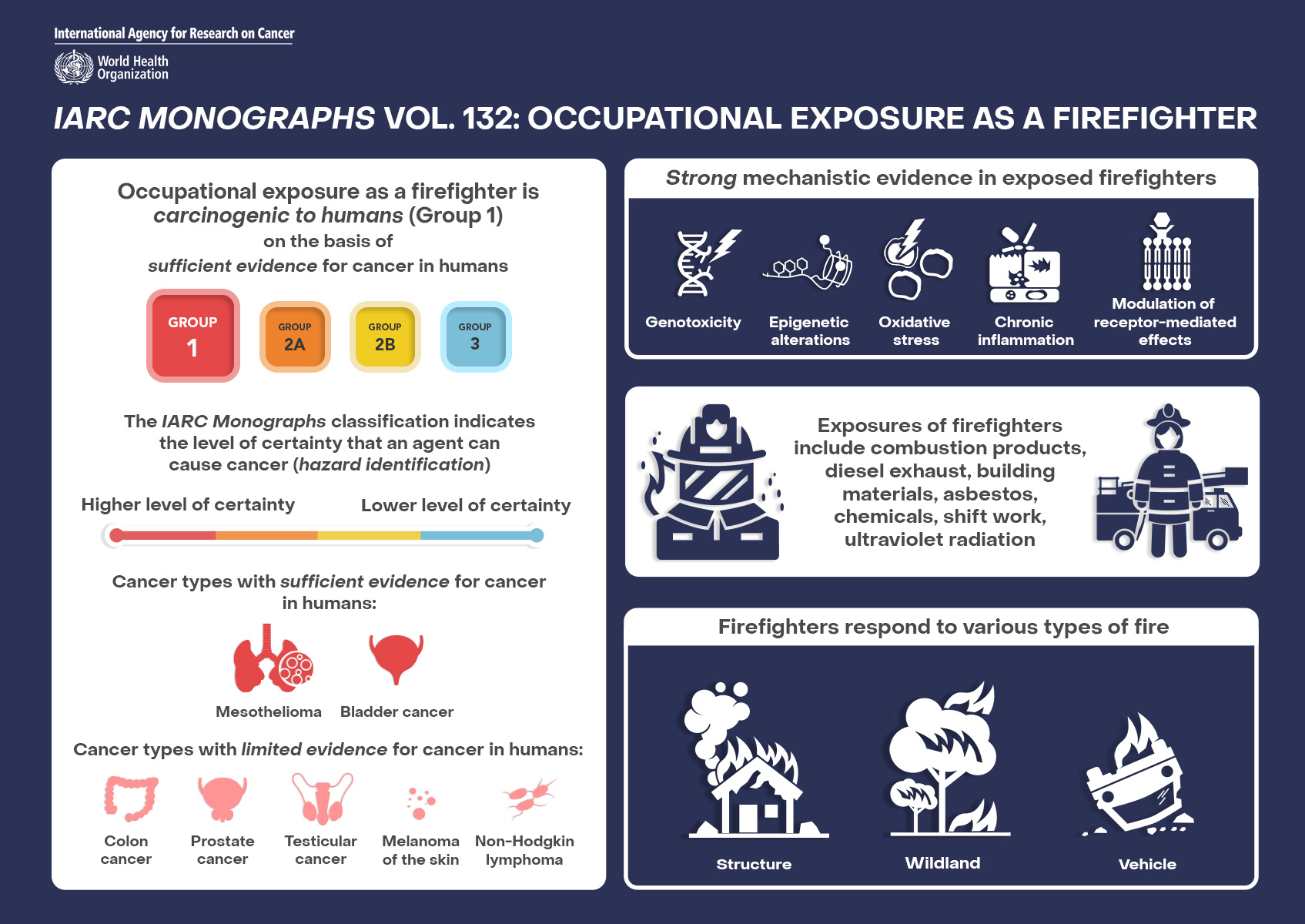
Firefighters encounter carcinogens through smoke, combustion products, diesel exhaust, firefighting foams, contaminated protective equipment, and other occupational exposures. Research increasingly recognizes cancer as an occupational health concern for the fire service. West Virginia already identifies some cancers as occupational diseases among qualifying professional firefighters, and lawmakers considered several proposals during the 2026 legislative session to expand firefighters’ access to cancer screening. This Science & Technology Note examines cancer risk among firefighters, evidence regarding cancer screening, cancer screening approaches proposed in West Virginia, and models used in other states.
Cancer Risk Among Firefighters
Firefighters can be exposed to carcinogens through smoke, combustion products, diesel exhaust, firefighting foams, building materials, and contaminated protective equipment. In 2022, the International Agency for Research on Cancer (IARC) classified firefighters’ occupational exposure as carcinogenic, meaning it could lead to cancer. Firefighters have greater risk than the general public for testicular cancer, multiple myeloma, non-Hodgkins lymphoma, skin cancer, prostate cancer, brain cancer, colon cancer, leukemia, and breast cancer in women. Cancer risk for individual firefighters can be influenced by the type, intensity, and duration of occupational exposures, as well as age, smoking, and additional individual risk factors. A study of nearly 30,000 career firefighters found 9% more cancer diagnoses and 14% more cancer deaths compared with the general U.S. population.

Firefighters experience a higher incidence of several cancers. The Standardized Incidence Ratio (SIR) compares observed cancer cases with the expected number based on U.S. population estimates. SIR of 1.0 indicates expected incidence. Adapted from Table 2 of Occupational and Environmental Medicine. U.S. firefighter cohort; not West Virginia-specific.
Cancer Screening Evidence
Current cancer screening recommendations target specific cancers and populations where the benefits of screening can outweigh potential harms. For example, there are general screening recommendations for breast cancer, colorectal cancer, lung cancer, and prostate cancer, primarily based on age and other risk factors. However, several cancers associated with firefighting, including bladder cancer, mesothelioma, testicular cancer, and lymphoma, do not have established screening programs. This creates a challenge for firefighters: an occupational group can have elevated risk for cancer even when there is no proven method for routinely screening that group for the disease. There are emerging technologies to address this gap, including multi-cancer detection (MCD) blood tests. MCD tests analyze biological signals that may indicate the presence of multiple types of cancer, including cancers for which routine screening tests do not currently exist. However, a positive MCD result is not a diagnosis and requires follow-up.
Cancer Screening in WV
West Virginia already recognizes firefighters’ occupational risk through its workers' compensation system. Under WV Code §23-4-1, some cancers (leukemia, lymphoma, multiple myeloma, bladder cancer, mesothelioma, and testicular cancer) are presumed to be work-related and screening is covered when employment, age, and tobacco-use criteria are met. Bladder cancer, mesothelioma, and testicular cancer were added in 2024 and are scheduled to expire July 1, 2027, unless extended by the Legislature. This does not apply to volunteer firefighters, though 90.6% of registered fire departments in the state are volunteer, compared with 69.8% nationally.

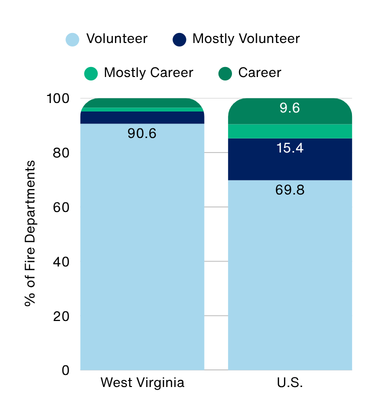
More than 90% of West Virginia fire departments are volunteer, compared with about 70% nationally; another 4.5% are mostly volunteer. Career departments identified in the U.S. Fire Administration registry are concentrated in 12 counties. Department location does not represent individual firefighter residence or service area.Data from ResponseRack.
During the 2026 legislative session, lawmakers considered a state-funded, 24-month cancer screening pilot program for active and retired career firefighters through SB 940, HB 5068, and the introduced version of HB 4989. The program would include a MCD test, ultrasound screening, low-dose CT, and skin cancer screening, with expenditures capped at $1,300 per participant. A fiscal analysis identified 562 active and 1,128 retired firefighters eligible for the program and estimated total costs at around $2.2 million, excluding administrative expenses.
Alternatively, HB 4627 and the committee substitute for HB 4989 proposed insurance-based coverage of cancer screenings recommended by International Association of Firefighters guidelines or National Fire Protection Association standards, respectively. It would require coverage of cancer screenings without cost-sharing, with an exception for deductibles under high-deductible health plans. The average cost of standard cancer screening is $180 per patient while other firefighter-oriented screening services not currently covered by the Public Employees Insurance Agency ranged from $900–$2,500. It was estimated HB 4627 would increase plan costs by approximately $56,000. However, the fiscal estimates for the pilot program and this insurance-based approach are not directly comparable because the proposals differ in eligible populations, covered tests, and funding mechanisms.
Approaches in Other States
States have used different approaches to expand cancer screening for firefighters. New Jersey requires periodic cancer screening for full-time paid firefighters every three years and may reimburse public employers up to $1,250 per firefighter. This is similar to the $1,300 per-person allocation proposed in SB 940 and HB 5068, but New Jersey has established screening as an ongoing occupational benefit. However, this program only applies to full-time firefighters.
Louisiana requires employers to fund periodic cancer screening to professional firefighters, with screening frequency increasing with age and continuing into retirement. Louisiana also limits insurer responsibility for screening performed more frequently than recommended by established cancer-screening guidelines.Like Louisiana, West Virginia’s SB 940 and HB 5068 would also have included retired firefighters. However, Louisiana assigns the ongoing cost to employers rather than establishing a state-funded program, which could have different fiscal effects across counties.
States have also considered how to reach volunteer firefighters. Virginia’s proposed Firefighters Cancer Screening Grant Program would provide grants to localities for ultrasound and MCD screening but has not been enacted. In contrast, Nevada requires employer-funded annual screening for covered career and volunteer firefighters as of July 2026, while Wyoming provides screening through workers' compensation for career and volunteer firefighters with at least 10 years of service.
These approaches illustrate several policy options for West Virginia, including state funding, employer or insurance requirements, local grants, or workers' compensation benefits. Programs vary in whether they cover retirees or volunteers and whether they support established screening practices or emerging technologies such as MCD tests.
This Science and Technology Note was prepared by Anika Zaman, PhD, West Virginia Science & Technology Policy Fellow on behalf of the West Virginia Science and Technology Policy (WV STeP) Initiative. The WV STeP Initiative provides nonpartisan research and information to members of the West Virginia Legislature. This Note is intended for informational purposes only and does not indicate support or opposition to a particular bill or policy approach. Please contact info@wvstep.org for more information.