Colorectal Cancer in West Virginia
This Science & Technology Note provides statistics surrounding colorectal cancer in West Virginia, gives information on colorectal cancer screenings, and highlights previously successful state efforts to increase the colorectal cancer screening rate.
Updated April 10, 2026
Research Highlights
Screening can catch many cases of CRC at an early stage, when the cancer is more easily treated.
About 60% of eligible West Virginians receive recommended CRC screenings.
States have successfully increased CRC screening rates by providing additional funding for screenings, patient navigation, and outreach.
Previous efforts to increase CRC screening in West Virginia resulted in a 20% increase in completed screenings.
West Virginia has the 2nd highest rate of colorectal cancer (CRC) diagnosis and 3rd highest rate of CRC death in the United States. Although effective screening methods for CRC exist, only about ⅔ of eligible individuals receive screening. This Science & Technology Note provides statistics on CRC in West Virginia, compares CRC screening methods, identifies state-funded CRC screening programs in other states, and highlights considerations for a proposed screening program in West Virginia.
Colorectal Cancer in West Virginia
CRC is a type of cancer that occurs in the large intestine, most often the lower portion of the colon and the rectum. It can cause many symptoms, including bloody stools, abdominal pain, weight loss, and changes in bowel habits. Often, CRC does not cause symptoms until the disease is more advanced and more difficult to treat. In 2022, more than 1,000 West Virginians were diagnosed with CRC. This is the 2nd highest rate of CRC diagnosis in the nation, behind Kentucky, and the state also has the 3rd highest rate of death from CRC, behind Mississippi and Kentucky.
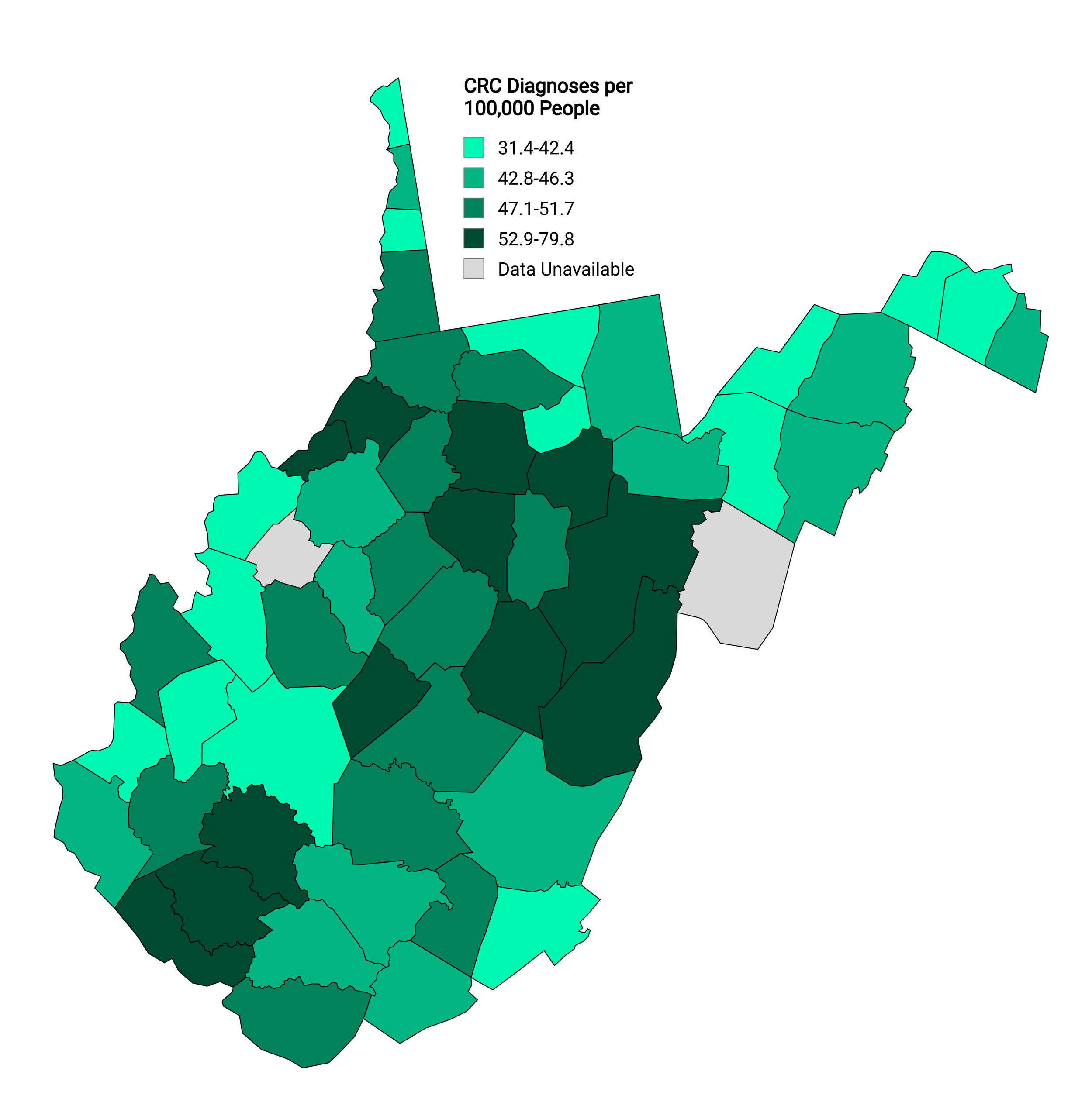
Adapted from United States Cancer Statistics: Data Visualizations
There are several factors that may be contributing to high rates of CRC in West Virginia. Obesity and tobacco use are risk factors for CRC, and rates of both are high in the state. Other risk factors for developing CRC include certain autoimmune or genetic conditions, eating large amounts of red meat, and drinking alcohol. Additionally, much of West Virginia is rural. In rural areas, CRC diagnosis rates are 16% higher, and mortality rates are 20% higher, often attributed to lack of access to screening and follow-up care, as many cancer services are only located in major cities. Early access to screening and care is important, as the survival rate is as high as 90% in the earliest stage, before cancer has spread. This drops to 16% if the cancer has spread. Because CRC is located in the abdomen, close to many other organs, it is likely to spread to organs like the liver and lungs. CRC screenings can help to catch many of these cases in earlier stages, when treatment is more successful.
Screening for Colorectal Cancer
CRC screening is recommended by the US Preventive Service Taskforce to begin at age 45 for adults with an average risk of CRC. There are several different ways to be screened for CRC. About 10% of adults at average risk of CRC are screened using an at-home stool test. Home stool tests, depending on the specific type of test, typically cost between $20 and $500, ranging from 30% - 95% accuracy. These tests require an individual to provide a stool sample and return the test via mail. Home tests need to be performed more frequently than other types of screenings. If someone tests positive on a home test, they are recommended to receive a follow-up colonoscopy. Colonoscopies allow a doctor to see the inside of the colon, identify areas that are abnormal, and remove them. Many people use colonoscopies as their primary CRC screening method. About 50% of people in the US who test positive on an at-home stool test receive a follow-up colonoscopy to further investigate their positive test.
Barriers to CRC screening include financial hardships and a lack of knowledge about testing recommendations and options. States, including West Virginia, have taken several actions to combat these barriers and increase CRC screenings. Raising the rate of CRC screening to 80% is estimated to reduce CRC deaths by 33%, and achieving a screening rate of 70% is estimated to produce over $14 billion in Medicare savings by 2050.
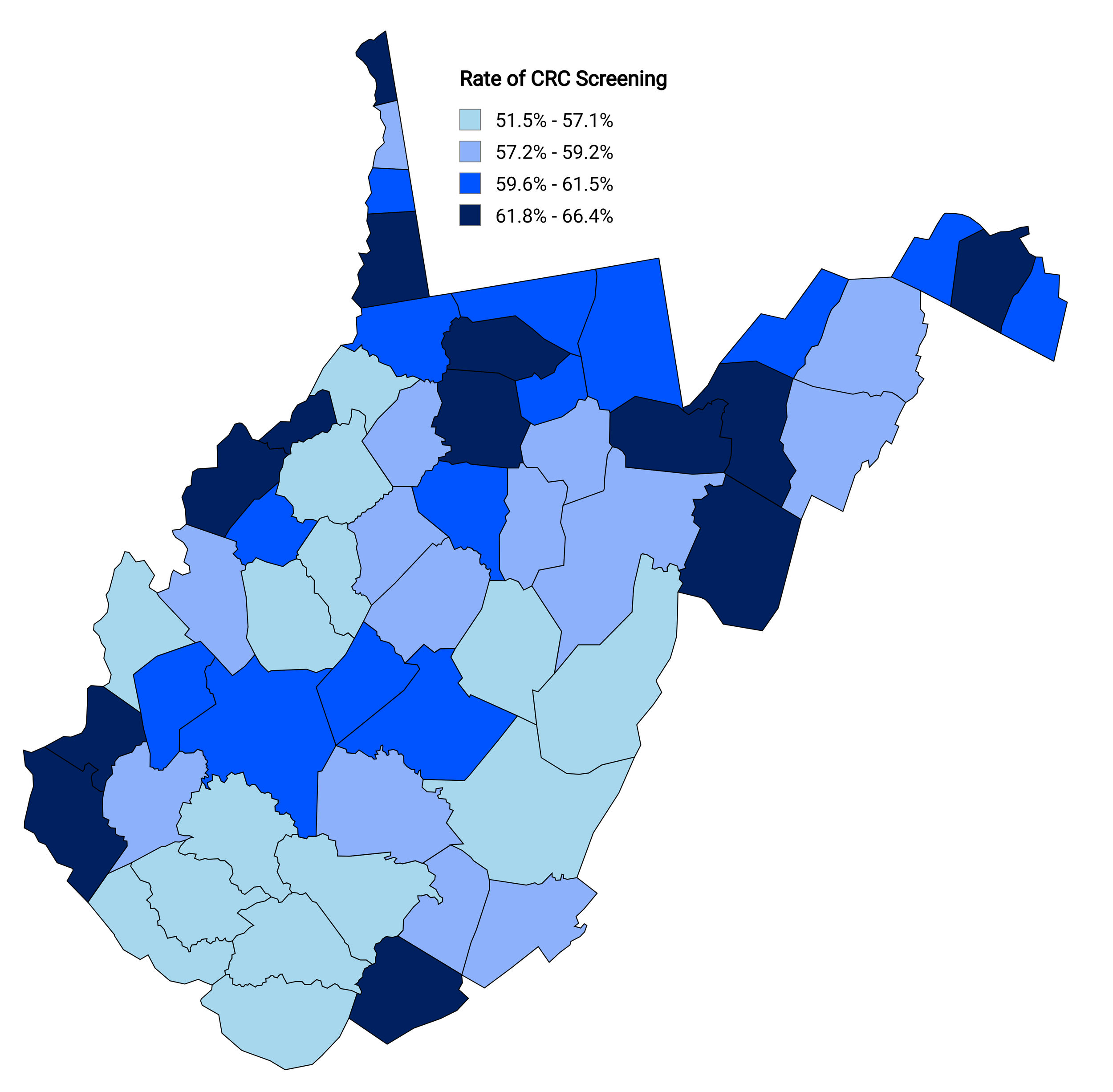
Adapted from United States Cancer Statistics: Data Visualizations
Cancer Screening Legislation in WV
West Virginia and other states have demonstrated that providing funding for CRC screening can be effective at increasing screening rates and decreasing late-stage cancer diagnosis. West Virginia receives funds from the national Colorectal Cancer Control Program to fund the West Virginia Program to Increase Colorectal Cancer Screening (WVPICCS). With this funding, the Wheeling Health Right clinic changed the type of stool-based CRC screening tests they offered and implemented a screening reminder program. These efforts resulted in the clinic raising its CRC screening rate by 58% in 2 years. Efforts funded by this program across the state averaged a 20% increase in at-home, stool-based CRC screenings.
In 2026, West Virginia legislators introduced a bill to implement a new CRC screening program. SB 662 would have established the Colorectal Cancer Screening and Diagnostic Colonoscopy Treatment Pilot Program to provide colonoscopies and CRC treatment to eligible individuals, however, the bill did not make it through the committee process. Eligibility for the program would include being a West Virginia resident between 45 and 64, with income at or below 300% of the federal poverty level, who has CRC symptoms and has tested positive using a stool test. The program proposed providing up to $500,000 annually for these services over a 3 year period, but does not require these funds to be provided by the Legislature. This proposal is similar to programs in Colorado and Kentucky.
The Colorado Colorectal Screening Program uses revenue from the state tobacco excise tax to provide colonoscopies, CRC treatment, and patient support services. In the first 6 years of the program, over 13,000 colonoscopies were performed. The program was eventually expanded to provide additional screenings for other types of cancer. In Kentucky, the legislature funds the Colon Cancer Screening & Prevention Program to make colonoscopies and stool tests available to eligible residents. This program helped raise the CRC screening rate in Kentucky, and has a significantly higher follow-up rate after a positive screening than the national average.
Possible options to fund a CRC program like what is proposed in SB 662 include using revenue from the tobacco excise tax, as smoking raises the risk of developing CRC. This option may result in a reduction of programs that this revenue is currently directed to. Because West Virginia is a highly rural state, and rural areas have higher rates of CRC diagnosis, an alternative option to explore for funding could be the Rural Health Transformation Fund. The Rural Health Link component of the governor’s plan could help transport more West Virginians to CRC screening appointments. The state could also explore partnering with the WVPICCS to take advantage of existing federal funding, collaborative relationships between healthcare providers and research institutions, and proven strategies to increase screening rates in the state.
This Science and Technology Note was prepared by Madison Flory, PhD, West Virginia Science & Technology Policy Fellow on behalf of the West Virginia Science and Technology Policy (WV STeP) Initiative. The WV STeP Initiative provides nonpartisan research and information to members of the West Virginia Legislature. This Note is intended for informational purposes only and does not indicate support or opposition to a particular bill or policy approach. Please contact info@wvstep.org for more information.