Bees in West Virginia
Bees support West Virginia agriculture and environments by pollinating a wide variety of crops and wildflowers. Nearly 90% of all flowering plants including 75% of all agricultural crops depend on animal pollination, with bees being responsible for most worldwide crop and wildflower pollination. Both honey and native bee populations have been declining worldwide due to pesticide use, habitat loss, pests, and disease. This Science and Technology note discusses honey and native bees in the state, the problems facing them, and policy options West Virginia could consider to protect the state’s bee populations.
Updated October 9, 2026
Research Highlights
Bees support West Virginia agriculture through crop pollination and honey production; native bees can be better pollinators than honey bees for certain crops.
West Virginia honey bee populations declined by an estimated 40% from 2024-2025, amid substantial colony losses nationally.
West Virginia has considered three major approaches to protect bees: funding pollinator habitats, modifying beekeeping regulation, and managing honey bee pests.
Other states have passed legislation creating pollinator habitat programs and regulating the use of harmful pesticides.
Bees support West Virginia agriculture and environments by pollinating a wide variety of crops and wildflowers. Nearly 90% of all flowering plants including 75% of all agricultural crops depend on animal pollination, with bees being responsible for most worldwide crop and wildflower pollination. Both honey and native bee populations have been declining worldwide due to pesticide use, habitat loss, pests, and disease. This Science and Technology Note discusses honey and native bees in the state, the problems facing them, and policy options West Virginia could consider to protect the state’s bee populations.
Honey Bees
The West Virginia Department of Agriculture recorded 16,000 honey bee colonies in West Virginia run by 1,400 beekeepers in all 55 counties, which produced 250,000 lbs of honey in 2025. Due to competition with low-cost imported honey, beekeepers are increasingly renting out their hives in a pollination-for-hire business model. This benefits farmers by increasing yields of crops such as blueberries and apples that cannot effectively self-pollinate while providing an important additional income stream for U.S. and West Virginia beekeepers. In 2025, 3,250 of West Virginia’s 16,000 honey bee colonies were shipped to California to aid in almond production. About one-third of food in the United States comes from crops pollinated by honey bees, and the agricultural benefit of honey bees is estimated to be 10-20x the value of honey and beeswax.
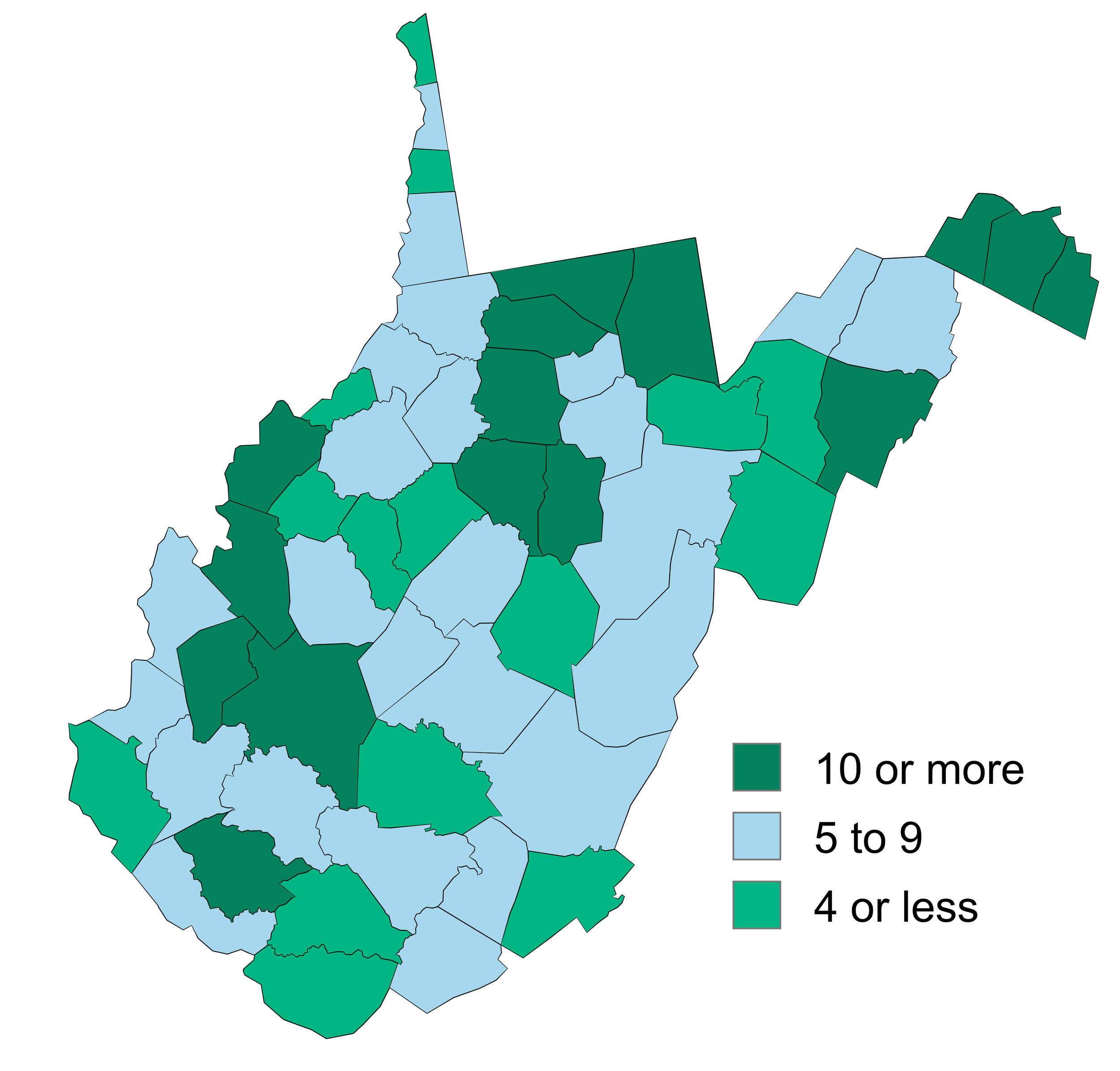
Counties with registered apiaries. Source: WV Department of Agriculture
Honey bee colony populations in West Virginia declined by an estimated 40% from 2024-2025, with losses as high as 62% being reported nationwide. This is believed to be a result of harsh winters and honey bee pests, specifically the varroa mite. Transporting hives long distances for pollination services could be exposing honey bees to pests and diseases.
Native Bees
Compared to honey bees, native bees are better adapted to pollinate native plants and do not require transportation because they can live out in the environment near fields and orchards. These bees can fly and pollinate throughout the cooler and wetter growing season in Appalachia. Native bees usually make their nests in the ground or inside tree trunks, which makes them vulnerable to habitat loss during tillage or tree removal. Other threats include insecticides, and herbicides. Insecticides are primarily broad-spectrum, which means that they do not distinguish between harmful pests and helpful pollinators and are therefore deadly to bees. Indiscriminate herbicide use can also kill many of the flowers that bees rely on for food. A type of insecticide known as neonicotinoids are particularly dangerous to native bees because they are taken up by plants, can last for months, and also seep into bee nests.
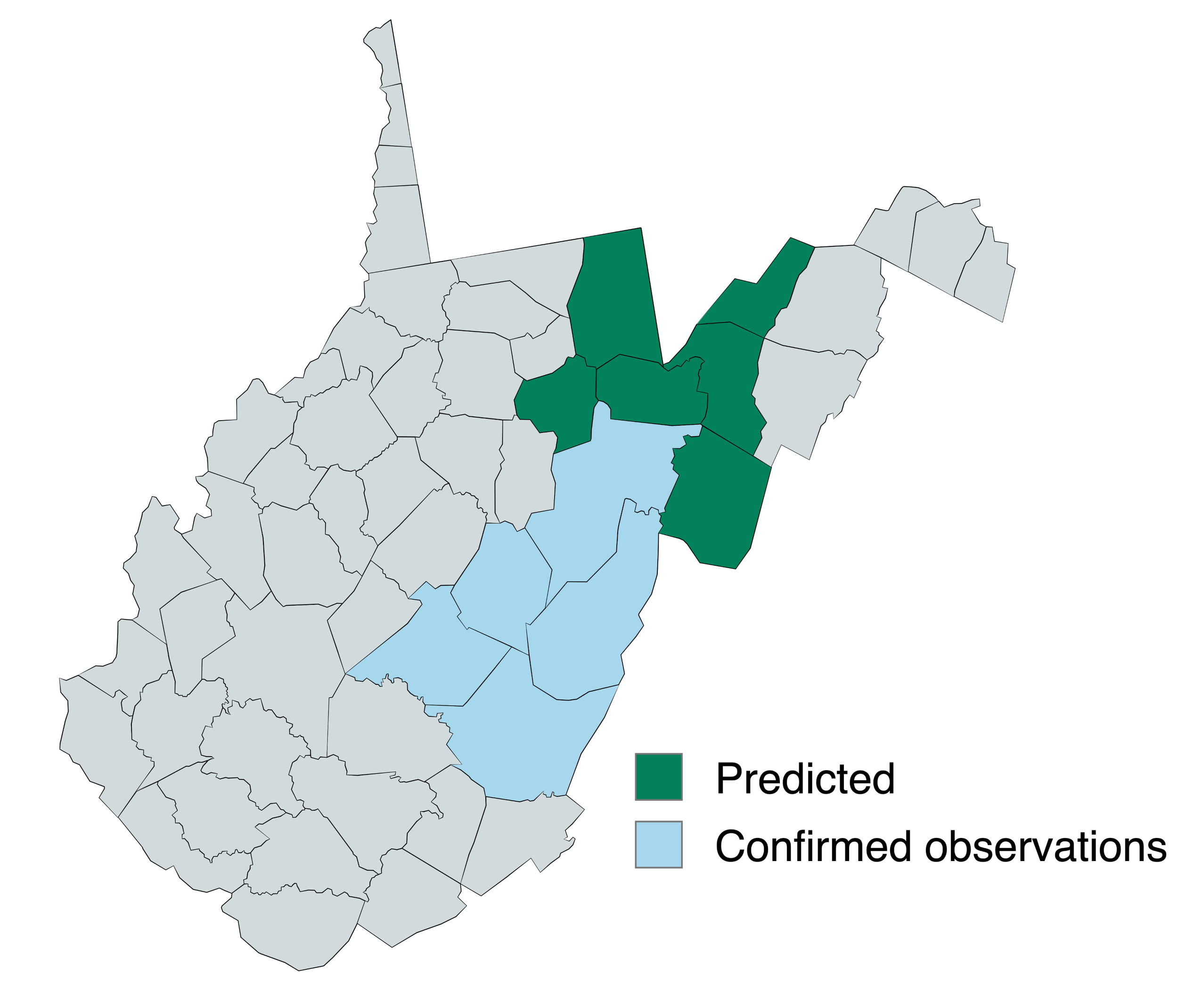
An example of a native bee species facing population decline is the rusty patched bumble bee, a species that was once found throughout Appalachia and the eastern United States. This species has lost 87% of its population over the past 20 years and lives in 0.1% of its historical range. This led to it becoming the first bee species to be listed as endangered in the continental United States by the U.S. Fish and Wildlife Service in 2017. West Virginia is home to the last verifiable population cluster of rusty patched bumble bees in the eastern United States.
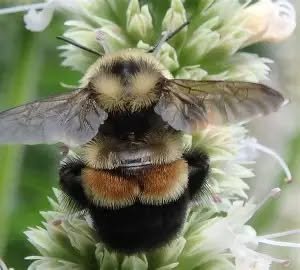
Counties in West Virginia with possible and confirmed (since 2022) observations of the endangered rusty patched bumble bee. Sources: U.S. Fish and Wildlife Service and inaturalist. Image Source: West Virginia Department of Agriculture
Bee Legislation and Policy Options in West Virginia
West Virginia lawmakers introduced SB 927 in 2026, also known as the "Omnibus Bee Bill”. This included the West Virginia Apiary Act, which acknowledged the drastic decline of pollinators in the state and their importance to the state’s economy. The bill would have reduced local and county regulations on registration, permitting, location, and management of beehives, and it included provisions to control honey bee pests by giving the Commissioner of the West Virginia Department of Agriculture the authority to destroy any infected bees or equipment. The West Virginia Beekeeping Association (WVBA) supported the bill as a way to promote honey bee agriculture and populations in the state by placing beekeeping under state rather than local control, which would have prevented municipalities from banning beekeeping. The WVBA also supported the provisions designed to protect honey bees from pests like the varroa and tropilaelaps mites, which are the leading threats to honey bee colonies nationwide.
SB 927 would have also designated all fees collected from West Virginia’s protect pollinators license plate to be used for planting pollinator habitats along state highways. Special fees collected from this license plate are currently deposited into the general State Road Fund. West Virginia is the only state that does not designate honey bee or pollinator-themed license plate fees for their state beekeeping associations or for protecting pollinators. The state could consider designating some or all pollinator license plate fees for a newly created state pollinator habitat program such as the one proposed in HB 5439, introduced in 2026 and known as the Pollinator Protection Act. An example is Virginia’s Wildflower and Pollinator Habitat Program, which was created in 2015 and supports pollinator habitats at Virginia Department of Transportation sites throughout the state. This program is directly funded using $15 of the $25 plate fee for the Wildflowers and Protect Pollinators license plates, which generated $350,000 in 2025. In addition to promoting healthy populations of native bees, a similar program in West Virginia could allow for reduced mowing, reduced erosion and runoff, and decreased invasive species. This would reduce the cost of removing problem vegetation and the need for herbicides.
West Virginia has not passed legislation on pesticide regulation. However, the West Virginia Department of Agriculture has published best management practices that recommend choosing less toxic pesticides, applying when bees are less active, and taking care to avoid pesticide drift. Lawmakers introduced HB 4722 in 2022, which would have set limits on neonicotinoid pesticides based on a Department of Agriculture review of the latest research concerning harm to pollinators including bees. As of 2024, 26 states have regulated neonicotinoids with policy options ranging from a total ban on agricultural and consumer use to requiring licenses and pollinator-specific training for users. West Virginia could consider any of these options for regulating pesticide use, however, this could face opposition from agricultural interests and homeowners in the state.
This Science and Technology Note was prepared by David Ramotowski, PhD, West Virginia Science & Technology Policy Fellow on behalf of the West Virginia Science and Technology Policy (WV STeP) Initiative. The WV STeP Initiative provides nonpartisan research and information to members of the West Virginia Legislature. This Note is intended for informational purposes only and does not indicate support or opposition to a particular bill or policy approach. Please contact info@wvstep.org for more information.