Alpha-Gal Syndrome in West Virginia
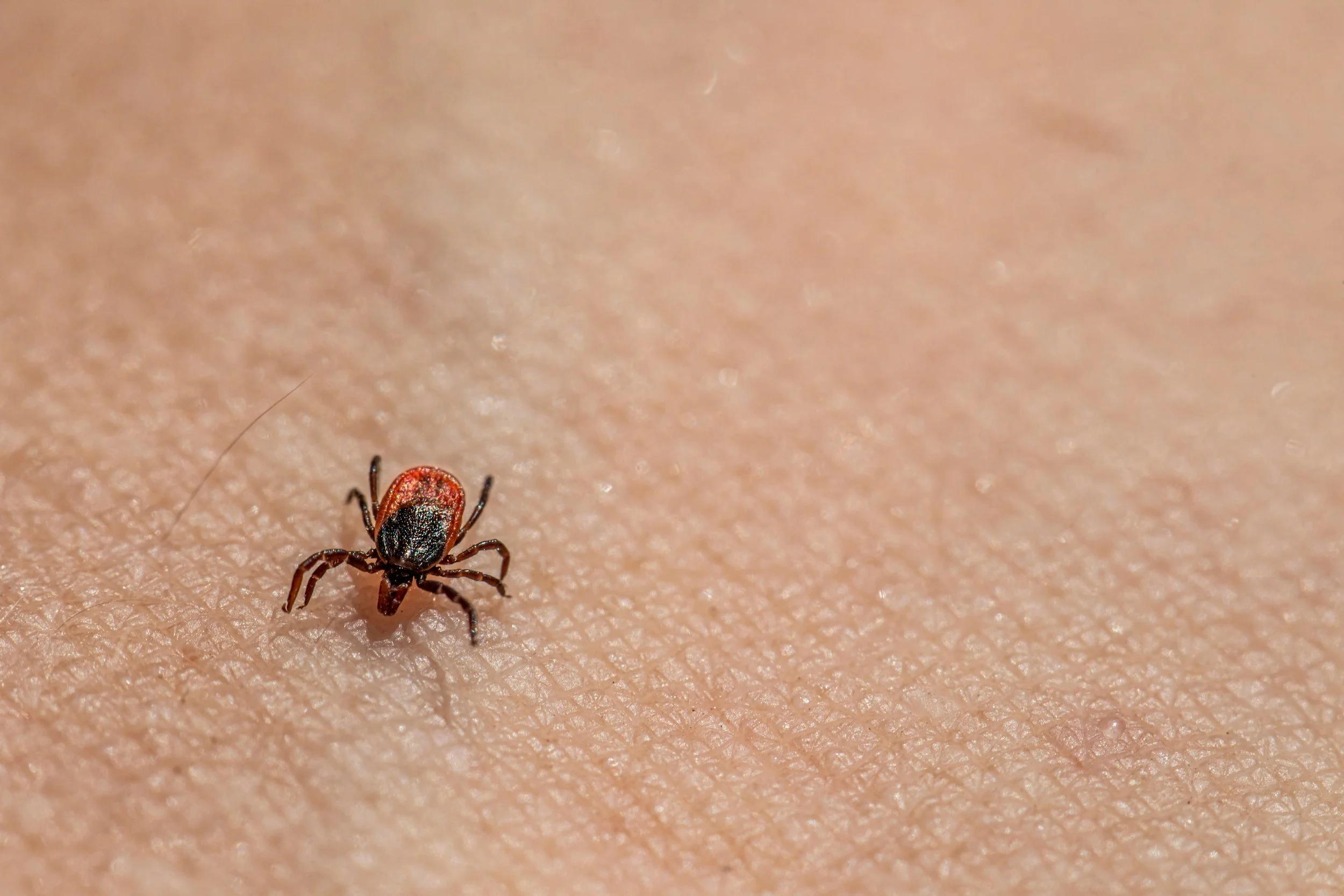
Alpha-gal syndrome is a life-altering allergy to a sugar found in mammals. It is caused by tick bites, and is a growing issue in West Virginia and the wider region, as cases are increasing and the area that ticks can live is expanding. This Science & Technology Note describes what alpha-gal syndrome is, provides information on the ticks that transmit this allergy, and highlights some policy options addressing alpha-gal syndrome that the West Virginia legislature could adopt.
Research Highlights
Lone Star ticks, which are found in West Virginia, can bite humans and trigger alpha-gal syndrome. Alpha-gal syndrome can cause severe allergic reactions to meat and other products made from mammals.
The West Virginia Department of Health requires cases of alpha-gal syndrome to be reported.
West Virginia could opt to enshrine reporting requirements in code, require alpha-gal labeling on products, or increase familiarity of the condition among medical providers through continuing education requirements.
Alpha-gal Syndrome
Alpha-gal syndrome (AGS) is an allergy to the galactose-α-1,3-galactose sugar, commonly known as alpha-gal. AGS is an acquired allergy that can occur after a tick bite. This bite introduces the alpha-gal sugar into a person’s blood, and the immune system can react to this as a threat, causing allergic reactions after subsequent exposures to the sugar. Most mammals produce the alpha-gal sugar, so people with AGS commonly have allergic reactions after eating meat. People can also react to dairy products and specific medical and personal care products that contain ingredients derived from mammalian sources.
May Contain Alpha-Gal (a non-comprehensive list):
Beef, Pork, Lamb, Venison, Rabbit, Bison, Goat, Milk, Cheese, Butter, Ice Cream, Gelatin, Lard, Tallow, Suet, Broths, Stocks, Bouillon, Gravy, Gelatin, Jell-O, Sausage Casings, Cooking Fats, Carrageenan, Nut Milk, Toothpaste, Shampoo, Glycerin, Magnesium Stearate, Animal-Derived Heart Valves, Heparin, Anti-Venoms, Thyroid Hormones, Pancreatic Enzymes, MMR Vaccine, Softgel Medications, Certain Monoclonal Antibody Medications
Lone Star Ticks Trigger AGS
90% of all diseases spread by biting animals in the US, including AGS, are transmitted by ticks. Ticks need to consume blood to survive, and humans serve as frequent hosts for ticks. Conditions transmitted by ticks include AGS, Lyme disease, and anaplasmosis.
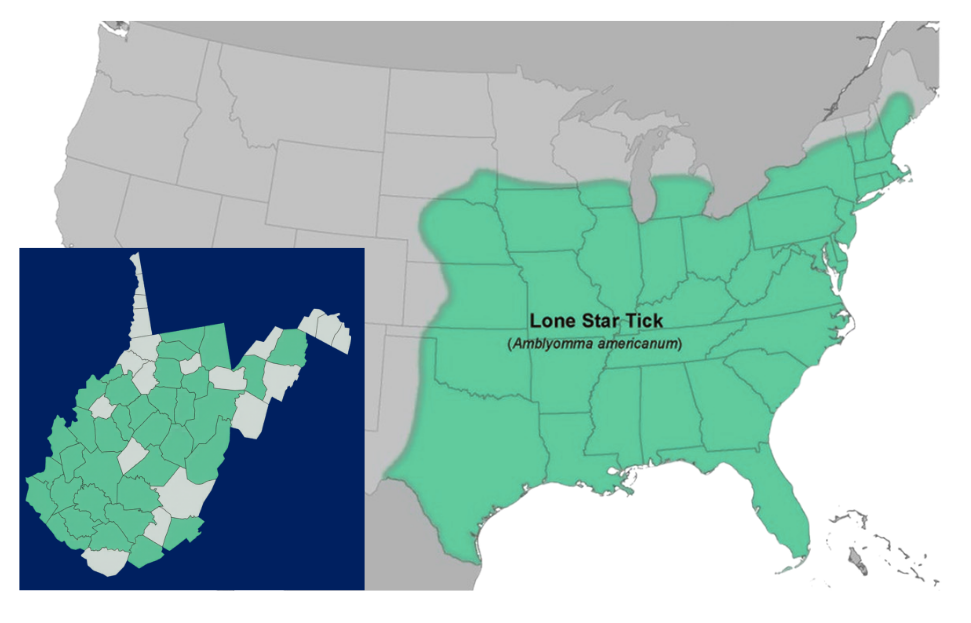
In the US, Lone Star ticks are the main source of AGS transmission. These ticks primarily live in the eastern half of the US, overlapping with the highest incidence of AGS. Lone Star ticks are “very aggressive”, and are the 2nd most common source of tick bites in the US. People who live in rural areas, including many West Virginians, are at high risk of exposure to AGS, as ticks often live in wooded or brushy areas. West Virginia tick surveillance data found the highest number of Lone Star ticks in Putnam, Jackson, Cabell, Kanawha, and Wayne counties.
Lone Star ticks live across the eastern United States and have been identified in a majority of West Virginia’s counties. Green coloration on the US map identifies Lone Star ticks’ estimated habitat, while green coloration on the West Virginia map shows counties where Lone Star ticks have been collected. Adapted from Lone Star Tick Surveillance (CDC), and West Virginia Tick Surveillance Report (WV Department of Health).
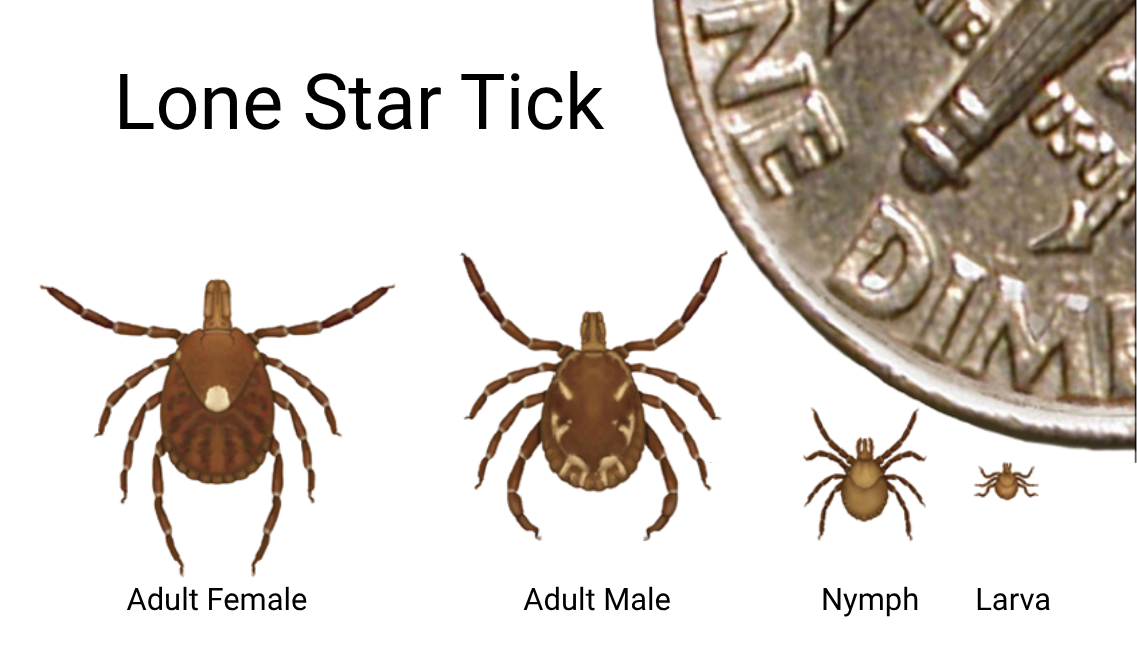
Adult female and nymph Lone Star ticks are the most likely to bite humans. The adult female can be identified by a white “Lone Star” on her back. Adapted from It’s Open Season on Ticks - CDC.
AGS Policy Options
AGS is not a nationally reportable condition, although some states, including West Virginia, require state-level reporting. In both 2025 and 2026, the West Virginia Legislature introduced bills to make AGS a reportable condition, but neither bill passed. However, in June 2025, the West Virginia Department of Health (DOH) added AGS as a reportable health condition through the rulemaking process, allowing them to monitor the number of cases in the state. Since then, at least 14 cases have been confirmed in the state. 11 other states also require reporting of AGS diagnosis, and legislation is pending in 4 additional states. One option for West Virginia could be to reintroduce an AGS reporting bill. Although the state DOH has already opted for AGS reporting, they did so through the rules process. Passing a bill requiring AGS reporting could enshrine this in statute, making it more difficult to change this policy in the future.
At the federal level, a bill has been introduced to classify alpha-gal as a major food allergen, requiring it to be disclosed on labels. This bill was included on the agenda in a 2026 congressional hearing, "Healthier America: Legislative Proposals on the Regulation and Oversight of Food.” West Virginia could opt to require labels for products containing alpha-gal in the state, much like the legislature opted to do with lab-grown meat in 2024. Introducing labeling requirements could make it easier for people with AGS to avoid reactions, but could make it difficult for companies to comply with differing labeling requirements.
A major issue cited by many AGS researchers is lack of knowledge of the condition among healthcare providers. Another option that the West Virginia legislature could take up could be to require AGS awareness training as a part of continuing medical education requirements for licensure in the state. In the 2026 session, the legislature opted to include nutrition education in the requirements for continuing medical education, and a similar tact could be taken with AGS. This could increase awareness of diagnosis and management of the condition among medical providers in the state. However, introducing AGS awareness as a requirement could reduce the amount of continuing education medical providers receive around other topics, and could add additional time and financial burdens for medical providers.
This Science and Technology Note was prepared by Madison Flory, PhD, West Virginia Science & Technology Policy Fellow on behalf of the West Virginia Science and Technology Policy (WV STeP) Initiative. The WV STeP Initiative provides nonpartisan research and information to members of the West Virginia Legislature. This Note is intended for informational purposes only and does not indicate support or opposition to a particular bill or policy approach. Please contact info@wvstep.org for more information.